Top Dog Diet Myths Debunked: Facts Every Owner Needs
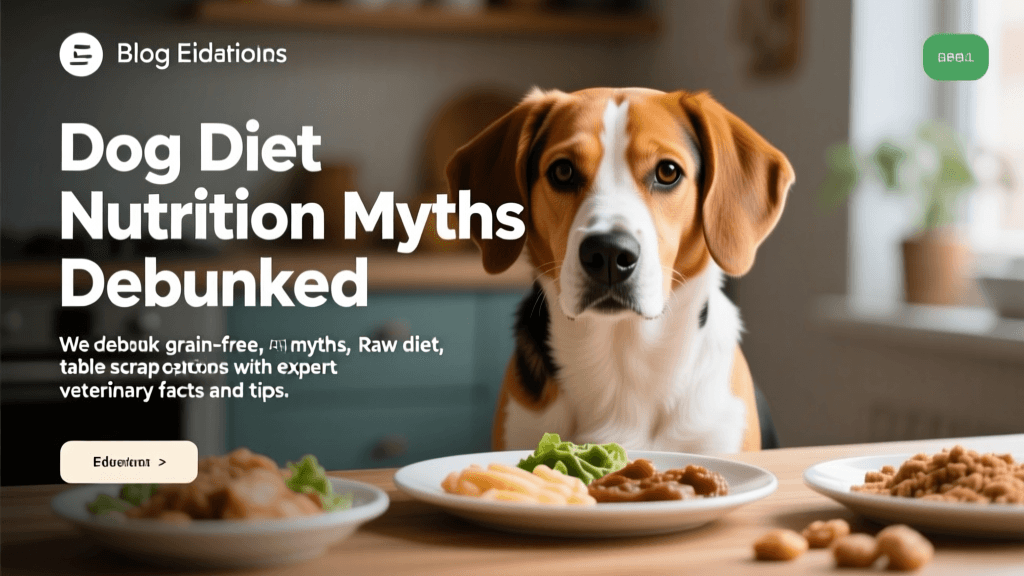
Discover the truth behind common dog diet myths. We debunk grain-free, raw diet, and table scrap misconceptions with expert veterinary facts and tips.
The Truth About What Is In Your Dog's Bowl
As a dog owner, navigating the endless aisles of pet food and the overwhelming amount of online advice can feel like a full-time job. Between social media influencers pushing raw meat diets and boutique brands marketing grain-free kibble as the ultimate health solution, it is incredibly easy to fall prey to well-intentioned but scientifically inaccurate information. Nutrition is the cornerstone of your dog's health, influencing everything from their coat quality and energy levels to their long-term joint and heart health.
At Paws-Tales, we believe in empowering pet parents with evidence-based veterinary science rather than marketing hype. Below, we tackle five of the most persistent dog diet myths, debunk them with hard facts, and provide actionable, practical advice to help you make the best dietary choices for your furry best friend.
Myth 1: Grain-Free Diets Are Inherently Healthier
The grain-free movement exploded in the pet food industry over the last decade, driven by the misconception that dogs are allergic to grains and that carbohydrates like corn, wheat, and rice are mere 'fillers.' In reality, true grain allergies in dogs are exceptionally rare. Most food allergies are actually triggered by animal proteins like beef, chicken, or dairy.
More alarmingly, the U.S. Food and Drug Administration (FDA) launched an investigation into a potential link between grain-free diets and Dilated Cardiomyopathy (DCM), a life-threatening heart disease. Many grain-free diets replace traditional grains with high concentrations of legumes, peas, lentils, and potatoes. Veterinary cardiologists and nutritionists suspect that these alternative ingredients may interfere with taurine absorption or synthesis, leading to heart muscle deterioration.
Actionable Advice:
Unless your veterinarian has explicitly diagnosed your dog with a specific grain allergy via a strict elimination diet trial, there is no medical benefit to feeding a grain-free diet. Instead, look for brands that employ full-time veterinary nutritionists and conduct AAFCO feeding trials. Brands that consistently meet the World Small Animal Veterinary Association (WSAVA) guidelines include Purina Pro Plan, Hill's Science Diet, and Royal Canin. A standard 30-pound bag of WSAVA-compliant kibble typically costs between $50 and $80, providing a safe, balanced, and cost-effective foundation for your dog's health.
Myth 2: Raw Diets Are Completely Safe and Natural
Advocates of the Biologically Appropriate Raw Food (BARF) diet argue that feeding raw meat, bones, and organs mimics a dog's ancestral diet. While it is true that wolves eat raw prey, domestic dogs have evolved alongside humans for over 15,000 years, developing entirely different digestive capabilities and life expectancies. Furthermore, the safety risks associated with raw diets are severe and well-documented.
The American Veterinary Medical Association (AVMA) strongly discourages feeding raw or undercooked animal-source protein due to the high risk of zoonotic pathogens. Studies have shown that up to 25% of raw pet food samples test positive for harmful bacteria like Salmonella and Listeria. This poses a massive health risk not only to your dog but also to the humans in your household, particularly children, the elderly, or immunocompromised individuals. Additionally, raw bones frequently lead to fractured teeth, gastrointestinal obstructions, and esophageal tears.
Actionable Advice:
If you prefer a less-processed diet for your dog, consider gently cooked fresh food delivery services like Nom Nom or The Farmer's Dog. These companies use human-grade ingredients that are lightly cooked to eliminate pathogens while retaining high moisture and nutrient bioavailability. Be prepared for a higher price point; fresh cooked diets typically cost between $5 and $12 per day depending on your dog's weight, compared to $1 to $2 per day for premium kibble.
Myth 3: Dogs Are Strict Carnivores
Because dogs belong to the order Carnivora, many owners assume they are obligate carnivores like cats, requiring a meat-only diet to thrive. This is biologically incorrect. Dogs are highly adaptable omnivores. During their domestication, dogs evolved specific genetic mutations that allow them to digest and thrive on starches and plant-based materials.
Specifically, dogs possess multiple copies of the AMY2B gene, which produces amylase, an enzyme essential for breaking down carbohydrates. They also have the ability to convert plant-based precursors into essential nutrients like Vitamin A and arachidonic acid, which cats cannot do. A diet consisting exclusively of meat lacks crucial dietary fiber, calcium, and essential trace minerals, which can lead to severe metabolic bone disease and gastrointestinal distress.
Actionable Advice:
Ensure your dog's diet contains a balanced ratio of high-quality animal proteins and digestible complex carbohydrates. Ingredients like sweet potatoes, brown rice, and oats provide excellent sources of dietary fiber, promoting a healthy gut microbiome and firm stools. If you are supplementing your dog's meals, adding one tablespoon of plain, unsweetened canned pumpkin per 20 pounds of body weight can work wonders for their digestive regularity.
Myth 4: All Human Food Is Toxic to Dogs
The phrase 'never feed your dog human food' is a gross oversimplification. While it is absolutely true that certain common household ingredients are highly toxic to canines, many whole, unseasoned human foods are incredibly nutritious and make excellent, low-calorie training treats. The key is knowing exactly what is safe, what is toxic, and understanding proper portion control.
According to the ASPCA Animal Poison Control Center, the most dangerous human foods include anything containing xylitol (a common artificial sweetener), grapes, raisins, onions, garlic, and macadamia nuts. However, the center also highlights numerous safe fruits and vegetables that can provide antioxidants and vitamins.
Safe vs. Toxic Human Foods Comparison Chart
| Category | Safe Human Foods (In Moderation) | Toxic Human Foods (Strictly Avoid) |
|---|---|---|
| Fruits | Blueberries, Apple slices (no seeds), Watermelon (seedless) | Grapes, Raisins, Cherries (pits/stems) |
| Vegetables | Baby carrots, Green beans, Plain canned pumpkin | Onions, Garlic, Leeks, Chives |
| Proteins/Fats | Plain boiled chicken breast, Scrambled eggs (no butter) | Macadamia nuts, Bacon grease, Xylitol (peanut butter) |
| Dairy | Plain Greek yogurt (small amounts), Cottage cheese | Blue cheese mold, Milk (if lactose intolerant) |
Actionable Advice:
Treats, including safe human foods, should never make up more than 10% of your dog's total daily caloric intake. For a 30-pound dog requiring roughly 700 calories a day, treat calories should not exceed 70 calories. Swap out high-calorie commercial biscuits for 1-2 baby carrots or 3-4 blueberries during training sessions to keep your dog lean and healthy.
Myth 5: Changing Dog Food Brands Causes Immediate Illness
Many owners stick to the exact same bag of kibble for their dog's entire life out of fear that switching brands will cause severe gastrointestinal upset. While it is true that an abrupt change in diet can lead to diarrhea, vomiting, and a disrupted gut microbiome, the idea that dogs cannot handle dietary variety is a myth. In fact, rotating proteins and carbohydrates can help prevent the development of food sensitivities and ensure a broader spectrum of micronutrients.
Actionable Advice:
The secret to changing your dog's food without triggering stomach upset is a slow, methodical transition over 7 to 10 days. Follow this structured schedule to allow your dog's digestive enzymes and gut flora to adapt:
- Days 1-2: 25% new food mixed with 75% old food.
- Days 3-4: 50% new food mixed with 50% old food.
- Days 5-6: 75% new food mixed with 25% old food.
- Day 7: 100% new food.
If your dog has a historically sensitive stomach, extend this transition period to 14 days and consider adding a canine-specific probiotic, such as Purina FortiFlora or Proviable, to support digestive stability during the switch.
Conclusion: Fact-Checking Your Dog's Diet
When it comes to your dog's health and wellbeing, relying on veterinary science rather than internet trends is the best way to ensure a long, vibrant life. Grain-free diets are not a magic bullet, raw food carries hidden dangers, and dogs are perfectly equipped to digest a balanced, omnivorous diet. By understanding the facts, utilizing safe human foods as low-calorie treats, and transitioning meals properly, you can confidently nourish your dog. Always consult with your primary care veterinarian or a board-certified veterinary nutritionist before making drastic changes to your dog's dietary regimen.
jonas-cole
All our authors care for dogs every day — read more of their work on the authors page.