Canine Separation Anxiety: Expert Behavioral Analysis
Discover expert behavioral diagnostics and modification protocols for canine separation anxiety, including desensitization steps and management costs.
Understanding Separation Anxiety Through Applied Behavior Analysis
From the perspective of Applied Behavior Analysis (ABA) and veterinary behavioral medicine, canine separation anxiety is not a display of spite, dominance, or simple boredom. It is a profound, involuntary panic disorder triggered by the absence of a specific attachment figure. When a dog experiences true separation anxiety, their autonomic nervous system shifts into a severe sympathetic (fight-or-flight) state, flooding their brain with cortisol and adrenaline. This neurochemical cascade results in desperate escape behaviors, vocalization, and inappropriate elimination.
Treating this condition requires moving beyond generic obedience training and adopting a clinical, data-driven approach. As noted by the ASPCA, successful intervention relies on systematic desensitization and counterconditioning (DS/CC) to alter the dog's underlying emotional response to isolation. This article provides an expert behavioral breakdown of how to diagnose, measure, and systematically treat separation-related distress in dogs.
Differential Diagnosis: Dissecting the Topography of Distress
Before implementing a modification protocol, a certified behaviorist must conduct a differential diagnosis. Owners often label any destructive behavior that occurs while they are away as separation anxiety. However, behavioral topography—the physical form and function of the behavior—must be analyzed to distinguish between three distinct conditions: True Separation Anxiety, Isolation Distress, and Confinement Distress.
According to VCA Animal Hospitals, misdiagnosing the root cause can lead to ineffective treatment plans and exacerbate the dog's stress. Below is a comparative diagnostic table used by behavior professionals to isolate the precise antecedent triggering the panic response.
| Condition | Primary Trigger (Antecedent) | Behavioral Topography | Resolution Criteria |
|---|---|---|---|
| True Separation Anxiety | Departure of a specific primary attachment figure, regardless of whether other humans or dogs remain in the home. | Pacing, drooling, destructive behavior focused on exit points (doors/windows), intense vocalization, psychogenic vomiting. | Panic ceases only when the specific attachment figure returns. Presence of a pet sitter does not alleviate symptoms. |
| Isolation Distress | Being left completely alone. The dog is comfortable as long as any human or familiar canine companion is present. | Whining, scratching at doors, mild pacing. Less intense than true separation anxiety and rarely results in self-injury. | Panic resolves immediately upon the arrival of any familiar person, dog, or even a pet sitter. |
| Confinement Distress | Physical restriction (crates, gated rooms, tie-outs). The dog may be perfectly fine roaming the house freely when alone. | Frantic digging at crate corners, chewing on bars, breaking teeth, excessive salivation, panic when the barrier is engaged. | Panic resolves when the physical barrier is removed, even if the owner remains absent. |
The Functional Behavioral Assessment (FBA) Protocol
To establish a clinical baseline, behaviorists utilize a Functional Behavioral Assessment (FBA). This requires capturing the dog's behavior via remote video monitoring to measure specific metrics without the observer effect altering the dog's response.
Essential Data Collection Metrics
- Latency to Vocalization: The exact time (in seconds) between the owner's departure and the first instance of whining, barking, or howling. A latency of under 3 minutes is a strong indicator of clinical anxiety.
- Duration of Motor Pacing: Continuous, repetitive movement along a fixed route. Pacing that persists for more than 15 minutes indicates an inability to self-soothe.
- Vectoring of Destruction: Analyzing where the dog directs destructive energy. Damage concentrated on door frames, window sills, and weather stripping indicates escape-motivated panic (separation anxiety), whereas chewing on remote controls or sofas often indicates under-stimulation or scavenging behavior.
- Elimination Events: Inappropriate urination or defecation occurring exclusively during absences, despite the dog being fully house-trained and having recently eliminated outside.
Investing in a reliable two-way camera system, such as the Furbo 360 Dog Camera (approximately $169 to $210) or a Wyze Cam v3 (approximately $35), is a mandatory first step for accurate data collection.
Evidence-Based Modification: Systematic Desensitization
Once the FBA confirms true separation anxiety, the gold-standard treatment is Systematic Desensitization and Counterconditioning (DS/CC). This protocol involves breaking down the antecedents of departure into micro-steps, ensuring the dog remains sub-threshold (below the point of panic) while pairing the experience with high-value reinforcement.
Phase 1: Habituation to Departure Cues
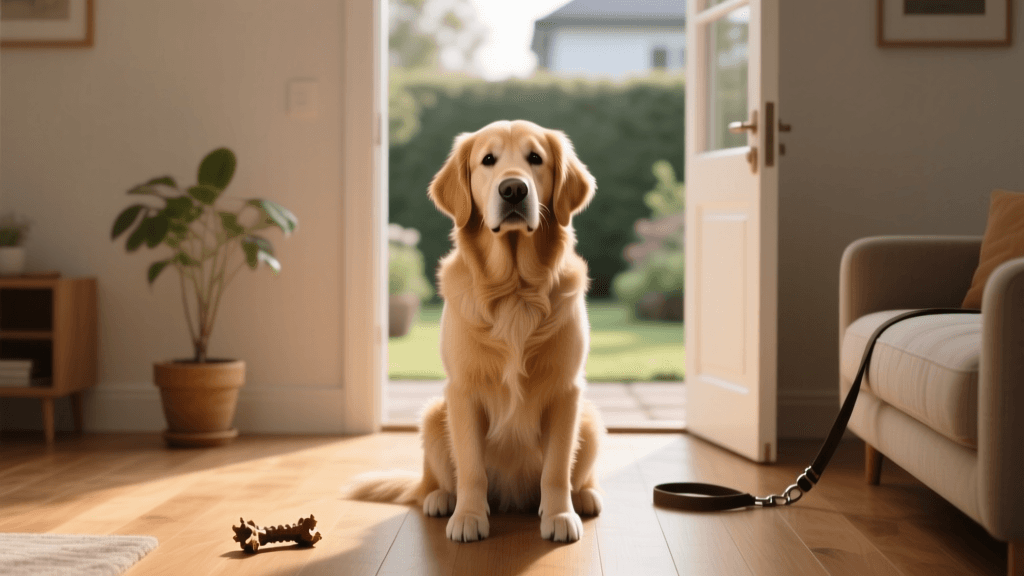
Dogs with separation anxiety are hyper-vigilant to the environmental cues that predict their owner's departure. These cues—picking up keys, putting on shoes, grabbing a coat, or jingling a leash—trigger a preemptive cortisol spike. The goal of Phase 1 is to decouple these cues from the act of leaving.
- Protocol: Perform 15 to 20 randomized cue presentations daily without actually leaving the house. Pick up your keys, hold them for 3 seconds, put them down, and sit on the couch. Put on your work shoes, walk to the kitchen, take them off, and read a book.
- Success Metric: The dog no longer exhibits alerting behaviors (ear pinning, following, panting) when these cues are presented. This habituation phase typically takes 2 to 4 weeks of consistent daily practice.
Phase 2: Graded Exposure to Absences
Only after the dog is habituated to pre-departure cues should the owner begin actual absences. The American Kennel Club emphasizes that pushing a dog past their threshold during this phase will sensitize them further, making the anxiety worse.
- Step 1 (The Door Touch): Reach for the doorknob, hold for 2 seconds, release, and reward with a high-value treat (e.g., freeze-dried liver or boiled chicken). Repeat until the dog remains relaxed.
- Step 2 (The Crack): Turn the knob, open the door 1 inch, close it immediately, and reward. Gradually increase the door opening to 6 inches, then 12 inches over several days.
- Step 3 (The Micro-Departure): Step outside the door, close it completely, and immediately (within 1 second) re-enter. Do not make a fuss upon returning; ignore the dog until they are calm.
- Step 4 (Time Extensions): Increase the duration outside the door using a randomized schedule: 3 seconds, 1 second, 5 seconds, 2 seconds, 10 seconds. Randomization prevents the dog from anticipating the exact moment of return, which can cause anticipatory anxiety.
Note: If the dog vocalizes or paces on the camera during a micro-departure, the duration was too long. The owner must drop back to the last successful time increment and proceed more slowly.
Adjunct Therapies, Tools, and Financial Investment
Behavioral modification is a slow, methodical process that often requires adjunct therapies to lower the dog's baseline arousal levels, making them more receptive to learning. Owners should be prepared for the financial and time investments required for a comprehensive treatment plan.
Environmental and Nutritional Support
- Pheromonotherapy: The use of synthetic dog-appeasing pheromones (DAP), such as the Adaptil Calm Diffuser ($80 to $100 per kit, with refills costing $25). While not a standalone cure, clinical studies suggest it can reduce mild to moderate stress indicators.
- Nutraceuticals: Supplements containing L-theanine, alpha-casozepine, or ashwagandha (e.g., Solliquin at $35/month or Zylkene at $40/month) can provide mild anxiolytic effects without the side effects of pharmaceuticals.
- Compression Garments: Products like the Thundershirt ($40 to $50) apply gentle, constant pressure to the dog's torso. While effective for noise phobias, their efficacy for separation anxiety is highly variable and should be tested while the owner is home first to ensure they do not cause freezing or learned helplessness.
Professional Intervention Costs
For severe cases involving self-injury or extreme property destruction, the involvement of a board-certified veterinary behaviorist is strongly recommended. A Diplomate of the American College of Veterinary Behaviorists (DACVB) can legally prescribe psychoactive medications (such as Fluoxetine or Clomipramine) to alter brain chemistry and facilitate behavioral learning. Initial consultations typically range from $300 to $500, with follow-ups costing $150 to $250. Alternatively, a Certified Applied Animal Behaviorist (CAAB) can design the DS/CC protocol but cannot prescribe medication; their rates generally average $150 to $200 per hour.
Conclusion
Canine separation anxiety is a complex, multifaceted behavioral health issue that demands clinical precision. By accurately differentiating true separation anxiety from isolation or confinement distress, conducting rigorous functional assessments via video monitoring, and executing a meticulously paced systematic desensitization protocol, owners can significantly improve their dog's welfare. While the process requires patience, financial investment, and strict adherence to sub-threshold training, the ultimate reward is a dog that can rest peacefully and confidently in their own home.
hannah-wickes
All our authors care for dogs every day — read more of their work on the authors page.