Avoid These 7 Common Dog Dental Care Mistakes Today
Discover the top dog dental care mistakes owners make and learn actionable tips to protect your pup's teeth, gums, and overall health today.
The Hidden Epidemic of Canine Periodontal Disease
When it comes to our dogs' overall health, dental care is often the most neglected area. According to the American Veterinary Medical Association (AVMA), over 80% of dogs show signs of periodontal disease by the age of three. This isn't just about bad breath; untreated dental disease can lead to systemic infections affecting the heart, liver, and kidneys. Despite the high stakes, many well-meaning pet owners fall into predictable traps that compromise their dog's oral health. In this guide, we will explore the most common dog dental care mistakes and provide actionable, specific advice to keep your pup's smile bright and healthy.
Mistake 1: Using Human Toothpaste
One of the most dangerous mistakes a pet owner can make is reaching for their own toothpaste when brushing their dog's teeth. Human toothpastes often contain fluoride, which can cause severe gastrointestinal upset in dogs when swallowed. More alarmingly, many human toothpastes, especially those marketed for whitening or tartar control, contain xylitol—an artificial sweetener that is highly toxic to dogs. Even in small amounts, xylitol triggers a rapid release of insulin, leading to life-threatening hypoglycemia and potential liver failure.
The Fix: Always use a veterinary-formulated enzymatic toothpaste. Products like Virbac C.E.T. Enzymatic Dog Toothpaste or Sentry Petrodex are specifically designed to be swallowed and contain enzymes that continue to break down plaque even after brushing. Expect to spend around $10 to $15 per tube, which typically lasts two to three months for a medium-sized dog.
Mistake 2: Believing Kibble Cleans Teeth
There is a pervasive myth in the dog-owning community that feeding dry kibble naturally scrapes plaque off a dog's teeth, much like crunching on an apple might for a human. In reality, most dogs do not chew kibble thoroughly; they simply crush it or swallow it whole. Even when chewed, standard kibble shatters upon impact with the tooth, failing to provide the mechanical abrasion needed to clean the gumline where plaque accumulates.
The Fix: Do not rely on standard dry food for dental hygiene. If you want a diet that aids in dental health, look for prescription dental diets (such as Hill's Prescription Diet t/d) that feature a specialized kibble matrix designed to resist shattering, allowing the tooth to sink into the kibble and scrape the surface. These diets typically cost between $70 and $90 for a 27-pound bag.
Mistake 3: Dismissing Bad Breath as Normal
Many owners accept doggy breath as an inevitable part of living with a canine companion. However, a healthy dog's breath should not be overwhelmingly foul. Persistent halitosis is often the first clinical sign of stage 2 or stage 3 periodontal disease, indicating the presence of anaerobic bacteria thriving in deep periodontal pockets.
The Fix: Treat bad breath as a medical symptom, not a quirk. If your dog's breath smells metallic, putrid, or unusually sweet, schedule a veterinary oral exam immediately. In the meantime, you can use a Veterinary Oral Health Council (VOHC) accepted water additive like Virbac C.E.T. Aquadent (approx. $18 per bottle) to help neutralize oral bacteria. Add 15ml (one tablespoon) to every 5 liters of drinking water daily.
Mistake 4: Buying Unapproved Dental Chews
The pet market is flooded with dental chews, bones, and treats claiming to eliminate plaque and tartar. Unfortunately, many of these products are little more than expensive calories. Some are too soft to provide mechanical cleaning, while others are digested too quickly to have any meaningful contact with the teeth.
To separate fact from fiction, you must look for the Veterinary Oral Health Council (VOHC) seal of acceptance. The VOHC is an independent entity that evaluates pet dental products against rigorous scientific standards for plaque and tartar reduction.
Dental Product Comparison Chart
| Product Category | Examples | VOHC Status | Efficacy & Notes |
|---|---|---|---|
| VOHC-Approved Chews | Greenies, Purina Dental Chewz, Oravet | Accepted | Reduces plaque by 20-30%. Must be sized correctly to prevent choking. |
| Generic Rawhide / Pig Ears | Supermarket rawhide rolls, smoked ears | Not Accepted | High risk of gastrointestinal blockage; minimal plaque reduction. |
| Dental Diets | Hill's t/d, Royal Canin Dental | Accepted | Kibble matrix scrubs teeth. Requires prescription or vet authorization. |
| Chlorhexidine Rinses | MaxiGuard OraClens, Vetradent | Accepted | Chemical plaque control. Excellent for dogs that will not tolerate brushing. |
Mistake 5: Feeding Hard Bones, Antlers, and Hooves
While the image of a dog happily gnawing on a bone is iconic, it is a leading cause of veterinary dental emergencies. Hard items like weight-bearing bones from large livestock, deer antlers, buffalo horns, and hard nylon bones are significantly harder than a dog's tooth enamel. Chewing on these objects frequently results in slab fractures of the maxillary fourth premolar (the carnassial tooth) or the canine teeth.
The Fix: Follow the Kneecap Rule: if you cannot indent the object with your fingernail, or if it hurts to strike it against your own kneecap, it is too hard for your dog's teeth. Opt for softer, edible alternatives or rubber toys with variable give, such as the Kong Classic stuffed with peanut butter and frozen, which encourages chewing without the risk of tooth fractures. A single tooth extraction or root canal for a fractured carnassial tooth can cost between $1,500 and $3,000 at a veterinary dental specialist.
Mistake 6: Skipping Professional Veterinary Cleanings
Home care is essential, but it cannot remove calcified tartar (calculus) that has already bonded to the tooth enamel, nor can it clean beneath the gumline where periodontal disease actually originates. Some owners attempt to save money by opting for anesthesia-free dental cleanings offered by grooming salons or pet stores. According to experts at the Cornell University College of Veterinary Medicine, anesthesia-free cleanings are purely cosmetic, highly stressful for the dog, and fail to address subgingival disease.
The Fix: Schedule a professional veterinary dental cleaning under general anesthesia once your veterinarian recommends it (typically every 1 to 3 years, depending on the breed and home care routine). While the upfront cost of $700 to $1,500 may seem steep, it includes pre-anesthetic bloodwork, IV fluids, full-mouth dental radiographs (X-rays), and subgingival scaling. This preventive measure is vastly cheaper than treating advanced heart valve infections or extracting multiple diseased teeth later in life.
Mistake 7: Waiting Until Adulthood to Start Brushing
Many owners wait until their dog is older and visibly struggling with dental issues before attempting to brush their teeth. Introducing a toothbrush to an adult dog with existing mouth pain is a recipe for a biting incident and a lifelong aversion to oral handling.
The Fix: Start desensitizing your puppy to mouth handling the day you bring them home. Use a phased approach over four weeks:
- Week 1: Simply lift the lips and reward with high-value treats (e.g., boiled chicken).
- Week 2: Rub the gums with your bare finger coated in a pea-sized amount of poultry-flavored enzymatic toothpaste.
- Week 3: Introduce a soft-bristled finger brush, gently massaging the outer surfaces of the teeth for 10 seconds.
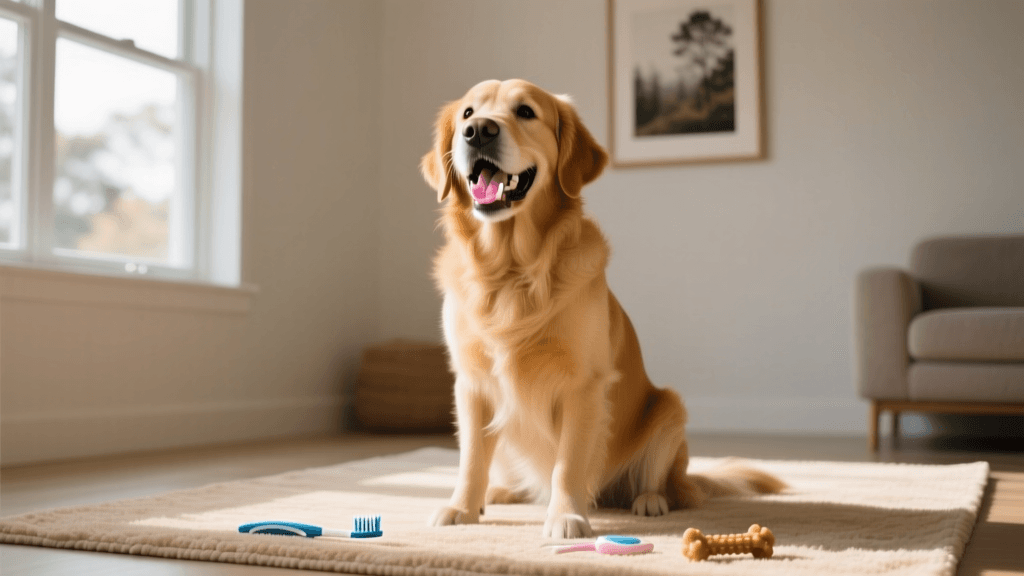
- Week 4: Transition to a dual-headed canine toothbrush (like the Boshiho Dog Toothbrush), aiming for the 45-degree angle at the gumline for 60 to 90 seconds daily.
Your Actionable Daily Dental Care Routine
To ensure optimal oral health without overwhelming your schedule, implement this practical daily and weekly routine:
- Daily Brushing (Evenings): Spend 90 seconds brushing the buccal (outer) surfaces of the teeth using a VOHC-accepted enzymatic toothpaste. Focus on the upper premolars and canines, where plaque accumulates fastest.
- Daily Water Additive (Mornings): Mix 15ml of an enzymatic water additive into your dog's primary water bowl to provide continuous chemical plaque control throughout the day.
- Weekly Chewing Session: Provide a VOHC-accepted dental chew (sized appropriately for your dog's weight) after dinner twice a week. Supervise the entire chewing session to prevent choking.
- Monthly Inspections: Once a month, gently lift your dog's lips to inspect the gumline. Look for redness, swelling, bleeding, or brown tartar buildup. If you spot these signs, book a vet visit immediately.
Conclusion
Avoiding these common dog dental care mistakes requires a shift in perspective: viewing your dog's oral health not as a cosmetic luxury, but as a critical pillar of their overall systemic wellbeing. By ditching the hard antlers, investing in VOHC-approved products, and committing to a gentle, consistent brushing routine, you can add years to your dog's life and save thousands of dollars in advanced veterinary dental procedures. Your dog's wagging tail—and their healthy heart—will thank you.
marcus-aldridge
All our authors care for dogs every day — read more of their work on the authors page.