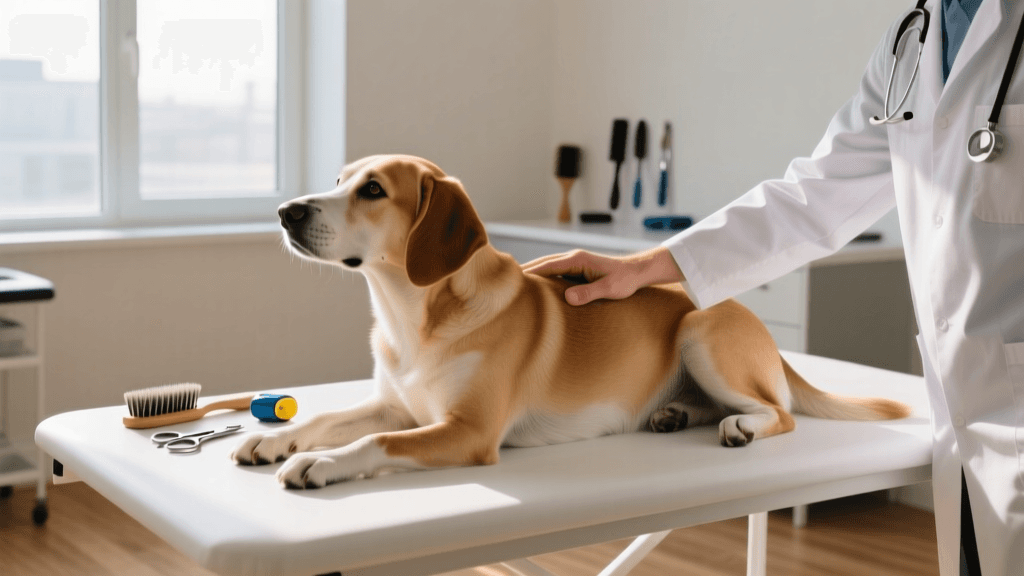
Dachshund Spinal Health: Preventing and Managing IVDD
Protect your Dachshund from IVDD. Discover expert tips on spinal health, ramp training, weight management, and care costs for long-backed breeds.
The Unique Anatomy of the Dachshund
When you bring a Dachshund into your home, you are adopting a dog with a truly unique and specialized anatomy. Bred originally in Germany to hunt badgers, their elongated bodies and short, sturdy legs allowed them to dig into tight burrows. In veterinary medicine, this specific body shape is known as chondrodysplasia. While this distinctive silhouette is undeniably charming and central to the breed's identity, it comes with significant biomechanical trade-offs. The Dachshund's disproportionately long spinal column must support the weight of their torso, placing immense and continuous mechanical stress on their intervertebral discs. Over time, or due to sudden trauma, this stress can lead to severe mobility issues, chronic pain, and even paralysis. Understanding the mechanics of your dog's back is the first and most crucial step in ensuring a long, healthy, and active life for your beloved companion.
Understanding Intervertebral Disc Disease (IVDD)
Intervertebral Disc Disease (IVDD) is the most common neurological disorder seen in dogs, and Dachshunds are disproportionately affected. According to VCA Animal Hospitals, the intervertebral discs act as shock absorbers between the vertebrae of the spine. In chondrodysplastic breeds like the Dachshund, these discs undergo premature degeneration, often beginning as early as two to four years of age.
Dachshunds are primarily susceptible to Hansen Type I IVDD. In this condition, the tough outer layer of the disc (the annulus fibrosus) weakens, allowing the jelly-like inner nucleus (the nucleus pulposus) to calcify and eventually extrude or 'blow out' into the spinal canal. This sudden extrusion compresses the spinal cord, leading to acute pain, nerve damage, and loss of motor function. Statistics are sobering: approximately 25% of all Dachshunds will experience some form of IVDD during their lifetime, making them up to 12 times more likely to suffer from disc issues than non-chondrodysplastic breeds.
Approximately 1 in 4 Dachshunds will experience some form of IVDD during their lifetime, making proactive environmental management and weight control absolute necessities for owners of this breed.
Proactive Prevention: A Daily Protocol
While you cannot change your Dachshund's genetics, you can drastically reduce the environmental and lifestyle factors that trigger a disc extrusion. A comprehensive prevention protocol requires daily diligence in three main areas: weight management, environmental modification, and proper handling.
Weight Management and Dietary Control
Excess body weight is the single most significant modifiable risk factor for IVDD. Every extra pound on a Dachshund's frame exponentially increases the gravitational and kinetic force exerted on their spinal discs. Your dog should be maintained at a strict Body Condition Score (BCS) of 4 out of 9. You should be able to easily feel their ribs without pressing hard, and they should have a visible abdominal tuck when viewed from the side. For an average 20-pound standard Dachshund, this typically requires a tightly controlled intake of 350 to 450 calories per day, depending on their age and activity level. Use a digital kitchen scale to measure their kibble rather than a standard measuring cup, and account for all training treats by deducting them from their daily caloric allotment.
Environmental Modifications and Gear
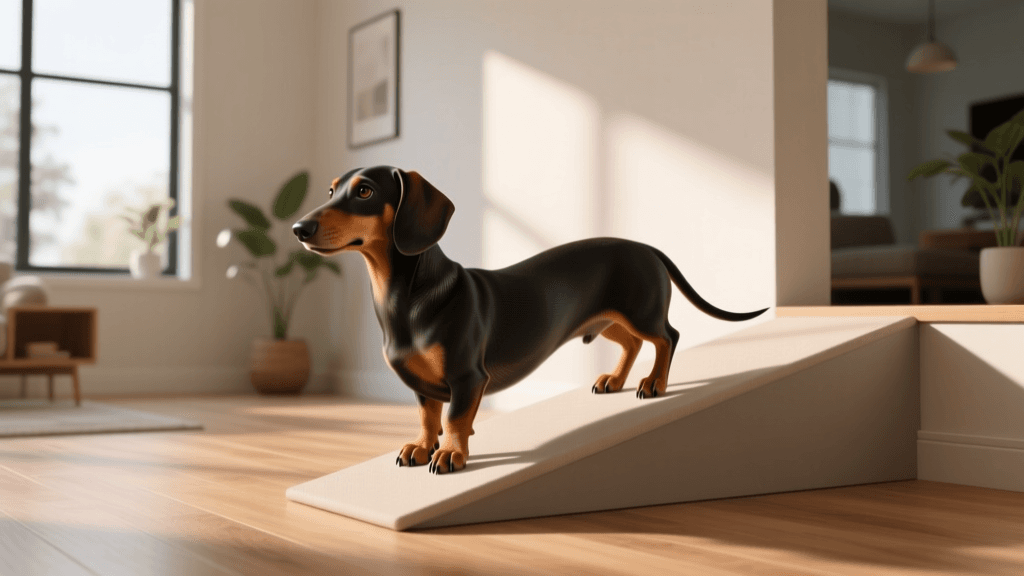
Dachshunds should never be permitted to jump on or off furniture, nor should they be allowed to navigate full flights of stairs. The repetitive impact of landing on hard surfaces creates micro-traumas in the spinal discs that compound over time. You must outfit your home with pet ramps and stairs. When selecting a ramp, ensure it has a gentle incline and a high-traction surface, such as the Solvit Wood Bed Ramp or the PetSafe CozyUp Folding Pet Steps. Furthermore, always use a well-fitted, padded harness instead of a neck collar. Collars place direct traction on the cervical spine when a dog pulls. A front-clip or dual-clip harness, such as the Ruffwear Front Range Harness, distributes force evenly across the chest and shoulders, entirely bypassing the vulnerable neck area.
Essential Gear Comparison for Spinal Protection
| Prevention Tool | Recommended Brand | Estimated Cost | Primary Benefit |
|---|---|---|---|
| Folding Pet Ramp | PetSafe CozyUp | $45 - $70 | Eliminates jumping impact on couches and beds |
| Front-Clip Harness | Ruffwear Front Range | $40 - $50 | Distributes pulling force across the chest, not the neck |
| Hardware-Mounted Gate | Cardinal Gates Wood Safety | $60 - $90 | Physically blocks access to hazardous staircases |
| Orthopedic Dog Bed | Big Barker 4-inch Lounger | $120 - $150 | Provides firm support to maintain spinal alignment during sleep |
Proper Handling and Exercise Modifications
How you pick up your Dachshund matters immensely. Never lift them by their front legs or armpits, as this allows their heavy hindquarters to dangle, putting severe traction on the lower spine. Instead, use the 'scooping' method: place one arm securely under their chest and the other arm fully supporting their hindquarters and lower back, lifting them horizontally and keeping their spine completely straight and level against your body.
When it comes to exercise, high-impact activities must be strictly avoided. Agility courses, frisbee catching, and repetitive fetch sessions that involve sudden stops and sharp turns are highly dangerous for this breed. Instead, focus on low-impact, steady-state exercises. Leash walking on flat, even terrain is excellent. Additionally, scent work and nose-work games provide immense mental stimulation and physical tiredness without requiring the dog to jump or twist their spine. Aim for two 20-minute structured leash walks daily rather than one long, exhausting hike.
Recognizing the Warning Signs of IVDD
Early intervention is the key to preserving neurological function. The American College of Veterinary Surgeons categorizes IVDD into five distinct clinical stages based on neurological deficits. Recognizing these stages early can mean the difference between a full recovery and permanent paralysis.
- Stage 1: Mild to severe back or neck pain. The dog may be reluctant to move, cry out when picked up, shiver, or hold their head in a lowered, stiff position.
- Stage 2: Pain accompanied by mild neurological deficits, such as scuffing the tops of their paws (knuckling) or mild weakness in the hind limbs (ataxia).
- Stage 3: Partial paralysis (paresis). The dog has some voluntary motor function in their hind legs but is unable to stand or walk unassisted.
- Stage 4: Complete paralysis of the hind limbs, but the dog still retains deep pain sensation in their toes when pinched with hemostats.
- Stage 5: Complete paralysis with a loss of deep pain sensation. This is a profound surgical emergency, and the window for successful intervention is typically within 12 to 24 hours.
If you notice your Dachshund arching their back, trembling, refusing to eat, or hesitating to jump, treat it as a medical emergency and confine them to a small crate immediately to restrict movement until you can reach a veterinarian.
Treatment Pathways and Financial Realities
Treatment for IVDD depends entirely on the stage of the disease at the time of diagnosis. For dogs in Stage 1 or early Stage 2, conservative management is often recommended. This involves strict, uncompromising crate rest for a minimum of 6 to 8 weeks. The dog is only removed from the crate on a short leash to eliminate waste. Conservative management is paired with a robust pharmaceutical protocol, typically including Non-Steroidal Anti-Inflammatory Drugs (NSAIDs) like Carprofen (Rimadyl) to reduce spinal swelling, Gabapentin for nerve pain, and sometimes muscle relaxants like Methocarbamol. The cost for conservative management, including diagnostics (X-rays) and medications, generally ranges from $500 to $1,500.
For dogs in Stage 3 or higher, or those who fail conservative management, surgical intervention is required. The most common procedure is a hemilaminectomy, where a veterinary neurosurgeon removes a portion of the vertebra to access the spinal canal and carefully extract the extruded disc material compressing the cord. According to data from Cornell University College of Veterinary Medicine, surgery offers the highest chance of a full neurological recovery, especially if deep pain sensation is still intact. However, the financial burden is significant. Advanced imaging (MRI or CT scan) combined with neurosurgery and post-operative hospitalization typically costs between $4,000 and $8,000, and can exceed $10,000 in major metropolitan areas. Because of this high financial risk, enrolling your Dachshund in a comprehensive pet insurance policy (such as Trupanion or Healthy Paws) while they are still a young puppy, before any spinal symptoms appear, is one of the most responsible financial decisions an owner can make.
Conclusion: A Lifelong Commitment to Spinal Care
Owning a Dachshund is a joy, but it requires a proactive and highly managed approach to their physical environment and health. By strictly controlling their weight, modifying your home with ramps and gates, utilizing proper lifting techniques, and avoiding high-impact exercises, you can significantly mitigate the risks associated with their unique anatomy. IVDD is a formidable adversary, but through education, vigilance, and early veterinary intervention, you can help ensure your long-backed companion enjoys a vibrant, pain-free, and deeply fulfilling life by your side.
beth-carrasco
All our authors care for dogs every day — read more of their work on the authors page.