First-Time Owner Guide to Puppy Potty Training Success
Master puppy potty training with our first-time owner guide. Learn schedules, crate sizing, and positive reinforcement techniques for quick success.
Welcome to the World of Puppy Potty Training
Bringing a new puppy home is one of the most exciting milestones for a first-time dog owner. However, the romanticized vision of cuddling on the couch is quickly replaced by the reality of puddles on your favorite rug. Potty training is often the most daunting hurdle for novice owners, but it does not have to be a battle of wills. With a structured routine, the right tools, and an understanding of canine biology, you can successfully house-train your puppy in a matter of weeks. This comprehensive first-time owner guide will walk you through the exact schedules, gear, and behavioral techniques needed to achieve potty training success.
The Biology of a Puppy Bladder
Before setting expectations, it is crucial to understand the physical limitations of your new companion. Puppies lack the muscle control to "hold it" for long periods. A widely accepted rule of thumb among veterinarians and professional trainers is that a puppy can hold their bladder for roughly one hour per month of age, up to a maximum of about eight hours. For example, an eight-week-old (two-month-old) puppy can only hold it for about two hours at the absolute maximum, and realistically needs to go out every 45 to 60 minutes during active play.
Expecting a young puppy to hold it while you are at work for eight hours is not just unrealistic; it is biologically impossible and will severely hinder your training progress. According to the American Kennel Club (AKC), consistency and frequent trips outside are the foundational pillars of house training. If you work full-time, you must budget for a dog walker or puppy daycare during the first few months.
Essential Gear for First-Time Owners
Success in potty training requires a small upfront investment in the right tools. Skip the generic pet store aisles and focus on these proven essentials:
- Enzymatic Cleaner: Standard household cleaners will not break down the uric acid crystals in dog urine. If your puppy can still smell their previous accident, they will return to the same spot. Invest in a high-quality enzymatic cleaner like Nature's Miracle Advanced Stain & Odor Eliminator (approx. $12-$15). Saturate the area, let it sit for 10 minutes, and blot it dry.
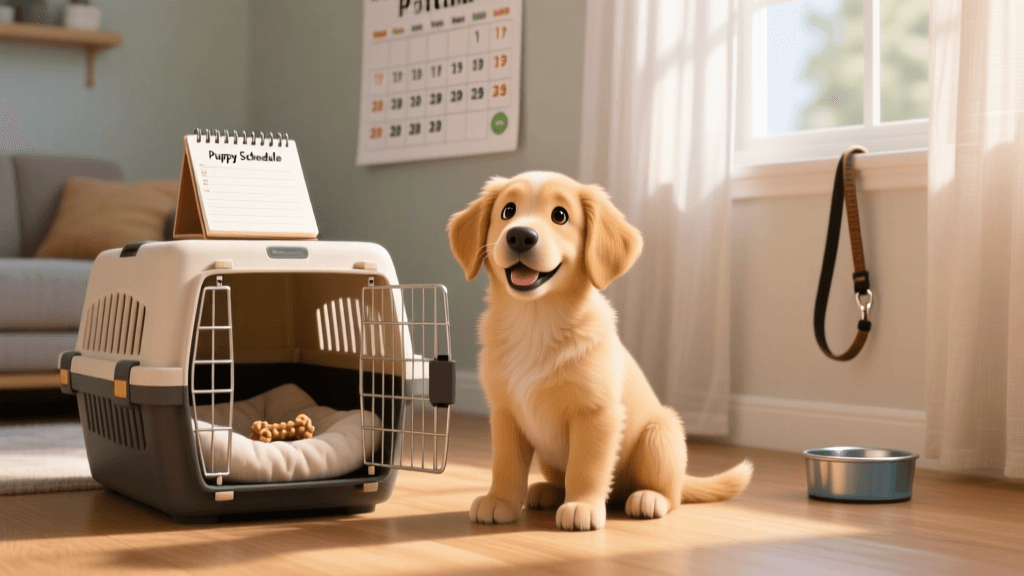
- Adjustable Wire Crate: A crate is your most powerful potty training tool. Dogs naturally avoid soiling their sleeping area. Purchase a wire crate that will fit your dog's adult size, such as the MidWest Homes for Pets iCrate (approx. $45-$70), which comes with a removable divider panel. This allows you to expand the space as your puppy grows. If the crate is too large, the puppy will designate one corner as a bathroom and sleep in the other.
- High-Value Training Treats: You need to reward your puppy the exact second they finish eliminating outside. Use soft, low-calorie treats like Zuke's Mini Naturals (approx. $6). Keep a treat jar right by the door so you never miss the timing of the reward.
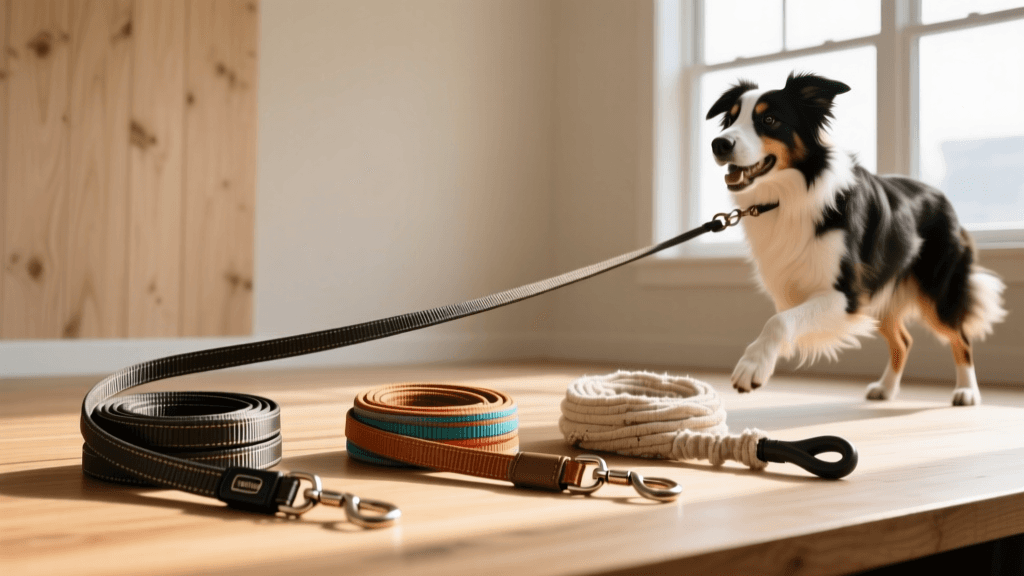
- 6-Foot Nylon Leash: Retractable leashes give puppies too much freedom to wander and sniff, which distracts them from the task at hand. A standard 6-foot leash keeps them focused on the designated potty spot.
The Ultimate Puppy Potty Training Schedule
Puppies thrive on routine. By taking your puppy out at the exact same intervals every day, you condition their digestive system and bladder to operate on a predictable schedule. Below is a structured guide based on the puppy's age.
| Puppy Age | Max Bladder Capacity | Daytime Potty Interval | Nighttime Potty Interval | Crate Time Limit |
|---|---|---|---|---|
| 8 - 10 Weeks | 1 - 2 Hours | Every 45 - 60 mins | Every 3 - 4 hours | 2 hours max |
| 11 - 14 Weeks | 2 - 3 Hours | Every 1 - 1.5 hours | Every 4 - 5 hours | 3 hours max |
| 15 - 16 Weeks | 3 - 4 Hours | Every 2 hours | Every 5 - 6 hours | 4 hours max |
| 4 - 6 Months | 4 - 6 Hours | Every 3 - 4 hours | 7 - 8 hours | 5 hours max |
Key Trigger Moments for Potty Breaks
In addition to the timed intervals above, you must immediately take your puppy outside during the following high-probability trigger moments:
- Immediately upon waking up in the morning or from a nap.
- Within 10 to 20 minutes after eating a meal or drinking a large bowl of water.
- Immediately after a vigorous play session or training exercise.
- Whenever you notice "potty dance" behaviors: sniffing the ground intensely, circling, or whining near the door.
Mastering the Outdoor Potty Routine
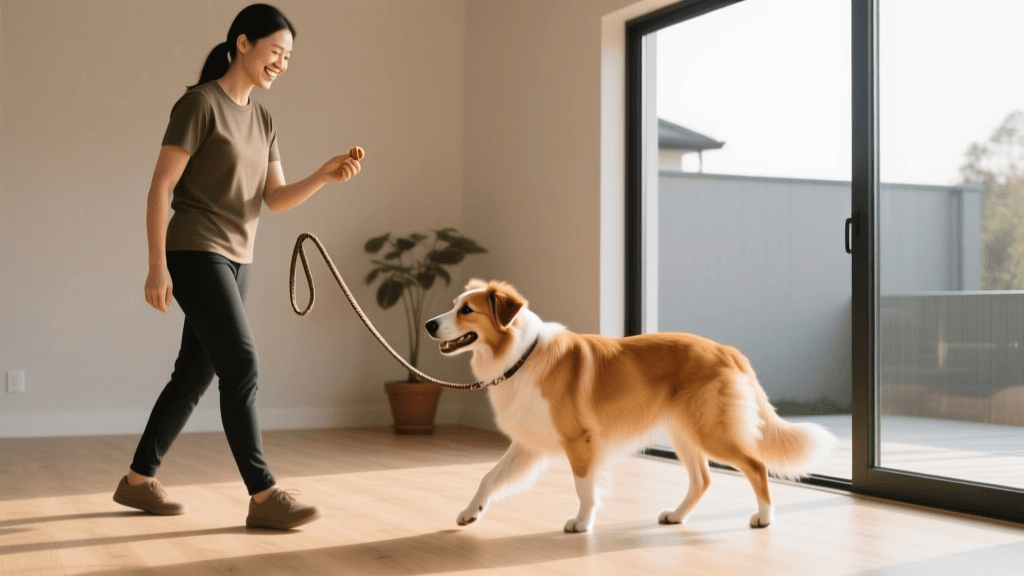
When you take your puppy outside, treat it as a business trip, not a recreational outing. Walk them directly to a designated "potty spot" in your yard. Use a consistent verbal cue, such as "Go potty" or "Do your business," in a calm, encouraging tone.
Stand still and let them sniff. The moment they finish eliminating, immediately praise them with a cheerful "Yes!" and give them a high-value treat. The timing is critical; if you wait until you walk back inside to give the treat, you are rewarding them for coming inside, not for going potty. After the reward is delivered, you can then unclip the leash (if in a fenced area) or go for a walk as a secondary reward for a job well done.
Crate Training: Your Secret Weapon
The Humane Society of the United States highly recommends crate training as a safe and effective method for housebreaking. The crate taps into a dog's natural denning instinct. When properly introduced, the crate becomes a sanctuary, not a punishment zone.
Sizing the Crate Correctly
As mentioned earlier, the crate must be just large enough for your puppy to stand up, turn around, and lie down comfortably. If you have a large breed like a Golden Retriever, use the divider panel in a 42-inch crate to block off the back half. Adjust the divider every few weeks as the puppy grows.
Creating Positive Associations
Never use the crate as a time-out for bad behavior. Feed your puppy their meals inside the crate, toss treats into the back, and provide safe chew toys like a frozen Kong stuffed with plain pumpkin puree. If your puppy whines in the crate at night, ensure they have been taken out to potty. If they have, ignore the whining; responding to it teaches them that crying equals freedom.
Handling Accidents Like a Pro
Accidents are an inevitable part of the process. How you react to them will dictate how quickly your puppy learns. The ASPCA strongly advises against punishing a puppy for accidents. Rubbing a puppy's nose in it or yelling will only teach them to fear you and hide behind furniture to eliminate next time.
The Interrupt and Redirect Method
If you catch your puppy in the act of having an accident indoors, do not yell. Simply clap your hands loudly once or say "Oops!" to interrupt the behavior. Immediately scoop them up or leash them and carry them outside to their potty spot. If they finish outside, praise and reward them heavily.
Cleaning Up the Mess
If you find an accident after the fact, say nothing to the dog. They cannot connect your anger to an action that happened ten minutes ago. Clean the area thoroughly with your enzymatic cleaner. Avoid any cleaning products containing ammonia, as ammonia smells similar to urine and will actually attract your puppy back to the same spot.
Tracking Progress and Adjusting Expectations
Keep a potty training log on your refrigerator or use a smartphone app to track when your puppy eats, drinks, sleeps, and eliminates. This data will quickly reveal your puppy's unique biological clock, allowing you to anticipate their needs before an accident occurs.
Remember that potty training is rarely a linear progression. You may have three perfect days followed by a sudden regression. This is completely normal and often coincides with growth spurts, teething, or changes in the household environment. Stay patient, revert to a stricter schedule, and continue to reward outdoor success.
"Patience and consistency are the true secrets to puppy potty training. Every accident is simply a missed opportunity to be outside at the right time, not a failure of the dog."
When to Consult a Veterinarian
If your puppy is having frequent, small accidents, straining to urinate, or licking their genitals excessively, stop the training regimen and consult your veterinarian. These are hallmark signs of a Urinary Tract Infection (UTI), which is common in young puppies and requires a course of antibiotics. No amount of behavioral training will fix a medical issue.
By committing to this structured approach, utilizing the right gear, and maintaining a positive, reward-based mindset, you will guide your new puppy toward lifelong good habits. The first few weeks require immense dedication, but the reward of a cleanly house-trained dog and a deeply bonded relationship is well worth the effort.
robin-maitland
All our authors care for dogs every day — read more of their work on the authors page.