How to Train Your Dog to Speak Using Viral AAC Buttons
Learn how to teach your dog to communicate using viral AAC sound buttons. Discover step-by-step FluentPet training tips, costs, and expert advice.
The Viral Phenomenon of Dog Button Training
If you have spent any time on TikTok or Instagram Reels lately, you have likely seen videos of dogs like Bunny, Stella, or Billi seemingly holding complex conversations with their owners using sound buttons. This viral trend is not just a cute internet trick; it is rooted in a cognitive science concept known as Augmentative and Alternative Communication (AAC). While originally designed for humans with speech impairments, canine behaviorists and cognitive scientists are now using AAC to unlock the hidden linguistic potential of our pets.
According to the TheyCanTalk research project led by cognitive scientist Federico Rossano at the University of California, San Diego, dogs possess the cognitive ability to associate specific sounds with outcomes, and potentially even combine them to express novel thoughts. In this comprehensive guide, we will break down exactly how to train your dog to use AAC buttons, the costs involved, and the step-by-step conditioning process to turn your pup into a master communicator.
Understanding the Science Behind the Buttons
Before purchasing any equipment, it is crucial to understand what is actually happening in your dog's brain. When a dog presses a button that says 'Outside' and the door opens, they are demonstrating associative learning. However, as detailed in a fascinating NPR feature on canine language acquisition, researchers are investigating whether dogs are merely performing operant conditioning (press button, get treat) or if they are genuinely grasping semantic meaning.
For the average pet owner, the goal is functional communication. By giving your dog a reliable way to express their needs, you can drastically reduce frustration-based behavioral issues, such as door-scratching, excessive barking, or destructive chewing. Mental stimulation from learning a new communication system also tires dogs out just as effectively as a long physical walk.
Essential Gear and Costs for AAC Training
To start your button training journey, you need the right equipment. The most popular and scientifically backed system on the market is FluentPet, designed in collaboration with speech-language pathologists. Here is a breakdown of what you need and the expected costs:
- Starter Kit ($29.95): Includes 6 recordable buttons and hexagonal foam mats. The hex shape allows for infinite, tight-fitting expansion as your dog's vocabulary grows.
- Additional Recordable Buttons ($15.00 for 6): You will need more buttons as you move past the basics. Look for buttons that record up to 30 seconds of audio.
- High-Value Treats ($8.00 - $15.00): Use pea-sized, high-value rewards like freeze-dried beef liver or Zuke's Mini Naturals (approx. 3 calories each) to prevent your dog from filling up during a 5-minute session.
- Non-Slip Mat (Optional, $20.00): If you have hardwood floors, placing a rug or non-slip shelf liner under the hex tiles prevents the soundboard from sliding when your dog paws at it.
Step-by-Step Guide to Teaching Your First Buttons
Training requires patience, consistency, and precise timing. Keep your training sessions short—around 3 to 5 minutes, two to three times a day—to prevent cognitive fatigue.
Phase 1: Target Training (Nose and Paw Boops)
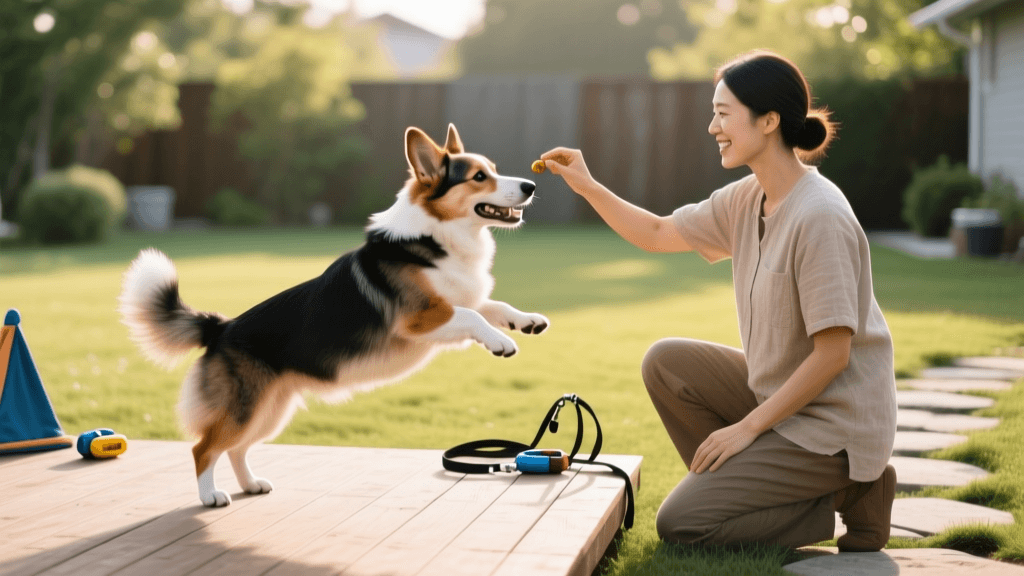
Before introducing the buttons, your dog needs to know how to target an object. Hold a treat in your closed fist and wait for your dog to sniff or paw at it. The exact second they make contact, mark the behavior with a clicker or a verbal 'Yes!' and give the treat. Once they reliably touch your hand, transfer this behavior to a physical target, like a plastic lid, and eventually to the unrecorded AAC button.
Phase 2: Modeling and Association
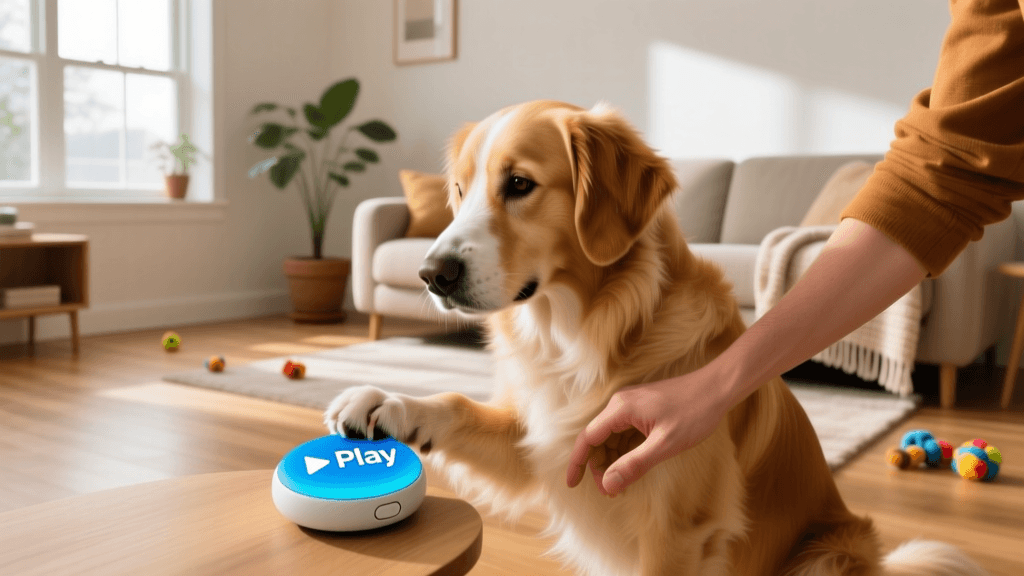
Start with one highly motivating button, such as 'Outside' or 'Play'. 1. Record your voice saying the word clearly and enthusiastically. 2. Place the button near the relevant area (e.g., next to the back door). 3. The Modeling Step: Every time you take the dog outside, point to the button, press it yourself so it plays the sound, and immediately open the door. 4. Repeat this 10-15 times a day. You are building a neurological bridge between the auditory cue, the physical action, and the environmental outcome.
Phase 3: Shaping and Capturing
Once your dog shows interest in the button (sniffing or looking at it), use shaping to encourage a press. If they look at the button, mark and reward. If they step near it, mark and reward. Finally, wait for them to press it with their nose or paw. The moment it sounds, immediately provide the corresponding reward. Timing is critical: the reward must occur within 0.5 to 1 second of the button press to solidify the association.
Core Starter Buttons vs. Advanced Concepts
When building your dog's soundboard, start with concrete, highly motivating concepts before moving to abstract ideas. Use the table below to structure your training progression:
| Button Category | Word Examples | Best Time to Introduce | Expected Learning Curve |
|---|---|---|---|
| Core Needs | Outside, Food, Water, Potty | Week 1 | 1 to 3 weeks |
| Social & Play | Play, Walk, Toy, Cuddle | Week 3 | 2 to 4 weeks |
| Emotions | Happy, Mad, Scared, Love | Month 2 | 1 to 3 months |
| Abstract / Time | Now, Later, All Done, Where | Month 4+ | 3 to 6+ months |
Troubleshooting Common Training Hurdles
Issue: My dog bites or chews the buttons.
Solution: This is common in puppies or heavy chewers. FluentPet buttons are made of durable ABS plastic, but chewing can ruin the internal speaker. If your dog mouths the button, interrupt the behavior calmly and redirect them to a chew toy. You can also try teaching a 'nose boop' target instead of a paw target to keep their mouth away from the device.
Issue: My dog presses the buttons randomly for no reason.
Solution: This is known as 'button mashing' and usually means the dog has learned that pressing *any* button yields attention or treats. To fix this, only reward intentional, context-appropriate presses. If they press 'Food' right after eating a full meal, calmly say 'All Done' and do not provide a reward. Consistency from all household members is vital here.
Issue: The soundboard slides across the floor.
Solution: Dogs will quickly abandon a task if the physical mechanics are frustrating. Ensure your hex tiles are locked together tightly, and use a non-slip rug pad underneath the entire array to anchor it firmly to hardwood or tile floors.
Final Thoughts on Canine Communication
Teaching your dog to use AAC buttons is a deeply rewarding journey that strengthens the human-animal bond. While not every dog will become a viral internet sensation stringing together complex sentences like 'Stranger come yard mad,' every dog can benefit from the agency and mental enrichment that functional communication provides. Start small, celebrate the minor victories, and enjoy the process of discovering exactly how your best friend views the world.
tom-renshaw
All our authors care for dogs every day — read more of their work on the authors page.