DIY Dog Agility Equipment: Build And Train At Home
Learn how to build DIY dog agility equipment at home. Discover step-by-step instructions, training tips, and cost-effective obstacles for your dog.
The Rise of Backyard Agility Training
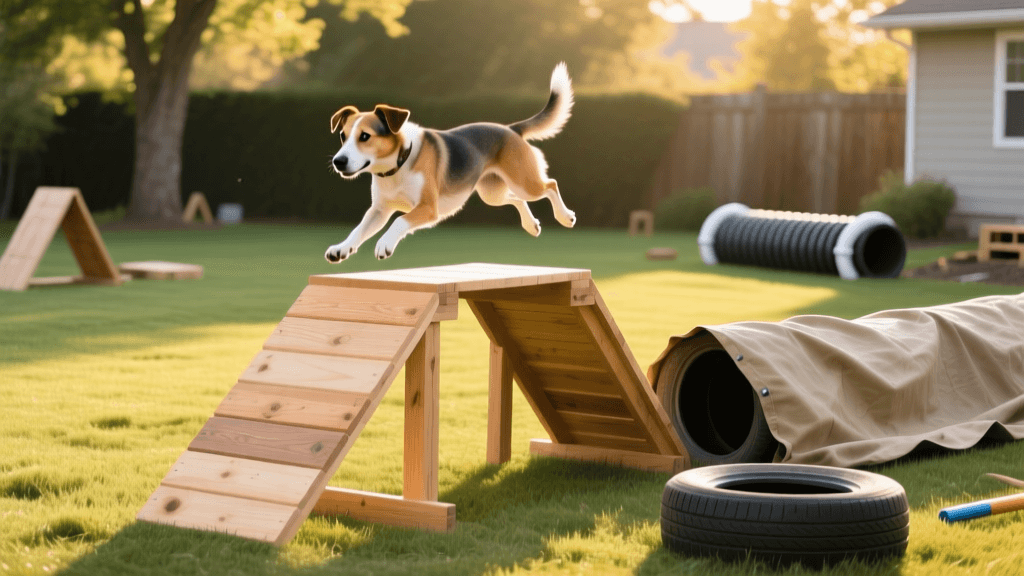
Agility training is one of the most rewarding activities you can share with your dog. It builds confidence, strengthens the human-animal bond, and provides essential physical and mental stimulation. However, outfitting a backyard with professional-grade agility equipment can easily cost thousands of dollars. Fortunately, with a little creativity and some basic hardware store supplies, you can create a highly effective, safe, and incredibly fun DIY agility course right in your own backyard.
According to the American Kennel Club, agility is a fast-paced canine sport that requires dogs to navigate a timed obstacle course, but you do not need to compete to reap the benefits. Backyard agility is a fantastic way to burn off excess energy, improve your dog's obedience, and teach complex behavioral conditioning using homemade solutions. In this comprehensive guide, we will explore how to build cost-effective DIY obstacles, formulate a structured training plan, and even whip up some homemade high-value training treats.
Essential DIY Agility Obstacles
When building your own equipment, safety and adjustability are your top priorities. Dogs of different sizes and skill levels require different heights and widths. Here is how to construct the four foundational obstacles using inexpensive, readily available materials.
1. The Adjustable PVC Bar Jump
The bar jump is the most common obstacle in agility. Commercial jumps feature quick-release mechanisms so the bar falls if the dog hits it, preventing injury. You can mimic this safety feature at home.
- Materials: Three 10-foot lengths of 1-inch PVC pipe, four PVC T-connectors, four PVC elbow joints, four end caps, and a lightweight wooden dowel or thinner PVC pipe for the crossbar.
- Measurements: Cut two 36-inch pieces for the uprights. Cut four 24-inch pieces for the base feet. Assemble the base into a T-shape on both sides for stability.
- The Safety Hack: Instead of drilling holes through the uprights (which creates a rigid, dangerous barrier), use heavy-duty zip ties or bungee cords to create loops on the uprights. Rest the crossbar in these loops so it easily dislodges upon impact.
- Cost: Approximately $18.
2. The Hula Hoop "Tire" Jump
The tire jump requires a dog to leap through a suspended circular opening. A standard hula hoop works perfectly for small to medium dogs.
- Materials: A sturdy hula hoop, PVC pipe for the outer frame (similar to the bar jump base), and bungee cords.
- Construction: Build a square or rectangular PVC frame slightly wider than the hula hoop. Suspend the hoop in the center using bungee cords stretched across the frame. The bungees provide tension but will give way if your dog misjudges the jump, ensuring they do not get tangled or injured.
- Cost: Approximately $12.
3. The 2x2 Weave Pole Method
Weave poles are notoriously difficult to train, but building a DIY set using the "2x2 method" (a popular training technique that breaks the weaves into pairs) makes the process much more manageable.
- Materials: Six to twelve 36-inch fiberglass garden stakes or flexible PVC pipes, and a rubber mallet.
- <
priya-sutaria
All our authors care for dogs every day — read more of their work on the authors page.