Dog and New Baby Transition in 2026: Nursery Tech & Safety
Prepare your dog for a new baby in 2026. Discover the best nursery monitors, safety gates, and desensitization routines for a safe, smooth family transition.
Navigating the Ultimate Life Transition: Dog and New Baby in 2026
Welcoming a new baby into your home is one of the most profound life transitions you will ever experience. For dog owners, this joyous milestone comes with a unique set of logistical and emotional challenges. Your dog has likely been the center of your universe, and a sudden shift in routine, attention, and household dynamics can lead to stress, anxiety, and behavioral regression. In 2026, advancements in smart home technology, AI-driven pet monitoring, and modern behavioral science have made this transition smoother than ever before. However, technology is only a supplement to proper training and preparation.
According to the American Kennel Club, the key to a harmonious multi-species household is gradual desensitization and establishing clear boundaries long before the baby arrives. This comprehensive guide will walk you through the essential steps, hardware upgrades, and 2026 smart tech integrations needed to prepare your dog for their new role as a gentle, protective older sibling.
The 9-Month Preparation Timeline
Waiting until the baby is home to introduce new rules is a recipe for disaster. Dogs thrive on predictability, and associating the baby's arrival with a sudden loss of privileges can breed resentment. Instead, break your preparation down by trimester.
First Trimester: Routine Adjustments
The first few months of pregnancy are the time to alter your dog's daily routine. If you currently let your dog sleep in your bed, but plan to transition them to a crate or a designated dog bed once the baby arrives, make that move now. Begin shifting walking schedules to match the realistic times you will be available postpartum. If you plan to hire a dog walker or enlist a neighbor, introduce them to your dog immediately so the change in handler does not coincide with the baby's homecoming.
Second Trimester: Sensory Desensitization
Dogs experience the world primarily through scent and sound. Start playing audio tracks of baby noises—crying, cooing, and the mechanical whir of a breast pump or swing—at a very low volume while feeding your dog high-value treats. Gradually increase the volume over several weeks. Introduce new scents like baby powder, diaper cream, and unscented baby lotion by letting your dog sniff them from a distance, rewarding calm behavior.
Third Trimester: Boundary Enforcement and Gear
This is the time to install physical barriers and finalize the nursery setup. Your dog must learn that the nursery is an invitation-only zone. Practice sending your dog to a 'place' mat or a designated safe zone outside the nursery door, rewarding them heavily for staying put while you simulate rocking a baby or folding tiny clothes.
Upgrading Your Physical Barriers: 2026 Safety Gate Guide
Physical management is just as important as behavioral training. In 2026, safety gates have evolved to offer better security, aesthetic integration, and hands-free operation for parents carrying infants. The Humane Society of the United States strongly recommends using baby gates to create safe, dog-free zones and to give dogs a voluntary retreat space away from the chaos of a crawling infant.
Choosing the right gate depends on your home's layout and your dog's size and agility. Below is a comparison of the top gate types utilized by modern pet parents.
| Gate Type | Best For | Pros | Cons |
|---|---|---|---|
| Hardware-Mounted (e.g., Cardinal Gates) | Top of stairs, high-traffic doorways | Maximum security; cannot be pushed over by large dogs; durable metal frames. | Requires drilling into walls/trim; leaves small holes when removed. |
| Pressure-Mounted (e.g., Regalo Wide Span) | Bottom of stairs, hallway dividers, doorways | No tools required; easy to move; budget-friendly. | Can be dislodged by large, energetic dogs; trip hazard at the bottom bar. |
| Retractable Mesh (e.g., Perma Child Safety) | Nursery doors, kitchen entrances, tight spaces | Rolls away completely when not in use; no trip hazard; scratch-resistant mesh. | Not suitable for top of stairs; mesh can sag over time if heavily leaned on. |
| Smart Auto-Closing (e.g., Qdos Flex) | Parents carrying baby; frequent pass-through areas | Hands-free closing mechanisms; integrates with modern home aesthetics. | Higher price point; mechanical parts may require maintenance. |
Pro Tip for 2026: If you have a large or athletic breed, avoid standard pressure-mounted gates with horizontal climbing bars. Dogs can easily use these as ladders. Opt for vertical-bar designs or smooth retractable mesh to prevent climbing injuries.
Smart Nursery Tech: AI Monitors and Pet Cameras
The integration of AI into home monitoring has revolutionized how parents manage the intersection of pet care and infant care. In 2026, you are not just buying a camera; you are investing in an intelligent co-pilot for your nursery.
AI-Enhanced Nursery Monitors
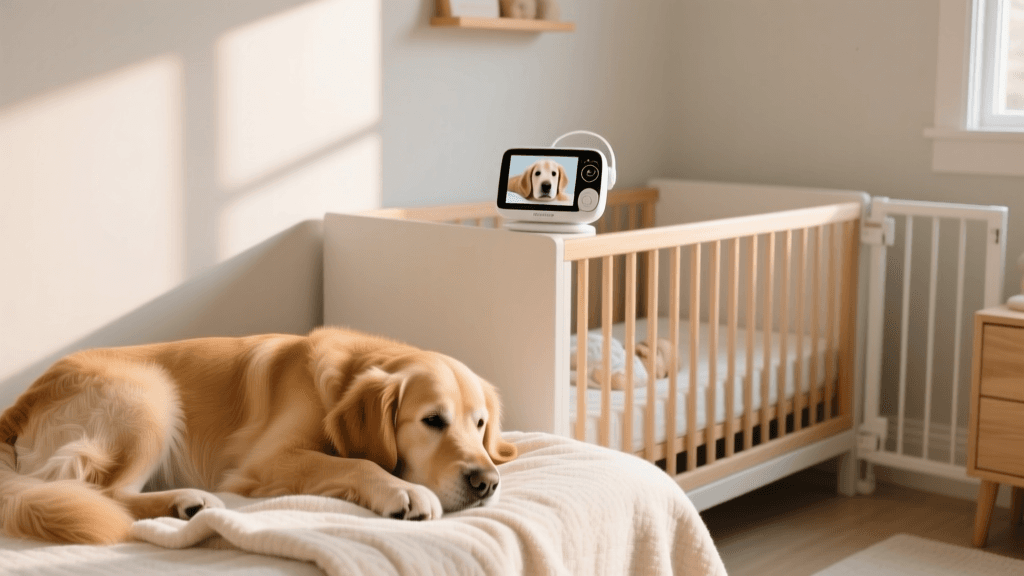
Modern smart monitors like the latest iterations of the Nanit Pro and Cubo Ai systems now feature advanced audio filtering. These systems can distinguish between the acoustic frequencies of a baby's cry and a dog's whine or bark, sending precise alerts to your smartphone. Furthermore, floor-level tracking zones allow you to draw a virtual boundary around the crib. If your dog breaches this digital perimeter, the monitor sends an immediate push notification, allowing you to intervene via two-way audio before the dog becomes overly curious.
Interactive Pet Cameras for Safe Zones
While the nursery is for the baby, your dog needs a rewarding safe zone. Place a Furbo 360 or Petcube Bites camera in your dog's designated retreat area (like the living room or a cozy den). When you are busy nursing or putting the baby down for a nap, you can use the app to check on your dog, speak to them in a calming voice, and toss a treat. This reinforces the idea that being in their safe zone while the baby is present yields high-value rewards, reducing jealousy and separation anxiety.
Sensory Desensitization and Stroller Training
Visual and tactile changes are just as jarring to a dog as auditory ones. The sudden appearance of a stroller, bouncy seats, and diaper bags can trigger herding or prey-drive behaviors in certain breeds.
- The Stroller Walk: Weeks before the baby arrives, start taking your dog on walks with the empty stroller. Teach them to walk politely on a loose leash beside it, rather than darting in front or nipping at the wheels. Reward them for ignoring the stroller's movements.
- The Doll Technique: While behaviorists debate the efficacy of treating a realistic baby doll like a real infant, it is highly useful for teaching your dog the 'leave it' and 'gentle' commands around a swaddled object. Practice carrying the doll, sitting on the couch, and asking your dog to sit at a respectful distance.
- Scent Swapping: When the baby is born, have your partner bring home a blanket or onesie the baby has worn before you return from the hospital. Let your dog sniff it thoroughly while on a leash, rewarding calm investigation. This ensures the baby's scent is familiar before the actual introduction.
The Homecoming: Orchestrating the First Introduction
The day you bring your baby home is emotionally charged, and your dog will feed off your energy. The ASPCA advises keeping the initial greeting as low-key and controlled as possible.
When you first walk through the door, the non-carrying parent should greet the dog first, allowing them to burn off initial excitement. Once the dog is calm, sit on the couch with the baby. Keep your dog on a leash for this first interaction, even if they have perfect recall. Allow the dog to approach slowly, sniffing the baby's feet or the blanket. Speak in a soft, encouraging tone and offer high-value treats like freeze-dried liver or boiled chicken. Keep the first session under two minutes, then happily lead the dog away to their safe zone with a long-lasting chew toy, like a stuffed Kong or a yak cheese chew.
Managing Postpartum Routine Shifts
The transition does not end after the first week. Postpartum life is unpredictable, and your dog's exercise needs will likely take a temporary backseat. To prevent pent-up energy from turning into destructive behavior, invest in mental enrichment. Snuffle mats, lick mats frozen with low-sodium bone broth, and automated puzzle toys can tire your dog out mentally when you lack the time for a rigorous three-mile hike.
Furthermore, consider utilizing a hands-free dog walking belt or a GPS-enabled dog backpack if you are cleared for light walks. This allows you to walk the dog while keeping your hands free to manage the stroller. Remember, grace and patience are required for both your newborn and your dog. By leveraging modern safety gates, 2026 smart monitoring tech, and proactive behavioral training, you are setting the foundation for a lifelong, beautiful bond between your child and their first best friend.
jonas-cole
All our authors care for dogs every day — read more of their work on the authors page.