DIY Scent Work Training: Build a Homemade Nosework Kit
Learn how to build a DIY scent work training kit at home. Discover homemade nosework tools, essential oil safety, and step-by-step canine conditioning.
The Rise of At-Home Canine Scent Work
Scent work, often referred to as nosework, is rapidly becoming one of the most popular and rewarding canine sports in the world. Originally designed to mimic the tasks of professional detection dogs, this activity allows pet dogs to use their most powerful sense to find specific target odors. According to the American Kennel Club (AKC), scent work is an inclusive sport that welcomes dogs of all ages, sizes, and physical abilities, making it an ideal training pursuit for reactive, senior, or high-energy dogs alike.
While you can easily purchase expensive starter kits online, building your own DIY scent work training kit at home is not only cost-effective but also allows for complete customization of your training environment. By utilizing household items and sourcing your own materials, you can create a professional-grade nosework setup for a fraction of the retail price.
The Science of the Sniff: Why Mental Conditioning Matters
Before diving into the DIY construction of your kit, it is essential to understand why scent work is so profoundly beneficial for your dog's behavioral conditioning. A dog's olfactory system is vastly superior to ours, possessing up to 300 million olfactory receptors compared to our mere six million. Furthermore, dogs possess a vomeronasal organ that allows them to process complex pheromones and chemical signatures in three dimensions. When a dog engages in scent work, they are performing intense cognitive processing and spatial mapping.
The Humane Society of the United States emphasizes that mental stimulation and enrichment activities are just as exhausting for a dog as rigorous physical exercise. Ten minutes of focused nosework can burn as much energy as a one-mile run, while simultaneously building confidence, reducing anxiety, and strengthening the bond between handler and hound.
Building Your DIY Scent Work Kit: Materials and Costs
To train effectively, you need a target odor, a way to contain it, and a method to handle it without cross-contamination. In official competitions, the three primary target odors are Birch, Anise, and Clove. For beginners, we will focus on creating a single-odor kit using Sweet Birch.
Essential Materials List
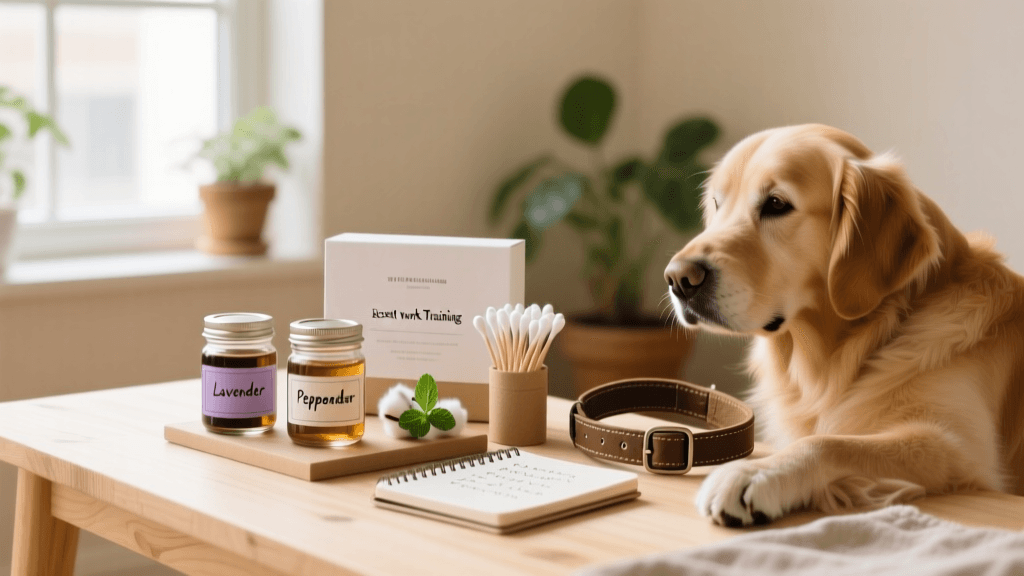
- Essential Oil: 100% pure Sweet Birch essential oil (approx. $8 - $12).
- Carrier Oil: Fractionated coconut oil or sweet almond oil to dilute the essential oil safely (approx. $5).
- Cotton Swabs: Standard Q-tips, which will be cut in half to create two hides (approx. $2).
- Hide Containers: Small metal tins with hinged lids (like empty Altoids tins) or specialized scent work tins with pre-drilled holes (approx. $5 for a multi-pack).
- Handling Tweezers: Stainless steel tweezers to handle the cotton swabs without transferring human scent or contaminating the odor (approx. $3).
- Glass Dropper Bottles: 10ml amber glass bottles for storing the diluted odor mixture (approx. $4).
Preparing the Target Odor Safely
Safety is paramount when working with concentrated essential oils. Never apply essential oils directly to your dog's skin, nose, or fur, as they can cause severe chemical burns or systemic toxicity. Always work in a well-ventilated area away from your dog while prepping.
- Take your 10ml amber glass dropper bottle and fill it halfway with your carrier oil (fractionated coconut oil).
- Add exactly one drop of Sweet Birch essential oil to the carrier oil.
- Top off the rest of the bottle with the carrier oil, cap it tightly, and shake vigorously for 30 seconds to ensure proper dilution.
- Using your tweezers, hold a single cotton swab and apply one small drop of the diluted mixture to the cotton tip.
- Cut the swab in half using scissors, creating two separate scent sources.
- Place the scented swab inside your metal tin. If using a standard Altoids tin, poke three or four small holes in the lid using a hammer and nail so the odor can escape without the dog accessing the cotton.
Pro Tip: Always store your essential oils and prepared scent tins in a sealed glass jar or a dedicated tackle box to prevent the odor from permeating your home and contaminating your training environment.
Step-by-Step Homemade Nosework Training Protocol
With your DIY kit assembled, it is time to begin the behavioral conditioning process. The goal is to teach the dog that finding the specific odor results in a high-value reward.
Phase 1: Imprinting the Odor (The Pairing Game)
Start in a quiet, low-distraction room. Place your prepared scent tin on the floor. The moment your dog approaches and sniffs the tin, immediately mark the behavior with a clicker or a verbal 'Yes!' and place a high-value treat (such as freeze-dried liver or boiled chicken) directly on top of the tin. Repeat this process 10 to 15 times per session. The dog must learn that the odor predicts the food.
Phase 2: The DIY Box Search
Gather five to six identical cardboard shipping boxes. Place them in a scattered pattern on the floor. Put the scent tin inside one of the boxes, leaving the others empty. Encourage your dog to 'Find it.' When they locate the correct box and indicate the odor (by freezing, staring, or pawing), reward them heavily directly at the source. Rotate the placement of the tin to ensure the dog is following their nose, not just memorizing a visual pattern.
Phase 3: Interior Room Searches and Elevation
Once your dog is reliably searching boxes, move the hides into the natural environment. Use painter's tape to secure your scent tins to the legs of chairs, the baseboards, or the sides of trash cans. Introduce the concept of elevation by placing tins on low shelves or countertops. This mimics real-world scenarios where scent pools and travels along air currents.
Phase 4: Threshold and Exterior Searches
Advance your training by hiding the tin just outside your front door or in your backyard. Threshold searches teach the dog to transition from a relaxed state into a working mindset the moment they cross a doorway. Exterior searches introduce environmental distractions like wind, grass, and wildlife scents, requiring intense focus and proofing of the target odor.
Cost Comparison: Store-Bought vs. DIY Scent Work Kits
One of the most compelling reasons to embrace homemade training solutions is the significant financial savings. Below is a breakdown comparing the costs of a commercial starter kit versus our DIY approach.
| Item Category | Commercial Kit Cost | DIY Homemade Cost | DIY Advantage |
|---|---|---|---|
| Starter Odor Kit (Birch) | $45.00 - $60.00 | $15.00 (Oil + Carrier) | Massive savings; yields dozens of hides. |
| Hide Containers (Tins) | $15.00 (for 4 tins) | $5.00 (multi-pack or free upcycled) | Upcycling household items reduces waste. |
| Handling Tweezers | $12.00 | $3.00 (pharmacy or beauty supply) | Identical utility for a fraction of the cost. |
| Training Boxes/Props | $30.00 (specialty cardboard) | $0.00 (upcycled delivery boxes) | Eco-friendly and easily replaceable. |
| Total Estimated Cost | $102.00 - $117.00 | $23.00 | Save over 75% with DIY methods. |
Safety Precautions and Handling Rules
When engaging in DIY scent work, maintaining the integrity of the odor and the safety of your pet is critical. The National Association of Canine Scent Work (NACSW) outlines strict guidelines for odor handling to ensure fair and safe searches for the dogs.
- Avoid Cross-Contamination: Never touch the scented cotton swabs with your bare hands. The oils will transfer to your skin, and you will inadvertently leave your scent trail everywhere you touch, confusing your dog during the search.
- Proper Storage: Store your prepared tins in a glass mason jar with a tight-fitting lid. Plastic containers are porous and will absorb the essential oils, making them useless for future storage and potentially contaminating other items in your home.
- Monitor for Fatigue: Nosework is mentally taxing. Keep training sessions short—between 3 to 5 minutes for beginners. If your dog starts sniffing the floor aimlessly or wandering away, they have reached cognitive fatigue. End the session on a positive note with an easy, successful find.
- Essential Oil Toxicity: Keep all undiluted essential oils locked away in a high cabinet. While Birch, Anise, and Clove are standard for canine sports, ingestion of concentrated oils can lead to gastrointestinal distress or neurological symptoms. Always consult your veterinarian if accidental ingestion occurs.
Conclusion: Unlocking Your Dog's Potential
Building a DIY scent work training kit is a deeply rewarding project that opens the door to one of the most enriching activities you can share with your dog. By utilizing household items, sourcing your own high-quality essential oils, and following a structured, positive-reinforcement training protocol, you can provide your dog with hours of mental stimulation and behavioral conditioning. Not only will you save a significant amount of money compared to commercial kits, but you will also gain a profound appreciation for the incredible olfactory capabilities of your canine companion. Grab your tweezers, prep your tins, and let the sniffing games begin!
jonas-cole
All our authors care for dogs every day — read more of their work on the authors page.