Operant Conditioning: Science of Variable Reward Schedules for Recall
Discover the science of variable reward schedules to proof your dog's recall. Learn actionable timing, treat metrics, and operant conditioning steps.

The Neuroscience of Canine Recall: Why Predictability Fails
Every dog owner dreams of a bulletproof recall—the ability to call your dog away from a squirrel, a dropped steak, or an open gate and have them sprint back with enthusiasm. However, many owners hit a plateau where their dog responds perfectly in the living room but completely ignores the 'come' command at the local park. The culprit is rarely stubbornness; rather, it is a misunderstanding of operant conditioning and canine neurobiology.
When you reward your dog with a treat every single time they come to you, you are utilizing a Continuous Reinforcement (CRF) schedule. While CRF is excellent for teaching a new behavior, it creates a predictable neurological loop. According to studies on dopamine prediction error, when a reward is 100% predictable, a dog's brain releases dopamine before the behavior in anticipation. If you reach into your pocket and realize you forgot the treats, the expected reward is missing. The dopamine crashes, and the behavior rapidly undergoes 'extinction.' The dog learns that the recall command is only worth obeying when they see the bait.
To build a recall that survives real-world distractions, we must transition to a Variable Ratio (VR) schedule of reinforcement. Often compared to a slot machine, a VR schedule rewards the behavior after an unpredictable number of responses. This unpredictability causes a sustained, elevated baseline of dopamine in the canine brain, keeping motivation incredibly high and making the behavior highly resistant to extinction.
Continuous vs. Variable Reinforcement: A Data Comparison
Understanding the mathematical difference between reinforcement schedules is critical for proofing any obedience command. Below is a comparison of how different schedules impact acquisition speed and long-term reliability.
| Schedule Type | Definition | Acquisition Speed | Resistance to Extinction | Best Use Case |
|---|---|---|---|---|
| Continuous (CRF) | Reward given after every correct response. | Very Fast | Very Low | Initial teaching of a brand new behavior. |
| Fixed Ratio (FR-3) | Reward given after a set number of responses (e.g., every 3rd time). | Fast | Low to Moderate | Building endurance, but can cause 'post-reinforcement pauses'. |
| Variable Ratio (VR-5) | Reward given after an unpredictable number of responses (averaging 5). | Moderate | Extremely High | Proofing recall, leash walking, and high-distraction obedience. |
The Partial Reinforcement Extinction Effect (PREE): Behavioral science dictates that behaviors learned under continuous reinforcement will extinguish rapidly when rewards stop. Behaviors conditioned under variable schedules persist much longer without a reward because the dog's brain assumes the 'next' attempt might be the jackpot.
Step-by-Step Protocol: Transitioning to a Variable Ratio Schedule
To effectively proof your dog's recall using the 'slot machine' method, follow this structured 4-week protocol. You will need a 15-to-30-foot long-line (Biothane lines cost around $45-$60 and resist tangling, while nylon options are $15-$20), a treat pouch, and high-value rewards.
Phase 1: Continuous Reinforcement (Week 1)
Start in a low-distraction environment like your hallway or living room. Call your dog using your chosen marker (e.g., 'Fido, come!'). The moment they move toward you, use a bridge word like 'Yes!' or click a clicker. When they reach you, deliver a treat. Repeat this 20 times per session, twice a day. Actionable Metric: Use pea-sized treats (approx. 1-2 calories each) to prevent caloric overload. Brands like Zuke's Mini Naturals are ideal. At 40 treats a day, you are adding roughly 60-80 calories to their daily intake. Reduce their kibble meals accordingly.
Phase 2: The Transition to VR-2 (Week 2)
Move to a slightly more distracting environment, like a fenced backyard. Now, you will reward the dog on a Variable Ratio of 2 (VR-2). This means the dog is rewarded on average every two recalls, but the pattern must be random. Example Sequence: Call, reward. Call, call, reward. Call, reward. Call, call, call, reward. If the dog fails to respond during an unrewarded trial, do not repeat the command. Gently reel them in using the long-line, reset, and try again at a shorter distance.
Phase 3: The Slot Machine VR-5 (Weeks 3 & 4)
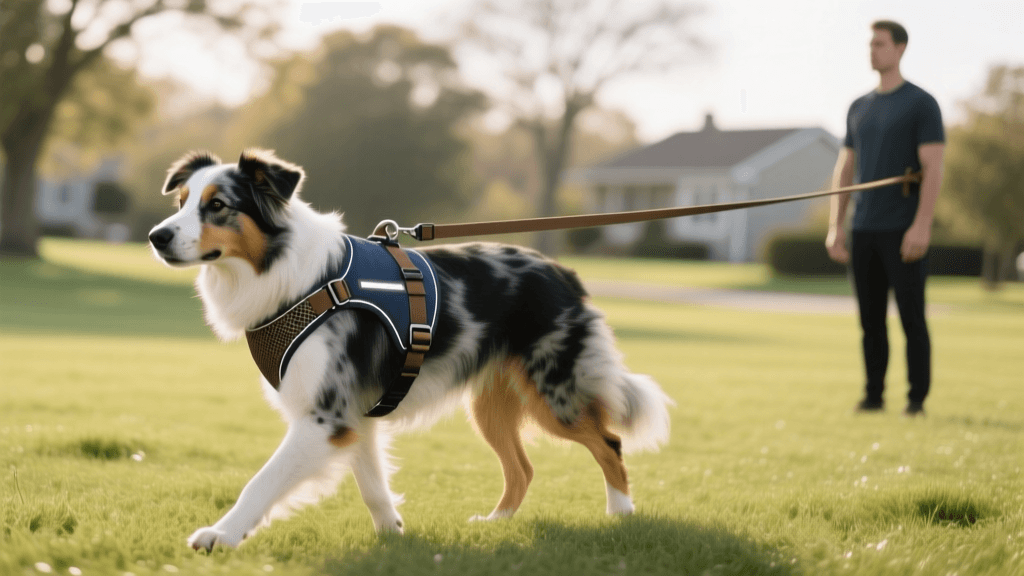
Take your training to the park using a 30-foot long-line for safety. You are now aiming for a VR-5 schedule. The dog may have to come to you four times for just a 'good boy' and verbal praise, but on the fifth recall, they receive a 'jackpot'—a handful of high-value treats like freeze-dried Stella & Chewy's Meal Mixers or boiled chicken. This massive, unpredictable dopamine spike cements the recall as a high-value gamble that the dog is always willing to take.
Actionable Metrics: Treat Valuation and Timing
Science shows that the timing and valuation of the reward are just as important as the schedule. To optimize your training sessions, adhere to these strict metrics:
- The 300-Millisecond Rule: Your marker word ('Yes!') or clicker must occur within 300 milliseconds of the dog making the decision to turn toward you. Delaying the marker until the dog reaches you fails to capture the exact neurological moment of the correct choice.
- Low-Value Rewards: Kibble or dry biscuits. Cost: ~$2/lb. Use only in zero-distraction environments or for continuous reinforcement of easy behaviors.
- Medium-Value Rewards: Commercial soft chews (e.g., Earthborn Holistic Soft Rewards). Cost: ~$12-$15/bag. Use for VR-2 and VR-3 schedules in moderate-distraction environments.
- High-Value Rewards (Jackpots): Real meat, cheese, or freeze-dried liver. Cost: ~$20-$30/lb. Reserve these exclusively for the 'jackpot' moments in a VR-5 or VR-10 schedule when the dog abandons a massive distraction (like another dog) to return to you.
Beyond Food: The Premack Principle
While food is a primary reinforcer, the Premack Principle states that a high-probability behavior can be used to reinforce a low-probability behavior. In the context of recall, if your dog wants to run off and sniff a bush (high probability), you can use the 'come' command (low probability). When the dog returns to you, the 'jackpot' reward is not a piece of chicken, but rather the release cue ('Go sniff!') that allows them to return to the bush. Incorporating life-rewards into your variable schedule prevents treat-satiation and mimics real-world scenarios where you may not have food on hand.
Troubleshooting the 'Extinction Burst'
When you first transition from giving a treat every time to a variable schedule, you may encounter an 'extinction burst.' This is a sudden, temporary worsening or escalation of the behavior. Your dog might come to you, realize there is no treat, and immediately bolt away again, or they might bark at you in frustration. The Science-Backed Solution: Do not revert to continuous reinforcement, or you will accidentally reinforce the extinction burst. Hold your ground, reset the dog using your long-line, and wait for a successful recall to deliver a massive jackpot reward. The burst will extinguish quickly if you remain consistent.
Summary and Scientific Consensus
Proofing a reliable recall is not about dominance or repetition; it is about hacking the canine dopamine system through intelligent operant conditioning. By systematically moving from continuous reinforcement to a variable ratio schedule, you transform your recall command from a predictable transaction into an irresistible game of chance.
The scientific community overwhelmingly supports reward-based methodologies over aversive ones. According to the American Veterinary Society of Animal Behavior (AVSAB), reward-based training is not just more humane, but scientifically superior for long-term retention, cognitive welfare, and avoiding fear-based fallout. Furthermore, the Humane Society of the United States emphasizes that positive reinforcement builds a bond of trust, which is critical when asking a dog to abandon a high-distraction environment to return to you. Finally, resources and behavioral journals indexed by the Association of Professional Dog Trainers (APDT) consistently demonstrate that variable reward schedules yield the highest resistance to extinction in companion animals, ensuring your dog comes back every single time.
robin-maitland
All our authors care for dogs every day — read more of their work on the authors page.