DIY Puppy-Proofing: Prep Your Home on a Tight Budget
Learn how to DIY puppy-proof your home on a budget. Discover homemade gates, cheap cord protectors, and pet-safe cleaners for your new dog's arrival.
Welcoming Your New Dog Without Breaking the Bank
Bringing a new dog or puppy into your home is one of life's most thrilling experiences. However, the preparation phase can quickly become overwhelming, especially when you start browsing pet stores for specialized safety gear. From freestanding wooden pet gates to heavy-duty cord concealers, the 'must-have' lists found online can easily drain your wallet before your new best friend even walks through the door. Fortunately, preparing your home for a new dog does not require a second mortgage. By embracing a DIY and homemade approach, you can create a safe, enriching, and secure environment for a fraction of the retail cost.
According to the Humane Society of the United States, proper environmental management is the cornerstone of successful house training and behavioral development. Puppies explore the world with their mouths, and adult rescue dogs may exhibit anxiety-induced chewing when adjusting to a new space. This guide will walk you through practical, budget-friendly DIY solutions to puppy-proof every corner of your home.
The 'Puppy-Eye View': Conducting a DIY Home Audit
Before you cut a single piece of PVC pipe or mix a homemade cleaner, you must understand your home from your new dog's perspective. The American Kennel Club (AKC) strongly recommends getting down on your hands and knees to conduct a thorough home audit. At this level, you will spot hazards that are completely invisible from a standing position.
The DIY Audit Checklist:
- Small Objects: Coins, hair ties, children's toys, and dropped pills are major choking and intestinal blockage hazards. Use a DIY 'sweep-and-scoop' method with a dustpan to clear under low-clearance furniture.
- Low-Hanging Textiles: Curtains, blankets, and rug fringes are irresistible to teething puppies. Tie up curtains using cheap, upcycled ribbon or twine to keep them out of the chewing zone.
- Houseplants: Many common houseplants are highly toxic to dogs. Move all potted plants to high shelves or hang them from the ceiling using inexpensive macrame hangers you can weave from old cotton t-shirts.
- Cabinet Latches: You do not need expensive magnetic locks. For lower cabinets containing cleaning supplies, use heavy-duty rubber bands looped around adjacent cabinet knobs to prevent a dog from nudging them open.
Homemade Cord and Cable Management
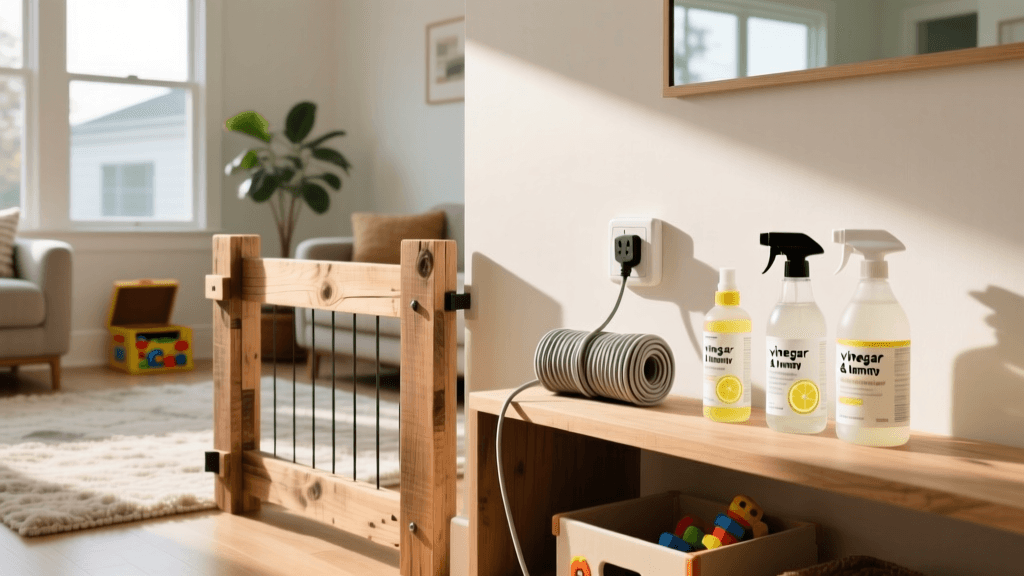
Electrical cords pose a severe shock, burn, and fire hazard. While pet stores sell plastic cord channels for upwards of $30 a pack, you can achieve the same level of protection using basic hardware store materials.
The PVC Pipe Split-Tube Method
Visit your local hardware store and purchase a 10-foot length of 1/2-inch or 3/4-inch PVC pipe (usually under $5). Using a hacksaw or a strong pair of tin snips, carefully cut a single slit down the entire length of the pipe. You can now peel the pipe open and snap it over your bundled TV, computer, and lamp cords. The hard PVC is virtually chew-proof and costs pennies per foot compared to retail pet-specific cord protectors.
The Split-Loom Tubing Alternative
If you need something more flexible for corners, automotive split-loom tubing is a fantastic DIY hack. Sold in the auto-parts section for protecting car wiring, a 25-foot roll costs about $8 and features a pre-cut slit for easy cord insertion. Secure the ends with black electrical tape to keep your dog from pulling the wires out.
DIY Pet Gates and Barrier Hacks
Restricting your new dog's access to certain rooms (like carpeted bedrooms or rooms with fragile items) is essential during the first few months. Retail baby gates can cost anywhere from $50 to $150. Here are two highly effective homemade alternatives.
The Tension Rod and Canvas Gate
For standard doorways, purchase an inexpensive spring-loaded shower tension rod ($10-$15) and a piece of heavy-duty canvas drop cloth or thick upholstery fabric. Fold the top edge of the canvas over the rod and sew a sleeve, or use heavy-duty fabric glue. When installed tightly in a doorframe, the canvas acts as a visual and physical barrier for small to medium dogs. To create a 'door', simply attach Velcro strips to one side of the canvas and the doorframe, allowing you to peel it back when you need to walk through.
The Upcycled Pallet Pen
If you need a larger playpen area for a puppy, look for free or cheap wooden shipping pallets. Sand them down thoroughly to prevent splinters, and use heavy-duty zip ties or metal mending plates to hinge them together. You can create a custom-sized, freestanding pen that folds flat for storage, entirely out of reclaimed materials.
Cost Comparison: Retail vs. DIY Puppy-Proofing
Understanding the financial impact of DIY puppy-proofing can help you allocate your budget toward more important things, like high-quality food and veterinary care. Below is a comparison of standard retail prices versus homemade solutions.
| Item | Retail Store Cost | DIY / Homemade Cost | Total Savings |
|---|---|---|---|
| Freestanding Pet Gate | $75.00 | $12.00 (Tension Rod & Canvas) | $63.00 |
| Cord Protector Channels | $35.00 | $4.50 (PVC Pipe Slits) | $30.50 |
| X-Large Puppy Playpen | $110.00 | $15.00 (Sanded Pallets & Zip Ties) | $95.00 |
| Cabinet Safety Latches | $20.00 | $2.00 (Rubber Bands) | $18.00 |
| TOTAL | $240.00 | $33.50 | $206.50 |
DIY Backyard and Balcony Safety
If you have outdoor space, securing the perimeter is non-negotiable. Chain-link fences often have gaps at the bottom where a determined puppy can dig and escape.
The Chicken Wire Dig-Barrier
Instead of pouring expensive concrete footers, purchase a roll of galvanized chicken wire or hardware cloth. Bury the wire just two inches below the soil line along the perimeter of your fence, extending it about a foot outward into the yard. When your dog attempts to dig at the fence line, they will hit the wire and stop. You can then cover the wire with a thin layer of mulch or topsoil to protect their paws and maintain your landscaping.
Balcony Railing Spacers
For apartment dwellers, balcony railings can be a terrifying hazard if the gaps are wide enough for a small dog's head to slip through. Use heavy-duty outdoor zip ties to secure bamboo garden fencing or plastic snow fencing to the inside of your balcony rails. This creates a solid, breathable, and incredibly cheap barrier that keeps your pup safely contained.
Homemade Pet-Safe Cleaning Solutions
When your new dog inevitably has a house-training accident, your first instinct might be to reach for harsh chemical cleaners. However, the ASPCA Animal Poison Control warns that many household cleaners, especially those containing bleach or ammonia, are highly toxic to pets. Furthermore, ammonia smells like urine to a dog, which can actually encourage them to re-mark the same spot.
DIY Odor-Neutralizing Floor Cleaner
You can mix a highly effective, pet-safe floor cleaner using ingredients you likely already have in your pantry. Combine 1 cup of distilled white vinegar, 1 gallon of warm water, and 3 drops of unscented castile soap in a bucket. The vinegar neutralizes alkaline odors and cuts through grease, while the castile soap lifts dirt. Note: While vinegar is excellent for general cleaning and deodorizing, for deep-set uric acid stains in carpets, you may eventually need a commercial bio-enzymatic cleaner to fully break down the proteins.
The Baking Soda Mattress Rescue
If an accident happens on a dog bed or mattress, blot the area with a towel, then generously cover the damp spot with plain baking soda. Let it sit for 12 hours to draw out the moisture and odors, then vacuum it up. It costs pennies and works just as well as expensive upholstery shampoos.
Distraction Tactics: Upcycled Chew Toys
The best way to protect your furniture is to give your dog something better to chew. Instead of spending $20 a week on destructible plush toys, try these homemade alternatives:
- The Braided T-Shirt Rope: Cut old, clean cotton t-shirts into long strips. Braid three or four strips together as tightly as possible, and tie massive overhand knots at both ends. This creates a durable, washable tug-and-chew toy that satisfies a puppy's need to gnaw.
- The Frozen Broth Block: Fill an ice cube tray or a small Tupperware container with low-sodium, onion-free chicken broth. Drop in a few pieces of carrot or dog-safe kibble, and freeze it solid. On a hot day, or when the puppy is teething, pop the block into a shallow bowl. It provides hours of mental stimulation and soothes inflamed gums.
'Management is the bridge between bringing a dog home and achieving reliable training. A well-proofed environment sets your dog up for success by removing the opportunity to practice unwanted behaviors.'
Final Thoughts on Management vs. Training
Ultimately, DIY puppy-proofing is about setting your new dog up for success. By utilizing tension rods, PVC pipes, upcycled fabrics, and homemade cleaners, you can secure your home safely and affordably. Remember that puppy-proofing is a management tool, not a replacement for active training and supervision. As your dog matures, learns the rules of the house, and outgrows the intense teething phase, you can gradually remove these DIY barriers and open up your home to them fully. Welcome to the incredibly rewarding journey of dog ownership—made just a little bit easier, and much more affordable, through the power of DIY.
marcus-aldridge
All our authors care for dogs every day — read more of their work on the authors page.