DIY Dog Enrichment: Homemade Puzzle Toys and Snuffle Mats
Discover budget-friendly DIY dog enrichment ideas. Learn how to make homemade snuffle mats and puzzle toys to keep your pup mentally stimulated daily.
The Importance of Canine Mental Enrichment
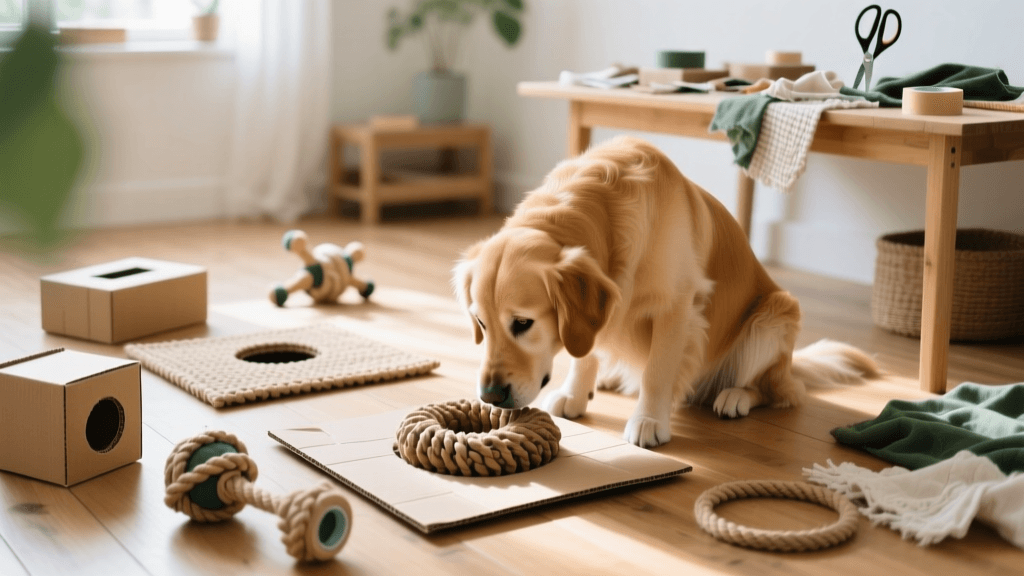
Dogs are intelligent, working animals that crave mental stimulation just as much as physical exercise. In the wild, canines spend the majority of their waking hours foraging, scavenging, and solving problems to secure their next meal. In our modern homes, meals are often handed to them in a bowl in a matter of seconds, which can lead to boredom, anxiety, and destructive behaviors. According to The Humane Society of the United States, providing daily mental enrichment is crucial for a dog's emotional well-being and can significantly reduce behavioral issues stemming from pent-up energy.
While the pet market is flooded with expensive puzzle toys and interactive feeders, you do not need to spend a fortune to keep your dog entertained. By leveraging DIY and homemade solutions, you can create highly effective, customizable, and budget-friendly enrichment tools using everyday household items. Below, we explore three highly actionable DIY dog enrichment projects, complete with measurements, cost breakdowns, and step-by-step instructions.
Project 1: The Ultimate DIY Fleece Snuffle Mat
A snuffle mat mimics the natural foraging behavior of dogs by hiding dry kibble or small treats within strips of fabric. It engages their primary sense—smell—and slows down fast eaters.
Materials and Cost Breakdown
- 1 Rubber Sink Mat with Holes: 12x18 inches (Approx. $6 at a hardware or dollar store)
- 1.5 Yards of Anti-Pill Fleece: You will need two contrasting colors (Approx. $12 total at a craft store)
- Sharp Fabric Scissors: (Household item)
- Total Estimated Cost: $18.00
Step-by-Step Instructions
- Prep the Fleece: Lay your fleece flat and cut it into strips measuring exactly 7 inches long and 2 inches wide. You will need roughly 150 to 200 strips depending on the density you desire.
- Secure the Base: Lay the rubber sink mat flat on a table. The mat should have a grid of holes roughly half an inch apart.
- Tie the Strips: Take one fleece strip and thread it through a single hole from the top down. Pull both ends up and tie a tight double knot on the top side of the mat.
- Fill the Grid: Repeat this process, tying strips into every available hole on the mat. Alternate colors if you wish to create a pattern. For a denser mat that is more challenging for your dog, tie strips into adjacent holes in alternating rows.
- Fluff and Hide: Once all strips are tied, fluff the fleece outward. Sprinkle your dog's dry kibble or freeze-dried treats deep into the base of the fleece strips.
Project 2: Upcycled Muffin Tin Puzzle Feeder
This is an excellent, zero-waste DIY puzzle that utilizes items you likely already have in your kitchen. It requires your dog to use their paws and nose to dislodge obstacles to reach their reward.
Materials Needed
- Standard 12-Cup Muffin Tin: (Upcycled / Free)
- 12 Tennis Balls or Rubber Fetch Balls: Must be large enough that they cannot be swallowed (Approx. $4 for a pack)
- High-Value Treats or Kibble
- Total Estimated Cost: $4.00
How to Build and Use It
Place the muffin tin on a non-slip surface, such as a silicone baking mat or a folded towel, to prevent it from sliding across hard floors. Drop two or three pieces of kibble into each of the 12 cups. Place one tennis ball over each cup, completely covering the treats. Your dog must figure out how to nudge, paw, or lift the tennis balls out of the way to access the food. To increase the difficulty, only place treats in four of the cups, meaning your dog has to use their nose to search and discard the 'empty' ball-covered cups.
Project 3: The PVC Pipe Treat Dispenser
For dogs that love to bat things around with their paws, a homemade PVC treat dispenser is a durable, heavy-duty alternative to expensive commercial wobble toys.
Materials and Tools
- 1.5-Inch Diameter PVC Pipe: Cut to 12 inches in length (Approx. $3)
- 2 PVC End Caps: 1.5-inch diameter (Approx. $2)
- Power Drill with a 3/4-Inch Hole Saw Bit
- Sandpaper (80-grit)
- Total Estimated Cost: $5.00 (excluding tools)
Assembly Instructions
- Drill the Holes: Using the hole saw bit, drill three to four holes randomly along the length of the PVC pipe. Ensure the holes are slightly larger than the kibble you plan to use, but not so large that treats fall out without the dog interacting with the toy.
- Sand the Edges: This is a critical safety step. Thoroughly sand the inside and outside edges of every drilled hole to remove any sharp plastic burrs that could cut your dog's mouth or paws.
- Cap the Ends: Firmly press a PVC end cap onto each side of the pipe. For a more permanent seal, you can use a pet-safe, non-toxic PVC primer and cement, but friction-fitting allows you to remove the caps for easy cleaning and refilling.
- Test and Play: Fill the tube with a cup of kibble, cap it, and let your dog roll it across the floor to dispense their meal.
Cost Comparison: Store-Bought vs. DIY Enrichment Toys
Creating your own enrichment tools offers massive financial benefits, especially for multi-dog households or owners of heavy chewers who destroy commercial toys quickly.
| Toy Type | Average Store-Bought Cost | Estimated DIY Cost | Time to Make | Durability Rating |
|---|---|---|---|---|
| Snuffle Mat | $35.00 - $50.00 | $18.00 | 45 Minutes | High (Machine Washable) |
| Puzzle Feeder Board | $20.00 - $40.00 | $4.00 (Muffin Tin) | 2 Minutes | Medium |
| Treat Dispensing Tube | $15.00 - $25.00 | $5.00 (PVC Pipe) | 15 Minutes | Very High |
| Interactive Wobble Toy | $25.00 - $45.00 | $6.00 (Upcycled Bottle) | 5 Minutes | Low to Medium |
Adapting Puzzles for Different Skill Levels
Just like humans, dogs can become frustrated if a puzzle is too difficult, or bored if it is too easy. You must adapt your homemade toys to your dog's cognitive skill level.
- Beginner: Use highly aromatic treats (like freeze-dried liver) in the snuffle mat, and leave them partially visible. For the muffin tin, only cover three cups with tennis balls and leave the rest open.
- Intermediate: Hide treats deeper in the snuffle mat. Use the PVC pipe with only two drilled holes, requiring more rolling and precision to dispense the food.
- Advanced: Combine puzzles. Hide the PVC pipe dispenser inside a cardboard box filled with crumpled paper, forcing the dog to unpack the box before they can even begin rolling the tube. For the muffin tin, wrap the tennis balls in old, clean rags before placing them in the cups, adding an unwrapping layer to the puzzle.
Cleaning and Maintaining Your Homemade Toys
Hygiene is paramount when dealing with food-based enrichment. Saliva and food residue can harbor bacteria and mold over time.
- Snuffle Mats: Shake out loose crumbs after every use. Machine wash the fleece mat on a gentle cycle with a pet-safe, unscented detergent once a week. Air dry or tumble dry on low heat to prevent the fleece from melting or warping.
- Muffin Tins: Wash in the dishwasher or with hot, soapy water after every use. Ensure the tin is completely dry before storing to prevent rust, especially if using older, non-stainless steel tins.
- PVC Pipes: Remove the end caps weekly. Wash the inside with warm water and a bottle brush. Sanitize by soaking in a solution of one part white vinegar to one part water for ten minutes, then rinse thoroughly and air dry.
Safety First: What to Avoid in Homemade Dog Toys
When crafting DIY solutions, safety must always be the priority. According to the ASPCA Animal Poison Control, many common household adhesives, paints, and plastics contain chemicals that are highly toxic to canines if ingested. Never use super glue, hot glue, or toxic wood stains on any toy that will go into your dog's mouth. Avoid using small plastic bottle caps, buttons, or coins inside puzzle boxes, as these present severe choking and intestinal blockage hazards. Always use food-grade materials, like untreated wood, stainless steel, and pet-safe PVC, whenever possible.
Integrating DIY Puzzles into Your Daily Routine
Enrichment should not be a once-a-week novelty; it should be a cornerstone of your daily routine. Experts at Fear Free Pets recommend rotating your dog's toys to maintain their novelty and prevent habituation. Keep two or three different DIY puzzles in rotation. Use the snuffle mat for their morning breakfast, the muffin tin for an afternoon boredom-buster while you work, and the PVC dispenser for an evening wind-down activity. By consistently integrating these homemade solutions into your dog's daily life, you will foster a calmer, happier, and more cognitively engaged companion, all while keeping your wallet full and your home clutter-free.
jonas-cole
All our authors care for dogs every day — read more of their work on the authors page.