Diagnosing and Solving Dog Leash Reactivity on Walks
Is your dog barking and lunging on walks? Learn how to diagnose leash reactivity triggers and apply proven, step-by-step solutions for peaceful strolls.
Understanding Leash Reactivity: Frustration vs. Fear
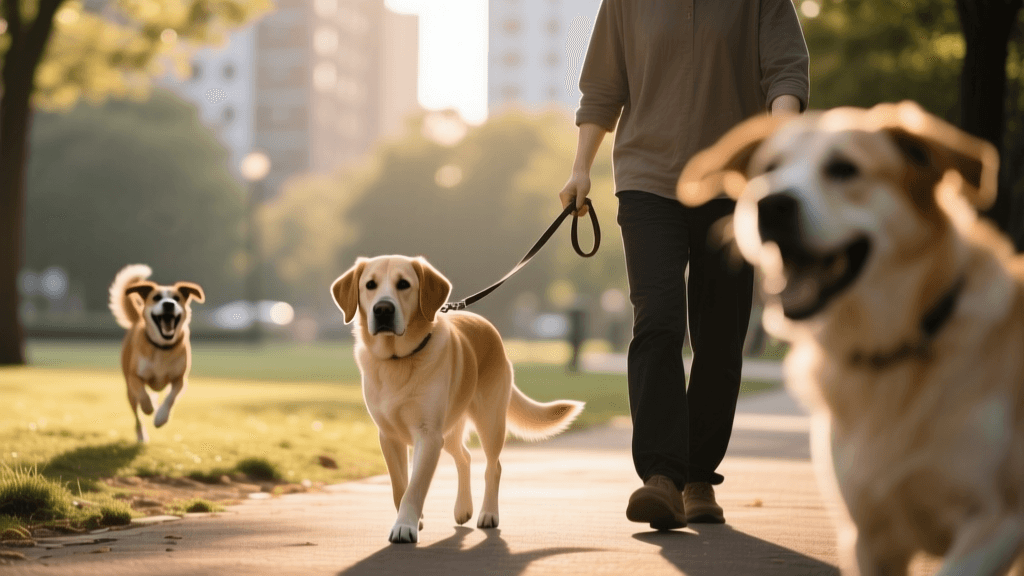
Walking your dog should be a relaxing bonding experience, but for owners of reactive dogs, it often feels like navigating a minefield. Leash reactivity—characterized by barking, lunging, growling, or pulling toward specific triggers—is one of the most common behavioral issues reported by pet parents. According to the American Kennel Club (AKC), reactivity is rarely about true aggression; it is typically an overreaction driven by fear, anxiety, or barrier frustration. The leash itself acts as a barrier, making the dog feel trapped and unable to perform natural flight or avoidance behaviors.
To solve the problem, we must first diagnose the root cause. Fear-based reactivity occurs when a dog wants to increase the distance between themselves and a trigger (like an unfamiliar dog or a loud truck). Frustration-based reactivity, often seen in highly social dogs, happens when the leash prevents them from rushing over to say hello. While the outward behavior (lunging and barking) looks identical, the underlying emotional state requires slightly different management strategies.
Diagnosing Your Dog's Specific Triggers and Thresholds
Before you can train, you must become a detective. Reactivity is entirely dependent on context. You need to identify two critical metrics: the trigger and the threshold.
- The Trigger: What exactly sets your dog off? Is it all dogs, or only large black dogs? Is it men wearing hats, skateboards, or sudden loud noises? Keep a reactivity journal for one week, noting the time of day, environment, and specific trigger.
- The Threshold: This is the exact distance at which your dog notices a trigger but remains capable of thinking and taking treats. If your dog is barking and refusing food, you have crossed the threshold (often called 'going over threshold'). For some dogs, this distance is 15 feet; for others, it is 100 feet.
The ASPCA emphasizes that working under the threshold is the golden rule of behavior modification. If your dog is over threshold, learning cannot occur because their brain is flooded with adrenaline and cortisol.
Essential Gear for Reactive Dogs: A Comparison Guide
You cannot train a reactive dog effectively if you cannot safely manage their physical movements. Standard flat collars can cause tracheal damage when a 60-pound dog lunges, and back-clip harnesses can actually encourage pulling by engaging the dog's opposition reflex. Below is a comparison of the most effective management tools for reactivity.
| Equipment Type | Pros | Cons | Estimated Cost |
|---|---|---|---|
| Front-Clip Harness (e.g., Kurgo Tru-Fit, Rabbitgoo) | Redirects forward momentum safely; prevents choking; offers great control. | Can cause chafing if poorly fitted; may alter natural gait if used 24/7. | $25 - $45 |
| Head Halter (e.g., Gentle Leader, Halti) | Provides maximum steering control for the head; ideal for very strong dogs. | Requires slow acclimation; dogs often try to paw it off initially. | $15 - $30 |
| Double-Ended Leash (e.g., Walky Dog, Blue-9) | Allows clipping to both front and back of harness for ultimate braking power. | Can be cumbersome to hold; requires practice to handle smoothly. | $20 - $40 |
| Standard Flat Collar | Great for holding ID tags. | Dangerous for lunging dogs; risks tracheal collapse and neck injury. | $10 - $20 |
Recommendation: For most reactive dogs, a well-fitted front-clip harness paired with a sturdy 6-foot biothane or leather leash provides the safest balance of control and comfort. Avoid retractable leashes entirely, as they teach dogs to pull and offer zero emergency stopping power.
Step-by-Step Training Solutions
Once you have the right gear and understand your dog's threshold, you can implement actionable behavior modification protocols. Always carry high-value treats that your dog only gets during training. Boiled chicken breast, freeze-dried beef liver, or Zuke's Mini Naturals are excellent choices because their strong scent can cut through a dog's environmental distraction.
1. The Engage-Disengage Game
This is the gold standard for building positive associations with triggers. You will need a clicker or a verbal marker word like 'Yes!'
- Engage: Stand with your dog at a sub-threshold distance from a trigger (e.g., 50 feet from another dog). The moment your dog looks at the trigger, mark the behavior with your clicker or 'Yes!' within 0.5 seconds.
- Disengage: Immediately deliver a high-value treat within 1 to 2 seconds. Your dog will eventually learn that looking at a trigger predicts a delicious reward, prompting them to voluntarily turn their head away from the trigger and look back at you for the treat.
- Progression: Once your dog is consistently disengaging and looking at you, wait one extra second before marking. This encourages them to process the trigger without reacting.
2. The 'Look At That' (LAT) Protocol
Similar to Engage-Disengage, LAT focuses on changing the dog's emotional response. When your dog spots a trigger under threshold, say 'Look at that!' in a cheerful tone, then feed a treat. You are essentially acknowledging the 'scary' thing and turning it into a cue for a reward, stripping the trigger of its negative emotional weight.
3. The Emergency U-Turn
Sometimes, a trigger appears unexpectedly around a blind corner, pushing your dog over threshold. You need an escape route. Practice the Emergency U-Turn in your living room first. Say a cue like 'Let's Go!', take a rapid step backward, turn 180 degrees, and run a few steps in the opposite direction while tossing a handful of treats on the ground. This builds a conditioned response to flee toward food rather than lunge toward the trigger when surprised on a walk.
Decompression Walks and Environmental Management
Living with chronic stress is exhausting for a reactive dog. If every walk is a high-stakes training session, your dog's cortisol levels will remain chronically elevated, making reactivity worse. Incorporate 'Sniffaris' or decompression walks into your weekly routine. Drive your dog to a quiet, empty field or use a long line (15 to 30 feet) in a secluded area. Allow them to simply sniff and explore without any demands or triggers. Sniffing naturally lowers a dog's heart rate and provides immense mental enrichment.
When to Call a Professional and Cost Expectations
While many dogs improve with consistent owner-led management, severe reactivity—especially cases involving a history of biting, intense panic, or redirected aggression toward the handler—requires professional intervention. Look for a certified professional dog trainer (CPDT-KA) or a veterinary behaviorist who utilizes force-free, science-based methods.
Budgeting for reactivity rehabilitation is an important part of the solution. Expect to spend roughly $150 to $250 per hour for private in-home or field sessions with a certified behaviorist. While the upfront cost may seem high compared to $50 group classes, private sessions provide the controlled environments necessary for safe, effective reactivity work. Additionally, factor in $30 to $50 a month for premium training treats and puzzle toys to support your dog's mental health at home.
Solving leash reactivity is not an overnight fix; it is a lifestyle adjustment. By accurately diagnosing your dog's thresholds, utilizing safe management gear, and consistently applying counter-conditioning games, you can slowly rewrite your dog's emotional responses. Patience, empathy, and a pocket full of boiled chicken will ultimately transform your stressful walks into peaceful adventures.
jonas-cole
All our authors care for dogs every day — read more of their work on the authors page.