DIY Dog Enrichment Toys: Homemade Puzzle Feeders Guide
Discover budget-friendly DIY dog enrichment toys and homemade puzzle feeders. Keep your pup mentally stimulated with these easy, safe household crafts.
The Science Behind Canine Enrichment
Domestic dogs are descendants of working animals bred to hunt, herd, guard, and forage. In the modern household, however, many dogs spend the majority of their day sleeping or waiting for their owners to return. This lack of mental and physical stimulation can lead to a host of behavioral issues, including excessive barking, destructive chewing, and even canine depression. Providing daily mental exercise is just as critical as physical walks for maintaining a balanced, happy dog.
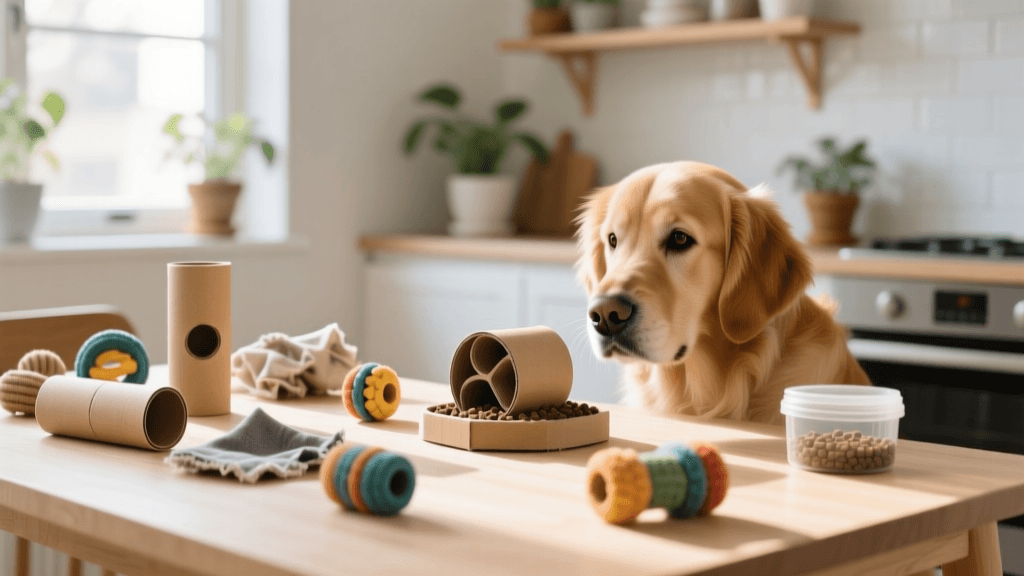
According to Fear Free Pets, environmental enrichment is essential for reducing stress and anxiety in companion animals. By engaging their natural foraging instincts, puzzle feeders slow down eating, prevent bloat, and trigger the release of dopamine in your dog's brain. You do not need to spend a fortune on commercial plastic puzzles to achieve these benefits. With a few common household items, you can create highly effective, engaging, and budget-friendly DIY enrichment toys right in your own kitchen.
Crucial Safety Guidelines for Homemade Toys
Before you start crafting, it is vital to prioritize your dog's safety. The Humane Society of the United States emphasizes that not all household items are safe for canine consumption or play. When designing DIY puzzle feeders, always adhere to the following rules:
- Supervision is Mandatory: Never leave your dog alone with cardboard, fabric, or plastic DIY toys. Ingestion of non-food materials can lead to life-threatening gastrointestinal blockages.
- Avoid Toxic Adhesives: Never use hot glue, super glue, or toxic craft glues to assemble toys. Rely on knots, folds, or pet-safe paper tape.
- Size Appropriateness: Ensure that any hidden treats or structural elements (like tennis balls or bottle caps) are significantly larger than your dog's throat to prevent choking hazards.
- Check for Sharp Edges: When cutting plastic bottles or cardboard, inspect the edges to ensure they will not cut your dog's gums or paws.
5 Budget-Friendly DIY Dog Puzzle Feeders
Here are five highly effective, homemade puzzle feeders that cater to different skill levels and foraging styles. Each includes specific measurements, costs, and setup times to help you integrate them into your daily routine.
1. The Classic Muffin Tin Shell Game
This is the perfect entry-level puzzle for dogs new to enrichment. It relies on their sense of smell and basic problem-solving skills.
- Materials Needed: 1 standard 12-cup metal or silicone muffin tin, 12 tennis balls (or dog-safe rubber balls), 1/2 cup of your dog's daily kibble allowance.
- Estimated Cost: $0 (assuming you own the tin and balls).
- Setup Time: 2 minutes.
- Instructions: Scatter the kibble evenly across the bottom of the muffin cups. Place one tennis ball over each cup, completely hiding the food. Your dog must use their nose to locate the kibble and their paws or snout to knock the balls out of the way to access the reward. To increase the difficulty, only place kibble in half of the cups, forcing your dog to discriminate between empty and full cups using scent alone.
2. The Fleece Snuffle Mat (Foraging Strip Mat)
Snuffle mats mimic the act of foraging in tall grass. They are excellent for high-energy dogs and can keep a pup occupied for 15 to 20 minutes.
- Materials Needed: 1 rubber sink mat with holes (approx. 12x12 inches), 2 yards of anti-pill fleece fabric in two different colors.
- Estimated Cost: $12 - $15.
- Setup Time: 45 minutes (one-time craft).
- Instructions: Cut the fleece into strips measuring exactly 1 inch wide by 6 inches long. You will need roughly 200 strips. Thread one strip through two adjacent holes in the rubber mat and tie a secure double knot. Repeat this process until every hole in the mat is filled, creating a dense, grass-like surface. To use, sprinkle dry kibble or small training treats deep into the fleece strips and shake the mat so the food falls to the base. Your dog will have to root through the fabric to find every last crumb.
3. The Upcycled Cardboard Box Foraging Maze
Dogs love to destroy cardboard, and this puzzle turns that destructive urge into a constructive foraging game. It is ideal for heavy chewers who need a safe outlet.
- Materials Needed: 3 clean, staple-free delivery boxes of varying sizes, non-toxic paper tape, 1 cup of kibble mixed with high-value treats.
- Estimated Cost: $0.
- Setup Time: 10 minutes.
- Instructions: Close the smallest box with a few treats inside and seal it with a single strip of paper tape. Place this box inside the medium box, add more kibble around it, and seal the medium box. Finally, place the medium box inside the largest box, scatter the remaining treats, and seal it. Your dog will have to tear through three layers of cardboard to reach the innermost prizes. Always supervise to ensure they are spitting out the cardboard and only eating the treats.
4. Frozen Bone Broth and Kibble Popsicles
This edible puzzle is perfect for hot summer days or for soothing a teething puppy. The frozen element forces the dog to lick and chew slowly, extending the enrichment session.
- Materials Needed: 1 large silicone ice cube tray or popsicle mold, 2 cups of low-sodium, onion-free, and garlic-free chicken or beef bone broth, 1/2 cup kibble, 1/4 cup fresh blueberries.
- Estimated Cost: $5 - $8.
- Setup Time: 10 minutes prep + 4 hours freezing.
- Instructions: Place a small handful of kibble and a few blueberries into each cavity of the silicone mold. Pour the bone broth over the ingredients, leaving a little room at the top for expansion. Freeze for at least four hours until solid. Pop them out and serve in a bowl or on a lick mat. Note: Always verify that your bone broth does not contain alliums (onions, garlic, leeks), which are highly toxic to dogs.
5. The Towel Burrito Roll-Up
This soft puzzle is great for senior dogs or dogs with dental issues who cannot chew on hard plastics or frozen treats.
- Materials Needed: 1 old, clean bath towel (free of loose threads), 2 tablespoons of xylitol-free peanut butter, 1/4 cup kibble.
- Estimated Cost: $0.
- Setup Time: 3 minutes.
- Instructions: Lay the towel flat on the floor. Smear the peanut butter in a zig-zag pattern across the center, and sprinkle the kibble evenly over the peanut butter. Starting from one short end, roll the towel up as tightly as possible into a "burrito" shape. For an advanced challenge, tie the rolled towel into a loose knot. Your dog will have to unroll and untie the towel using their paws and snout to access the smeared treats.
Store-Bought vs. DIY Enrichment: A Cost and Utility Comparison
While commercial puzzle toys like the Kong or Outward Hound Nina Ottosson puzzles are excellent investments, DIY solutions offer unique advantages, particularly regarding customization and cost. Below is a comparison to help you decide how to balance your dog's enrichment routine.
| Feature | Commercial Puzzle Toys | DIY Homemade Puzzles |
|---|---|---|
| Average Cost | $15 - $35 per toy | $0 - $10 per toy |
| Durability | High (Heavy-duty rubber/plastic) | Low to Medium (Often destroyed during play) |
| Customization | Fixed difficulty levels | Highly adjustable based on materials used |
| Clean-up | Requires washing (dishwasher safe) | Often disposable (e.g., cardboard) or machine washable |
| Mental Fatigue | High (Complex mechanical puzzles) | High (Scent-based and destructive foraging) |
Sourcing Safe Materials and Ingredients
When creating edible DIY puzzles, ingredient safety is paramount. The ASPCA Animal Poison Control Center maintains a comprehensive list of human foods that are dangerous to pets. When making frozen popsicles or using peanut butter as a binder, you must meticulously read the ingredient labels.
Always ensure your peanut butter does not contain xylitol (sometimes listed as birch sugar), an artificial sweetener that causes rapid hypoglycemia and liver failure in dogs. When sourcing fleece for snuffle mats, visit a fabric store and ask for "anti-pill" fleece, which is less likely to fray and shed micro-strings that your dog could accidentally ingest. For cardboard boxes, remove all shipping labels, plastic tape, and metal staples before giving them to your pet.
How to Introduce Puzzle Toys to Your Dog
If your dog is used to eating out of a standard bowl, a complex puzzle might cause frustration rather than enrichment. Start with the easiest level of difficulty. For the muffin tin game, leave the tennis balls off at first so the dog understands that the tin holds food. Next, cover only three cups with balls. Gradually increase the difficulty over several days as your dog's confidence and problem-solving skills grow. Always end the session on a positive note, praising your dog heavily when they successfully extract the final treat.
Final Thoughts
Integrating DIY enrichment toys into your dog's daily routine is a rewarding way to deepen your bond while supporting their cognitive health. By upcycling household items like delivery boxes, old towels, and muffin tins, you can provide endless mental stimulation without straining your wallet. Remember to always supervise play, prioritize safe ingredients, and rotate the puzzles regularly to keep your dog's mind sharp and engaged.
priya-sutaria
All our authors care for dogs every day — read more of their work on the authors page.