DIY Dog Training Gear: Budget Agility and Obedience
Discover how to build DIY dog agility equipment and use budget-friendly obedience techniques to train your dog at home without breaking the bank.
The Rising Costs of Canine Education
Training a dog is one of the most rewarding experiences of pet ownership, but it can also be one of the most expensive. Between professional group classes, private behavioral consultations, and commercial-grade agility equipment, the costs of canine education can quickly spiral into the hundreds, if not thousands, of dollars. Fortunately, dogs do not care how much money you spent on their gear. They care about your consistency, your timing, and the quality of your reinforcement.
Adopting a budget-friendly approach to dog training does not mean cutting corners on your dog's behavioral health. Instead, it means leveraging household items, DIY construction, and free educational resources to achieve the same results as high-priced commercial alternatives. According to the ASPCA, positive reinforcement training relies on rewarding desired behaviors, a psychological mechanism that works just as well with a homemade PVC jump as it does with a $150 competition-grade hurdle.
Cost Comparison: Commercial vs. DIY Training Gear
Before diving into the construction phase, it is helpful to understand exactly how much capital you can save by embracing the DIY ethos. Below is a comparison of standard commercial training expenses versus budget-friendly home alternatives.
| Training Item or Service | Commercial Cost | DIY / Budget Cost | Estimated Savings |
|---|---|---|---|
| 6-Week Group Obedience Class | $150 - $250 | $0 (Using free library/online resources) | $150 - $250 |
| Competition Agility Jumps (Set of 2) | $120 - $200 | $25 (PVC pipes and connectors) | $95 - $175 |
| 12-Piece Weave Pole Set | $250 - $400 | $40 (Rebar and PVC tubing) | $210 - $360 |
| Professional Training Clicker | $5 - $15 | $0 (Use a retractable pen or jar lid) | $5 - $15 |
| Commercial Treat Pouch | $20 - $40 | $2 (Thrift store fanny pack or silicone mold) | $18 - $38 |
Step-by-Step DIY Agility Equipment
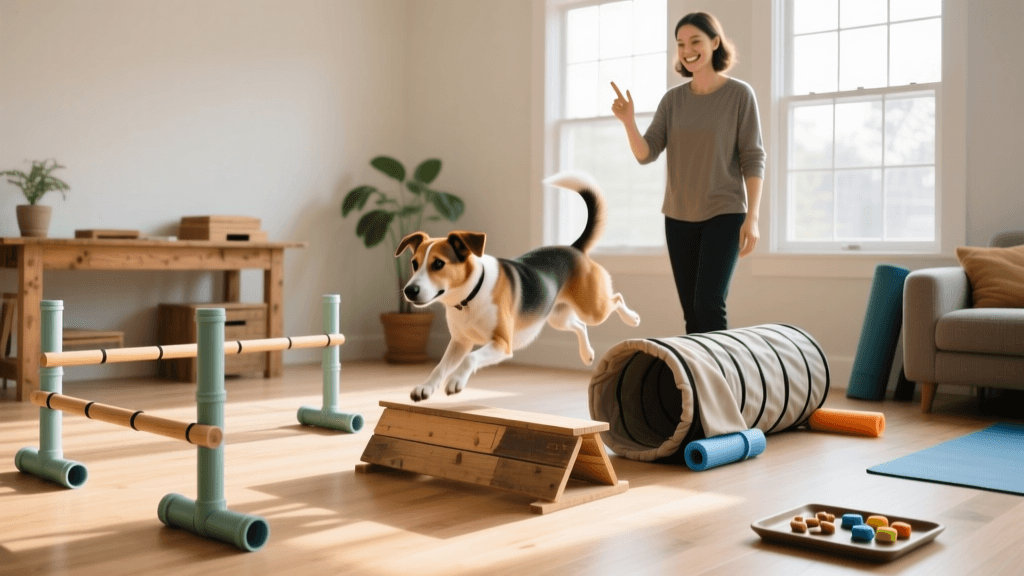
Agility training is an incredible way to burn off physical energy while simultaneously demanding intense mental focus from your dog. The American Kennel Club (AKC) notes that agility is a sport that builds confidence and strengthens the bond between handler and dog. You do not need a professional backyard setup to reap these benefits.
PVC Agility Jumps
Commercial jumps are heavy and expensive. You can build a safe, lightweight, and adjustable jump for under $15 using supplies from any local hardware store.
- Materials Needed: 1/2-inch PVC pipe (10 feet), four T-connectors, four end caps, a hacksaw, and a measuring tape.
- The Base: Cut two pieces of PVC to 36 inches each. Attach T-connectors to both ends of these base pieces. Insert 12-inch pieces into the side openings of the T-connectors and cap them. This creates two stable, flat-footed bases.
- The Uprights: Cut two 40-inch pieces for the vertical uprights. Insert them into the top of the T-connectors.
- The Jump Bar: Use a lightweight wooden dowel or a pool noodle sliced in half. Rest it loosely across the uprights. Never secure the bar with nails or glue; it must fall away easily if your dog misjudges the height to prevent injury.
Backyard Weave Poles
Weave poles are notoriously expensive, but they are essential for teaching a dog independent obstacle performance. Standard regulations, as outlined by the AKC, require weave poles to be spaced exactly 21 inches apart.
To build a budget set of six poles (perfect for beginners), purchase six 36-inch pieces of 1/2-inch PVC pipe and six 24-inch pieces of steel rebar. Drive the rebar into your lawn at exactly 21-inch intervals, leaving about 12 inches of rebar exposed above the grass. Slide the PVC pipes over the rebar. This method is incredibly cheap, and because the PVC bends and gives way if the dog hits it, it is much safer than rigid metal poles.
The DIY Pause Box and Tunnel
A pause box is simply a designated square where your dog must sit or lie down for a count of five. You can create this using four pieces of scrap wood, a hula hoop, or even by spray-painting a square directly onto your patio concrete. For tunnels, commercial chutes cost upwards of $80. Instead, visit a thrift store or browse online marketplaces for collapsible children's play tunnels, which typically cost between $15 and $20 and serve the exact same behavioral conditioning purpose.
Budget-Friendly Obedience and Behavioral Conditioning
While agility addresses physical exertion, foundational obedience and behavioral conditioning address your dog's psychological needs. You do not need to hire an expensive behaviorist to teach basic cues like 'sit', 'stay', 'leave it', or loose-leash walking.
Ditch the Expensive Treats: High-Value Kitchen Alternatives
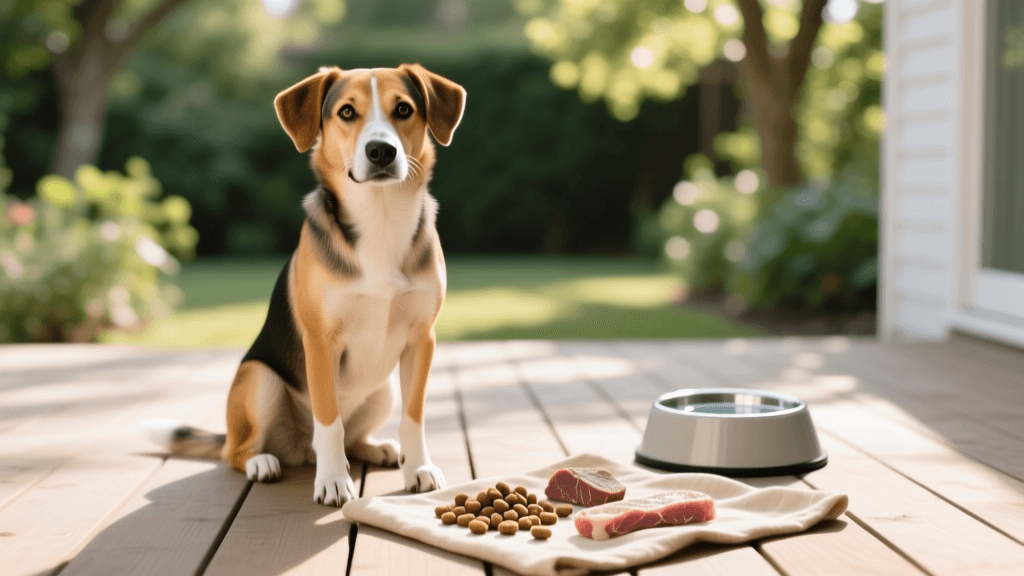
Pet stores sell specialized training treats at a massive markup, often loading them with unnecessary fillers. The American Veterinary Medical Association (AVMA) advises pet owners to be mindful of their dog's caloric intake, especially during heavy training sessions. By using your dog's daily kibble allowance and supplementing with single-ingredient kitchen staples, you save money and protect your dog's waistline.
Here is a structured guide to budget-friendly training reinforcements:
- Low-Value (For easy cues in low-distraction environments): Your dog's standard dry kibble. Cost: Already factored into your monthly grocery budget.
- Medium-Value (For learning new behaviors indoors): Frozen peas, small carrot chunks, or apple slices. Cost: Pennies per serving.
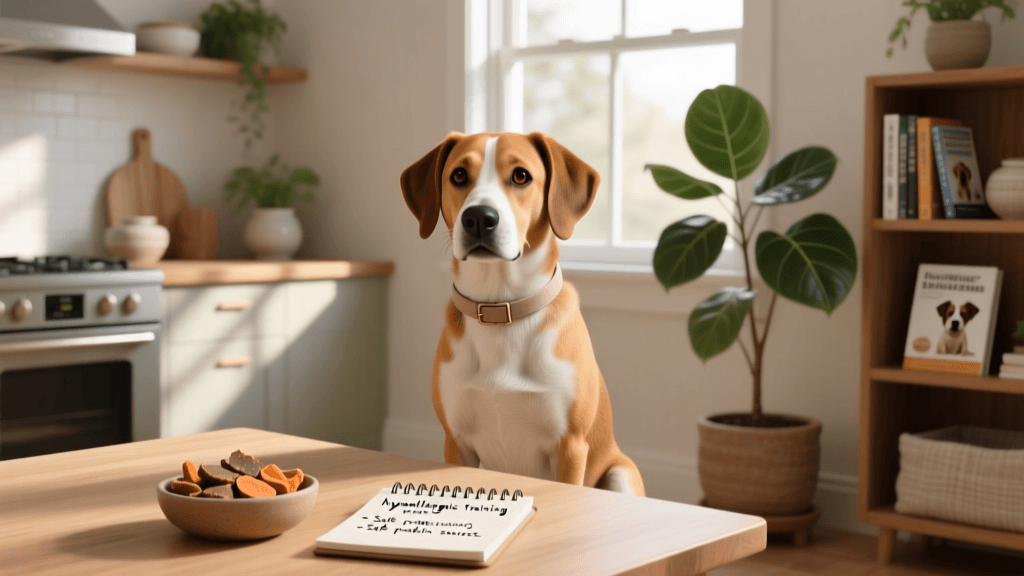
- High-Value (For recall training or high-distraction outdoor work): Boiled chicken breast, low-sodium hot dogs, or string cheese. Cost: Less than $3 per training week.
Pro-Tip: For tiny dogs or puppies, put a single hot dog in a blender with a little water and a cup of kibble, then bake it into a 'training cake'. Break it into pea-sized pieces for a high-value, low-calorie, and incredibly cheap treat alternative.
Free and Low-Cost Educational Resources
Instead of paying for group classes where your dog might become overly distracted by other animals, utilize the wealth of free, science-based training literature available. Check out books on canine body language and operant conditioning from your local public library. Furthermore, many reputable animal welfare organizations offer free, step-by-step video libraries online that cover everything from crate training to resource guarding.
The Science of Positive Reinforcement on a Dime
The core of all effective dog training is operant conditioning—specifically, positive reinforcement. This means adding a desirable stimulus (like a piece of boiled chicken) immediately following a desired behavior (like sitting calmly), which increases the likelihood of that behavior happening again. The mechanism of the brain's dopamine release does not differentiate between a $50 ergonomic treat pouch and a repurposed silicone baking mold clipped to your belt.
'Consistency and timing are the true currencies of dog training, not the price tag on your equipment. A perfectly timed marker word delivered alongside a piece of kibble will always outperform a poorly timed correction using a $200 remote collar.'
To replace a mechanical clicker, simply use a consistent marker word like 'Yes!' or click a retractable ballpoint pen. The sharp, unique sound acts as a 'bridge' between the behavior and the reward. Pairing the sound with a high-value kitchen treat takes less than an hour and costs absolutely nothing.
Conclusion
Budget-friendly dog care is not about depriving your pet; it is about being resourceful, engaged, and present. By building your own agility jumps from PVC, utilizing 21-inch spaced rebar for weave poles, and leveraging high-value kitchen scraps for positive reinforcement, you can provide a world-class canine education from the comfort of your backyard. Your dog does not need expensive gear to thrive; they need your patience, your creativity, and your willingness to learn alongside them.
tom-renshaw
All our authors care for dogs every day — read more of their work on the authors page.