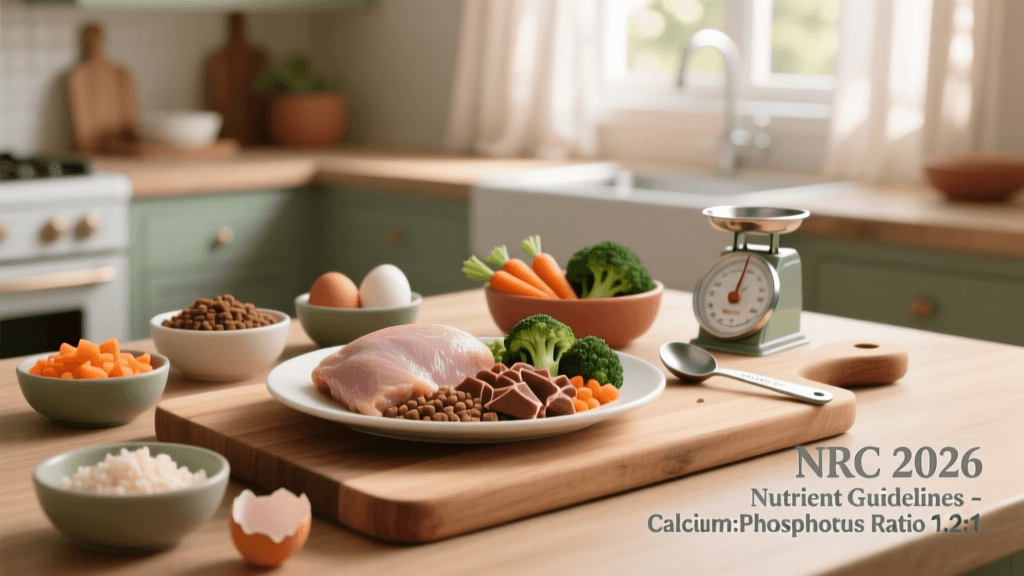
DIY Balanced Raw Dog Food: NRC Nutrient Guidelines 2026
Learn how to formulate a DIY balanced raw dog food diet using 2026 NRC nutrient guidelines, including exact calcium-phosphorus ratios and safety tips.
The Evolution of DIY Raw Feeding in 2026
As we navigate the pet care landscape in 2026, the popularity of raw, fresh, and alternative diets for dogs continues to surge. With the rising costs of premium commercial raw food brands and ongoing supply chain fluctuations affecting frozen pet food availability, an increasing number of dog owners are turning to DIY (Do-It-Yourself) raw feeding. While preparing your dog's meals at home offers unparalleled control over ingredient quality and sourcing, it also places the immense responsibility of nutritional balancing squarely on your shoulders. Feeding a dog a poorly formulated raw diet can lead to severe, sometimes irreversible health issues, making it imperative to rely on established scientific frameworks rather than internet anecdotes.
The gold standard for canine nutrition is established by the National Research Council (NRC). According to the comprehensive guidelines outlined in the NRC Nutrient Requirements of Dogs and Cats, dogs require a precise matrix of macronutrients, micronutrients, and minerals to thrive. In 2026, veterinary nutritionists are urging DIY raw feeders to move beyond the outdated and overly simplistic 'prey model' ratios and instead formulate diets that explicitly meet these rigorous NRC minimums and recommended allowances.
Understanding the NRC Nutrient Requirements
The NRC guidelines are not merely suggestions; they are the result of decades of peer-reviewed scientific research detailing the exact metabolic needs of canines at various life stages. When formulating a DIY raw diet, the most common pitfall is assuming that feeding 'whole prey' items naturally balances the diet. While a wild wolf may consume the entire carcass of a herbivore—including the stomach contents, bones, organs, and blood—replicating this in a domestic setting using grocery store or butcher-sourced meats is incredibly difficult. Modern agricultural practices have altered the nutrient profiles of commercially raised livestock, meaning that a chicken breast or beef roast from your local butcher in 2026 does not possess the same micronutrient density as the wild game consumed by ancestral canines.
Therefore, a successful DIY raw diet requires meticulous calculation. You must account for the specific amino acid profiles, fatty acid ratios, and mineral densities of every ingredient you introduce into your dog's bowl. This is where the concept of the 'balanced raw bowl' comes into play, utilizing specific percentages of muscle meat, raw meaty bones, secreting organs, and plant-based matter to hit the NRC targets.
The Crucial Calcium-to-Phosphorus Ratio
Perhaps the most critical metric in any raw diet is the calcium-to-phosphorus (Ca:P) ratio. The NRC mandates a Ca:P ratio between 1.1:1 and 1.4:1 for adult dogs, and slightly higher for growing puppies. Muscle meat is naturally very high in phosphorus and virtually devoid of calcium. If you feed a diet consisting primarily of muscle meat without an adequate calcium source, your dog will develop secondary nutritional hyperparathyroidism. This devastating condition causes the body to leach calcium from the dog's own bones to balance the blood phosphorus levels, leading to spontaneous fractures and severe skeletal deformities.
To counteract this, DIY raw feeders must include raw meaty bones (RMBs) or a bioavailable calcium supplement like eggshell powder or calcium carbonate. It is vital to note that cooked bones must never be used, as the cooking process alters the bone matrix, making them brittle and highly dangerous to the canine gastrointestinal tract.
Essential Ingredients for a Balanced Raw Bowl
To meet the NRC guidelines using whole foods, most veterinary nutritionists recommend a foundational framework that breaks down the daily meal into specific functional categories. Below is the standard macronutrient and ingredient breakdown used by professionals in 2026 to formulate balanced raw meals.
| Dietary Component | Target Percentage | Primary Nutritional Role |
|---|---|---|
| Muscle Meat | 65% - 70% | Provides essential amino acids, protein, and B-vitamins. |
| Raw Meaty Bones | 10% - 15% | Supplies the critical calcium required to balance phosphorus. |
| Liver | 5% | Nature's multivitamin; rich in Vitamin A, copper, and folate. |
| Other Secreting Organs | 5% | Provides trace minerals, Vitamin D, and essential fatty acids. |
| Plant Matter / Fiber | 5% - 15% | Offers dietary fiber, antioxidants, and phytonutrients. |
The Hidden Danger: Micronutrient Deficiencies
Even if you perfectly nail the macronutrient and bone ratios, a DIY raw diet will almost certainly fail the NRC guidelines without targeted supplementation of specific micronutrients. The WSAVA Global Nutrition Committee frequently highlights that homemade diets are notoriously deficient in Vitamin E, Zinc, Iodine, and Omega-3 fatty acids.
Vitamin E: Because raw diets are often high in polyunsaturated fatty acids (PUFAs) from meat fats, the body requires more Vitamin E to prevent oxidative stress and cellular damage. Sunflower oil or a natural mixed-tocopherol supplement is usually required.
Zinc: Beef and chicken are relatively low in zinc compared to the NRC recommended allowance. Without adequate zinc, dogs suffer from compromised immune function, poor wound healing, and severe dermatological issues. Zinc picolinate or zinc gluconate supplements are standard additions to DIY raw formulations.
Iodine: Essential for proper thyroid function, iodine is scarce in muscle meat and bone. Kelp powder is the most common and bioavailable way to introduce iodine into a raw diet, but it must be measured with a precision milligram scale, as both iodine deficiency and iodine toxicity can trigger thyroid disease.
Omega-3 Fatty Acids: To maintain a healthy Omega-3 to Omega-6 ratio and reduce systemic inflammation, the addition of wild-caught salmon oil, sardine oil, or phytoplankton is highly recommended in 2026 raw feeding protocols.
Sample Daily Framework for a 50-Pound Adult Dog
To illustrate how these percentages translate into real-world measurements, let us look at a sample daily framework for an ideal-weight, moderately active 50-pound (22.5 kg) adult dog. The general rule of thumb is to feed 2% to 2.5% of the dog's ideal body weight per day. For this dog, we will target 500 grams (approx. 1.1 lbs) of total food daily.
- Muscle Meat (70%): 350 grams (e.g., a mix of ground beef, chicken thigh, and pork loin).
- Raw Meaty Bones (10%): 50 grams (e.g., raw chicken necks or a precise measurement of bone-in turkey breast).
- Liver (5%): 25 grams (e.g., beef or chicken liver).
- Other Secreting Organ (5%): 25 grams (e.g., beef kidney or spleen).
- Plant Matter (10%): 50 grams (e.g., lightly steamed broccoli, pureed pumpkin, and blueberries).
- Supplements: 1/4 tsp kelp powder, 1 pump of wild salmon oil, and a canine-specific Vitamin E/Zinc blend as directed by a veterinary nutritionist.
Note: This is a foundational framework. A board-certified veterinary nutritionist should always evaluate your specific ingredient choices using canine diet formulation software to ensure all NRC minimums are met.
Sourcing and Food Safety Protocols
Food safety remains a paramount concern when handling raw meat. The FDA continues to issue guidance regarding the risks of Salmonella, Listeria, and E. coli associated with raw pet food diets, particularly in households with young children, the elderly, or immunocompromised individuals.
In 2026, best practices for DIY raw food safety include:
- Sourcing: Purchase human-grade meats from reputable butchers or grocery stores. Avoid 'pet grade' meats or wild game that has not been inspected, as these carry a significantly higher risk of pathogenic bacteria and parasitic infections.
- Freezing: While freezing does not kill bacteria, it is effective at neutralizing certain parasites. Freeze all raw meats at -4°F (-20°C) for a minimum of 72 hours before thawing and feeding.
- Thawing: Never thaw raw meat on the kitchen counter at room temperature. Always thaw meals in the refrigerator in sealed, leak-proof containers.
- Sanitation: Wash all prep surfaces, bowls, and utensils with hot, soapy water immediately after use. Consider using a diluted bleach solution or a food-safe sanitizer for surfaces that come into contact with raw bone and meat.
Transitioning Your Dog Safely
If you are transitioning your dog from a commercial kibble or a cooked diet to a DIY raw diet in 2026, patience is key. The canine gastrointestinal microbiome requires time to adapt to the new enzymatic demands of digesting raw meat and bone. A sudden switch can result in severe diarrhea, vomiting, and dehydration.
Begin by replacing just 10% of your dog's current meal with the new raw mixture. Over the course of 10 to 14 days, gradually increase the raw portion while decreasing the old food. During this transition, monitor your dog's stool quality. If the stool becomes excessively loose, slow the transition process and consider adding a canine-specific probiotic or a spoonful of canned plain pumpkin puree to help firm up the digestive tract. Conversely, if the stool becomes hard, chalky, and white, this indicates an excess of bone; you must immediately reduce the raw meaty bone percentage and increase the muscle meat and fiber content.
Conclusion
Formulating a DIY balanced raw dog food diet is a labor of love that requires dedication, precision, and a firm understanding of the NRC nutrient guidelines. By respecting the complex interplay of calcium, phosphorus, and essential micronutrients, and by adhering to strict food safety protocols, you can provide your dog with a vibrant, species-appropriate diet that supports their health and longevity well into the future. Always partner with a qualified veterinary nutritionist to audit your recipes and ensure your dog's bowl is as safe as it is nutritious.
robin-maitland
All our authors care for dogs every day — read more of their work on the authors page.