DIY Backyard Agility Course: Build Equipment Under $50
Learn how to build a DIY backyard agility course for under $50. Step-by-step instructions for jumps, weave poles, and tunnels to train your dog at home.
The Rise of DIY Canine Agility Training
Agility training is one of the most rewarding activities you can share with your dog. It builds confidence, strengthens the human-animal bond, and provides essential physical and mental stimulation. However, purchasing a commercial agility set can easily cost hundreds of dollars, pricing out many enthusiastic dog owners. Fortunately, with a trip to the local hardware store and a little bit of elbow grease, you can build a highly effective, safe, and fully functional DIY backyard agility course for under $50. According to the American Kennel Club (AKC), agility is a fast-paced sport that requires teamwork, communication, and trust between the handler and the dog. You do not need competition-grade equipment to build that foundation at home.
In this comprehensive guide, we will walk you through the exact measurements, materials, and costs to build three foundational agility obstacles: a knock-down jump, a set of weave poles, and a confidence-building tunnel. We will also cover essential training methodologies and safety precautions to ensure your dog remains healthy and enthusiastic throughout the learning process.
Cost Comparison: DIY vs. Store-Bought Agility Gear
Before we grab our tools, let us look at the financial breakdown. Building your own equipment not only saves money but also allows you to customize the dimensions to fit your specific backyard space and your dog's size.
| Obstacle Type | Commercial Cost (Approx.) | DIY Cost (Approx.) | Customization Level |
|---|---|---|---|
| Single Bar Jump | $80 - $150 | $12 - $15 | High (Adjustable heights) |
| Weave Poles (6-pole set) | $100 - $250 | $18 - $22 | Medium (Adjustable spacing) |
| Agility Tunnel (10 ft) | $70 - $120 | $5 - $10 | High (Expandable) |
| Total Estimated Cost | $250 - $520 | $35 - $47 | Varies |
Project 1: The PVC Knock-Down Jump (Cost: $15)
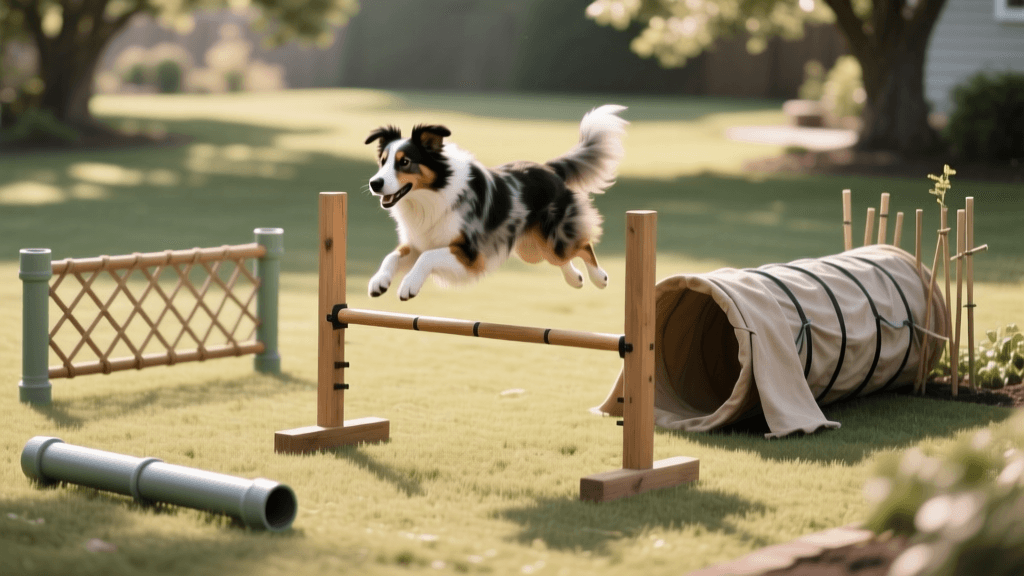
The most fundamental piece of agility equipment is the bar jump. For safety, the crossbar must be a 'knock-down' style, meaning it will easily dislodge if your dog misjudges the height and clips it with their paws. PVC pipe is the perfect material for this because it is lightweight, inexpensive, and easy to cut.
Materials Needed
- 10 feet of 1/2-inch PVC pipe (approx. $4)
- Four 1/2-inch PVC T-connectors (approx. $4)
- Four 1/2-inch PVC end caps (approx. $3)
- Two 1/2-inch PVC slip couplings or extra T-connectors for the jump cups (approx. $2)
- PVC pipe cutter or fine-toothed hacksaw
- Measuring tape and marker
The Cut List
- Uprights (2 pieces): Cut two sections at 36 inches each.
- Crossbar (1 piece): Cut one section at 48 inches (you can make this longer or shorter depending on your dog's stride).
- Base Feet (4 pieces): Cut four sections at 12 inches each.
Assembly Instructions
First, attach a T-connector to each end of the four 12-inch base feet. Next, insert the 36-inch uprights into the top of the T-connectors. Cap the ends of the base feet to prevent dirt and grass from getting inside the pipes. To create the jump cups, you can use slip couplings cut in half and glued to the uprights, or simply rest the crossbar on top of the T-connectors if you are keeping the jump low for beginners. The beauty of PVC is that you can easily drill new holes and insert small pegs to create adjustable height settings as your dog's jumping skills improve. Always ensure the crossbar is not screwed or glued in place; it must fall away freely upon impact to protect your dog's legs and joints.
Project 2: Garden Stake Weave Poles (Cost: $20)
Weave poles are notoriously the most difficult obstacle to teach, but they are incredibly fun once your dog understands the rhythm. Commercial weave poles feature complex bases and adjustable wires. For backyard training, heavy-duty fiberglass garden stakes offer a fantastic, budget-friendly alternative that is safe and visually distinct for your dog.
Materials Needed
- 6 to 12 fiberglass garden stakes, 36 to 48 inches tall (approx. $3 each at garden centers)
- A measuring tape
- Optional: PVC pipe sleeves for adjustability
Setup and Spacing
According to standard agility regulations, weave poles are typically spaced 24 inches apart. However, when training a beginner dog or a smaller breed, you can start with slightly wider spacing or use the '2x2 method' which only requires two poles at a time. Push the garden stakes firmly into your lawn, ensuring they are secure but have enough flex to bend slightly if your dog bumps into them. Fiberglass is excellent because it will not splinter like wood and is gentle on a dog's spine and shoulders if an accidental collision occurs.
Training the Weaves: The 2x2 Method
Instead of forcing your dog through a full set of 6 poles, start with just two poles. Stand so the poles are on your dog's left side. Toss a high-value treat past the poles to encourage your dog to run through the gap from left to right. Reward heavily. Once they master the entry, add two more poles and repeat. This method, popularized by agility experts, builds immense drive and understanding without the frustration of the traditional 'luring' method where handlers bend over and guide the dog through the poles with a treat in hand.
Project 3: The Cardboard Appliance Tunnel (Cost: $5)
Tunnels build confidence and are generally a dog's favorite obstacle because it feels like a giant game of hide-and-seek. While commercial tunnels are made of heavy-duty nylon and spring steel, you can create a highly effective training tunnel using large cardboard boxes.
Materials Needed
- 2 to 3 large appliance boxes (refrigerator or washing machine boxes are ideal, often free from local appliance stores)
- Heavy-duty duct tape
- Utility knife
Assembly Instructions
Cut the top and bottom flaps off the boxes so they form open-ended rectangular tubes. If you have multiple boxes, align them and use duct tape to securely bind the seams together, creating a 6-foot to 9-foot tunnel. To prevent the tunnel from collapsing or blowing away in the wind, use U-shaped garden staples or heavy sandbags on the exterior bottom edges. For added sensory enrichment, you can hang strips of cloth or soft plastic from the exit of the tunnel to simulate the 'tickler' flaps found on competition tunnels, teaching your dog to push through visual barriers.
Essential Safety and Training Guidelines
When engaging in any canine fitness or agility work, safety must be your primary concern. The AKC Fit Dog Program emphasizes the importance of proper warm-ups, cool-downs, and understanding canine biomechanics before engaging in high-impact sports.
Protecting Joints and Growth Plates
If you are training a puppy, you must be acutely aware of their growth plates. Puppies should never be forced to jump at full height or perform repetitive, high-impact weaving until their growth plates have fully closed, which can happen anywhere between 12 to 18 months of age depending on the breed. For puppies, keep all DIY jump bars flat on the ground and focus on 'paw targeting' and body awareness exercises. The ASPCA recommends consulting with your veterinarian before starting any rigorous exercise program to ensure your dog's skeletal structure is ready for the physical demands of agility.
Surface Matters
Never set up your DIY agility course on concrete, asphalt, or slippery indoor hardwood floors. Dogs need traction to push off for jumps and to grip the ground while weaving. A grassy lawn, flat dirt, or specialized rubber agility matting is required to prevent catastrophic injuries like torn cranial cruciate ligaments (CCL) or shoulder strains.
Keep Sessions Short and Positive
Agility is mentally exhausting for dogs. A 10 to 15-minute training session is vastly superior to an hour-long drill. End every session on a high note with a 'jackpot' reward—a handful of premium treats or a vigorous game of tug—while your dog is still eager to play. If your dog begins to sniff the ground, scratch, or walk away, they are experiencing mental fatigue. Pack up your DIY equipment and try again the next day. By keeping the training pressure low and the reward value high, your homemade backyard course will become your dog's favorite place to be.
priya-sutaria
All our authors care for dogs every day — read more of their work on the authors page.