Step-by-Step Guide to Bell Training Your Puppy for Potty Breaks
Learn how to bell train your puppy for potty breaks with our step-by-step guide. Includes timing, best bells, and troubleshooting tips for success.
Why Choose Bell Training for Potty Breaks?
Potty training a new puppy is one of the most challenging rites of passage for dog owners. Staring at a closed back door, waiting for a subtle whine or a frantic scratch, often results in missed signals and unfortunate accidents on your living room rug. Bell training bridges this communication gap, giving your puppy a clear, audible, and proactive way to tell you they need to go outside.
According to the ASPCA, consistency and positive reinforcement are the absolute foundations of successful house training. By teaching your dog to ring a bell, you are replacing ambiguous behaviors (like pacing or sniffing) with a definitive action that you can easily recognize and respond to. This step-by-step guide will walk you through the exact methodology, timing, and tools required to bell train your puppy effectively.
Essential Tools and Estimated Costs
Before beginning your training sessions, gather the following supplies. Investing in the right tools upfront will save you time and frustration.
- Potty Bells ($15 - $30): For a traditional option, the PoochieBells ($15) feature a durable nylon strap and loud jingle bells. If you have a sensitive-eared puppy or multiple exterior doors, the Mighty Paw Smart Bell 2.0 ($30) is a wireless, electronic push-button bell that chimes inside the house.
- High-Value Treats ($8 - $12): Use soft, highly palatable treats like Zuke's Mini Naturals or KONG Easy Treat paste. Keep treats pea-sized to avoid overfeeding during repetitive training sessions.
- Clicker ($5): A standard Karen Pryor i-Click is ideal for precisely marking the exact moment your puppy touches the bell.
- Enzymatic Cleaner ($15): Nature's Miracle Advanced Stain & Odor Eliminator is crucial. If an accident occurs, standard household cleaners leave behind uric acid and pheromones that will draw your puppy back to the same spot.
Step-by-Step Guide to Bell Training Your Puppy
Step 1: Charge the Target (Days 1-3)
Before hanging the bell on the door, you must teach your puppy that interacting with the bell yields a reward. This utilizes operant conditioning, specifically positive reinforcement.
- Start on the Floor: Place the bell on the ground in a quiet room with minimal distractions.
- Lure the Nose: Hold a pea-sized treat near the bell. When your puppy leans in to sniff or lick the treat, their nose will inevitably bump the bell.
- Mark and Reward: The exact millisecond the bell makes a sound, click your clicker (or say a sharp "Yes!") and immediately give them the treat. The timing here is critical; the marker must occur within one second of the behavior.
- Repeat: Practice this for 3-minute sessions, 3 to 4 times a day. By the end of Day 3, your puppy should be deliberately nudging the bell with their nose or paw to hear the click and get the treat.
Step 2: Move the Bell to the Door (Days 4-6)
Now it is time to associate the bell with the exit door.
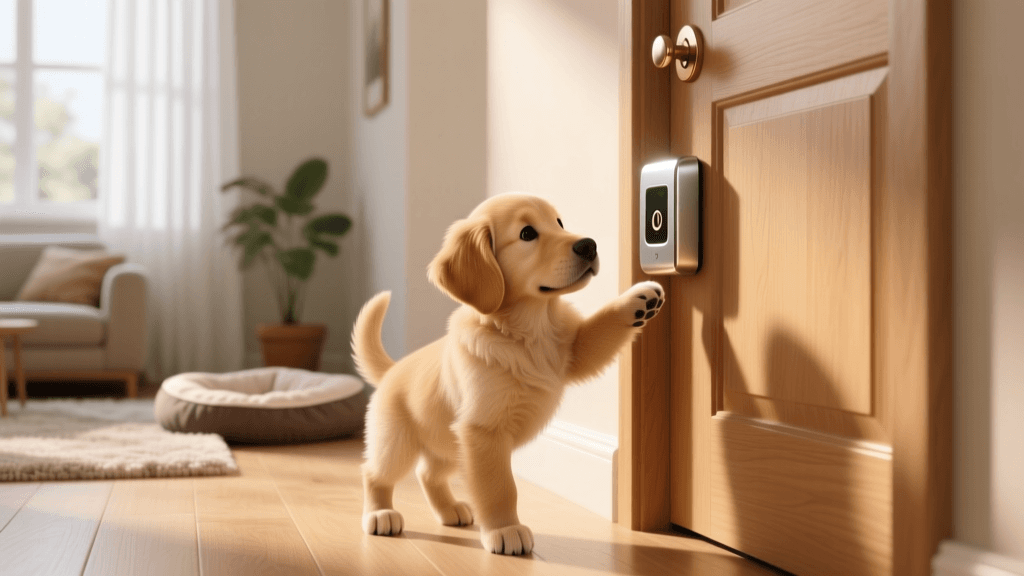
- Proper Placement: Hang the bell on the door handle or mount the electronic bell on the wall next to the door. Crucial Measurement: The bell must be positioned exactly at your puppy's nose height. If it is too high, they will jump; if it is too low, they will step on it.
- Transfer the Behavior: Bring your puppy to the door. Point to the bell or use a verbal cue like "Touch." When they ring it, mark the behavior with your clicker and reward them with a treat.
- Do Not Open the Door Yet: During this phase, you are only reinforcing the physical act of ringing the bell. Opening the door now might confuse the sequence.
Step 3: Ring, Open, and Reward (Days 7-10)
This is where the magic happens. You will now link the sound of the bell to the action of going outside.
- The 3-Second Rule: When your puppy rings the bell, you must open the door within 3 seconds. This tight window ensures the dog's brain connects the auditory feedback of the bell to the visual feedback of the door opening.
- The Potty Trip: Leash your puppy and walk them directly to their designated potty spot. Stand still and wait.
- The Jackpot Reward: The moment they eliminate outside, praise them enthusiastically and offer a "jackpot" reward (3 to 4 small treats in a row). The American Kennel Club (AKC) emphasizes that rewarding immediately after elimination reinforces the desired outdoor behavior, not just the act of going outside.
Step 4: Fade the Lure and Generalize (Days 11+)
Once your puppy is reliably ringing the bell to go out, you must fade the food lure so they do not become dependent on treats to use the bathroom.
- Stop treating them for simply ringing the bell.
- Reserve the high-value treats exclusively for successful outdoor elimination.
- Gradually transition from continuous reinforcement (a treat every single time) to variable reinforcement (a treat every third or fourth successful potty break). This builds a robust, long-lasting habit.
Troubleshooting Common Bell Training Issues
Even with perfect execution, you may encounter behavioral hurdles. Use this troubleshooting chart to correct common problems.
| Issue | Probable Cause | Actionable Solution |
|---|---|---|
| Dog rings bell but doesn't potty. | The dog has learned that ringing the bell equals playtime or a walk, not just bathroom time. | Implement the "Boring Potty Trip." Keep the leash short, stand in one spot, and do not engage in play. If they don't potty within 5 minutes, go back inside, crate them for 10 minutes, and try again. |
| Puppy is terrified of the bell sound. | The jingle is too loud, causing a startle response and negative association. | Wrap the bells in a thick sock or tape to muffle the sound. Alternatively, switch to the Mighty Paw Smart Bell which allows you to adjust the chime volume. |
| Dog rings bell constantly at 3 AM. | The dog is testing boundaries, seeking attention, or has a medical issue like a UTI. | First, rule out medical issues with a vet. If behavioral, remove water 2 hours before bedtime. If they ring at night, take them out on a leash in silence. No play, no talking, straight back to the crate. |
Expert Tips for Long-Term Success
"House training requires patience and a strict schedule. Dogs thrive on routine, and anticipating their biological needs prevents accidents before they happen."
— Adapted from guidelines by the Humane Society of the United States
To ensure your bell training sticks, integrate these pro tips into your daily routine:
- Pre-Emptive Ringing: For the first two weeks, gently guide your puppy's nose to ring the bell yourself right before you open the door for scheduled potty breaks. This builds the habit even if they don't initiate it.
- Consistency Across Household Members: Ensure everyone in the home responds to the bell immediately. If one person ignores the bell, the puppy will learn that the communication tool is unreliable and revert to scratching or whining.
- Manage the Environment: If you are hosting a loud party or have contractors in the house, your puppy may not hear the bell, or you might miss it. During high-distraction times, rely on a strict timer (taking them out every 45-60 minutes) rather than waiting for the bell.
Conclusion
Bell training is one of the most practical and rewarding obedience skills you can teach your dog. By breaking the process down into manageable, heavily reinforced steps, you empower your puppy to communicate their biological needs clearly. Remember that the ASPCA and other animal welfare organizations stress that accidents are a normal part of the learning curve. Stay patient, keep your enzymatic cleaner handy, and celebrate the small victories. Within a few weeks, that little jingle will become the sweetest sound in your home, signaling a clean house and a well-communicated pup.
hannah-wickes
All our authors care for dogs every day — read more of their work on the authors page.