Dog Training Myths Debunked: The Truth About Alpha Dominance
Discover the truth behind alpha dominance dog training myths. Learn science-backed, positive reinforcement methods for better obedience and behavior.

The Enduring Myth of the 'Alpha Dog'
For decades, dog owners and even some prominent trainers have operated under the assumption that domestic dogs are driven by a primal need to dominate their human families. This concept, widely known as dominance theory or alpha training, suggests that owners must constantly assert themselves as the 'pack leader' to maintain order. However, modern veterinary behaviorists and canine scientists have thoroughly debunked this outdated paradigm. The truth is that domestic dogs do not view their human families as a canine pack, and attempts to force a dominance hierarchy often lead to fear, anxiety, and aggression. According to The Humane Society of the United States, relying on dominance-based training methods is not only ineffective but can actively damage the bond between you and your dog.
The Origin of the Dominance Fallacy
The alpha dog myth originated from a 1947 study by animal behaviorist Rudolph Schenkel, who observed captive wolves in a zoo environment. Because these unrelated wolves were forced to live together in an unnatural, confined space, they formed rigid, aggressive hierarchies to compete for limited resources. Decades later, wildlife biologist L. David Mech studied wild wolves in their natural habitat and discovered that wild wolf packs are actually just nuclear families. The 'alphas' are simply the parents, and the 'subordinates' are their offspring. Mech has since spent years trying to debunk the alpha myth, emphasizing that domestic dogs, who have been selectively bred for thousands of years to cooperate with humans, do not operate on a wolf-pack dominance structure.
Myth vs. Fact: Dominance Training Debunked
Myth 1: The 'Alpha Roll' Establishes Leadership
One of the most pervasive and dangerous myths in dog training is the 'alpha roll'—the practice of forcibly pinning a dog on its back to assert dominance when it misbehaves. Proponents claim this mimics how a pack leader disciplines a subordinate. In reality, when a dog rolls onto its back voluntarily, it is displaying an appeasement behavior, signaling that it is not a threat and asking for space. Forcibly pinning a dog induces extreme fear and triggers a fight-or-flight response. Dogs subjected to alpha rolls are statistically much more likely to bite out of defensive aggression. True leadership in dog training is built on trust, clear communication, and controlling resources, not physical intimidation.
Myth 2: You Must Eat Before Your Dog to Show Dominance
Another common piece of advice is that owners must always eat their own meals before feeding their dog to prove they are the top of the food chain. There is zero scientific evidence to support the idea that meal sequencing affects a dog's perception of social hierarchy. Feeding times should be based on your schedule, your dog's digestive health, and training opportunities. In fact, using your dog's daily kibble allowance as training rewards throughout the day is a highly effective way to reinforce obedience and mental stimulation. If a dog exhibits food aggression or resource guarding, it is a behavioral issue rooted in anxiety and scarcity, not a desire to be the alpha.
Myth 3: Pulling on the Leash Means They Are Trying to Dominate You
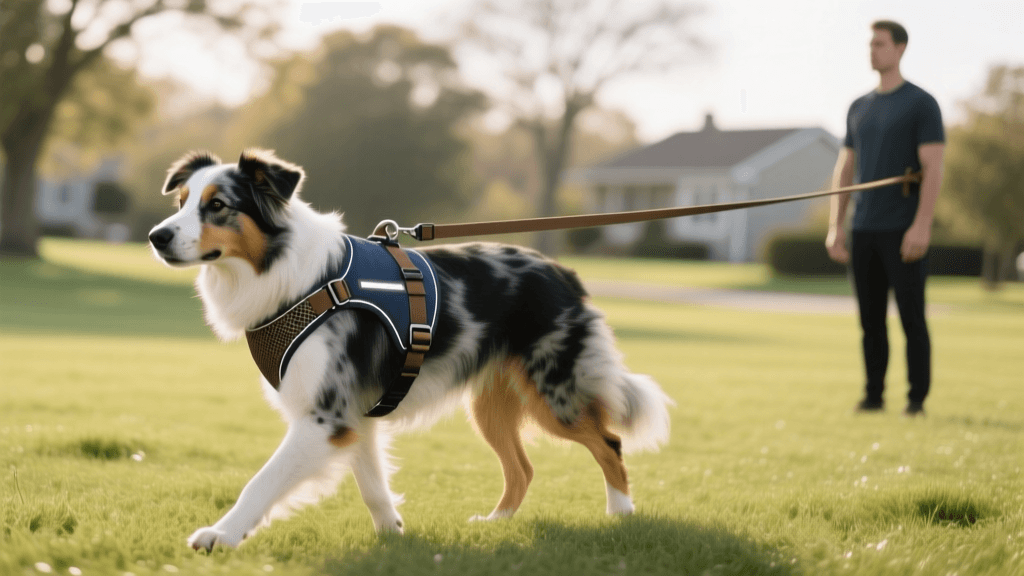
When a dog pulls on the leash, owners are often told the dog is trying to lead the pack. In truth, leash pulling is a result of the 'opposition reflex'—a natural canine instinct to push against pressure—combined with the fact that dogs naturally walk at a faster pace than humans. Furthermore, the environment is incredibly stimulating, and the dog is simply trying to reach an interesting smell or another animal. Punishing a dog for pulling does not teach them what you want them to do; it merely suppresses their natural curiosity through fear.
Comparison Chart: Dominance Theory vs. Positive Reinforcement
| Training Aspect | Dominance Theory (Myth) | Positive Reinforcement (Fact) |
|---|---|---|
| Core Philosophy | Dogs are wolves trying to conquer the household. | Dogs are opportunistic learners seeking rewards. |
| Response to Misbehavior | Physical corrections, alpha rolls, yelling. | Redirection, removing rewards, managing the environment. |
| Leash Walking | Choke chains, leash pops to force submission. | Front-clip harnesses, rewarding loose-leash proximity. |
| Resource Guarding | Forcibly taking items away to 'show who is boss.' | Trading up for high-value treats to build positive associations. |
| Long-Term Result | Suppressed behaviors, chronic stress, potential aggression. | Enthusiastic compliance, reduced anxiety, strong bond. |
Actionable Alternatives: Building Trust Through Science
1. Master the '1-Second Rule' for Marker Training
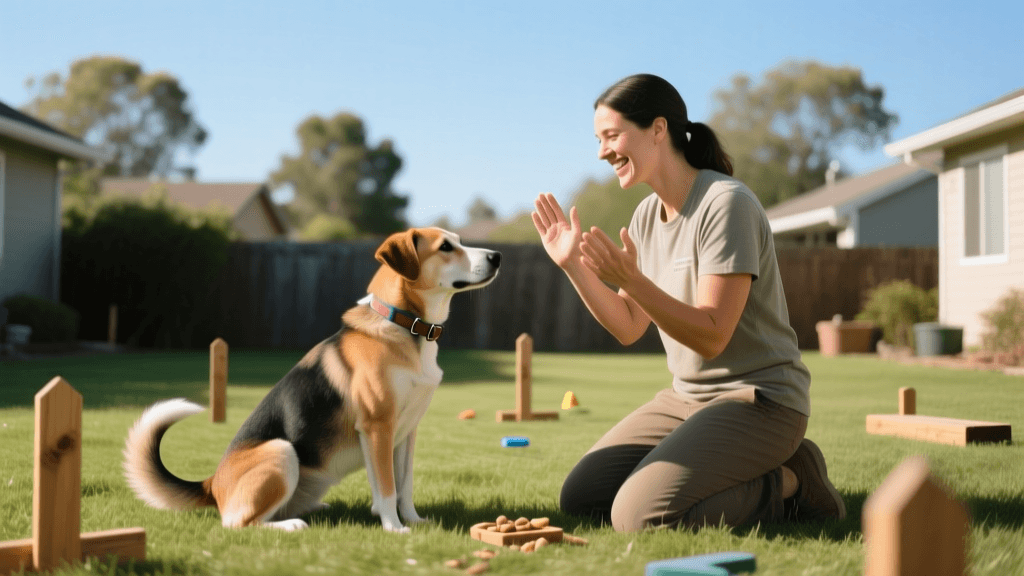
Instead of trying to dominate your dog, focus on precise communication. Marker training uses a distinct sound (like a clicker or the word 'Yes!') to tell the dog exactly which behavior earned a reward. The golden rule of marker training is the 1-second rule: you must deliver the marker and the treat within one second of the desired behavior. If you ask your dog to sit, the exact millisecond their hindquarters touch the floor, you click and treat. This removes ambiguity. Invest in a Starmark Pro-Training Clicker (Cost: ~$5), which features a raised button that is easy to press without looking, allowing you to maintain eye contact and perfect timing.
2. Invest in the Right No-Pull Equipment
To stop leash pulling without resorting to painful prong or choke collars, transition to a front-clip harness. A front-clip harness gently redirects the dog's momentum back toward you when they pull, utilizing biomechanics rather than pain. The Rabbitgoo No-Pull Dog Harness (Cost: ~$25) is an excellent, durable option. To ensure a proper fit, use a soft measuring tape to measure your dog's chest girth at the widest part of the ribcage, just behind the front legs. A snug fit allows you to slide two fingers between the strap and the dog's body. Pair this harness with a standard 6-foot nylon leash; avoid retractable leashes, as they inadvertently teach dogs that pulling extends the leash.
3. Utilize High-Value, Low-Calorie Rewards
Dogs are motivated by what they find valuable. While dry kibble might work for basic commands in a quiet living room, you need higher-value rewards for challenging environments or difficult behavioral conditioning. Zuke's Mini Naturals (Cost: ~$6 for a 6oz bag) are an ideal training treat. They are less than 3 calories each, meaning you can reward your dog 20 to 30 times in a single 10-minute session without risking obesity or gastrointestinal upset. Keep these treats in a dedicated training pouch, like the Kurgo Treat Pouch (~$15), which allows for rapid treat delivery. Remember, the reward must be given within two seconds of the marker to reinforce the neural pathway effectively.
The Scientific Consensus on Canine Behavior
The shift away from dominance-based training is not just a trend; it is a movement backed by rigorous peer-reviewed science. The American Veterinary Society of Animal Behavior (AVSAB) released a definitive position statement explicitly advising against the use of dominance theory in dog training. The AVSAB notes that confrontational training methods frequently elicit fear and aggression, whereas reward-based methods are highly effective and carry no risk of inducing behavioral fallout. Similarly, the ASPCA strongly advocates for positive reinforcement, highlighting that dogs trained with rewards learn faster, retain commands longer, and exhibit significantly lower levels of stress hormones like cortisol. By abandoning the myth of the alpha dog and embracing modern behavioral science, you empower your dog to learn confidently, resulting in a harmonious, trusting, and joyful relationship.
hannah-wickes
All our authors care for dogs every day — read more of their work on the authors page.