How to Diagnose and Solve Leash Reactivity in Dogs Today
Discover the root causes of leash reactivity in dogs. Learn actionable diagnosis steps, threshold training techniques, and the best gear to stop lunging.
The Embarrassment and Danger of Leash Reactivity
Walking your dog should be a relaxing bonding experience, but for owners of reactive dogs, it often feels like navigating a minefield. Leash reactivity—characterized by lunging, barking, growling, or pulling toward other dogs, people, or moving objects like bicycles—is one of the most common behavioral issues reported by pet owners. It causes immense stress for both the dog and the handler, frequently leading to abandoned walks, social isolation, and even the surrender of pets to shelters. However, reactivity is not a character flaw; it is a symptom of an underlying emotional state. By accurately diagnosing the root cause and implementing structured, science-based behavioral conditioning, you can transform your dog's walking experience from a chaotic struggle into a peaceful stroll.
Diagnosing the Root Cause: Fear vs. Frustration
Before implementing any training protocol, it is critical to diagnose why your dog is reacting. The VCA Animal Hospitals note that leash aggression and reactivity are generally driven by two distinct emotional states: fear/anxiety or barrier frustration. Misdiagnosing the root cause can lead to training methods that inadvertently worsen the behavior.
Signs of Fear-Based Reactivity
Fear-based reactivity is essentially a 'fight or flight' response triggered by the leash preventing the dog from escaping a perceived threat. The dog uses distance-increasing behaviors (barking, lunging, snapping) to make the scary thing go away. Common indicators include:
- Appeasement Signals: Lip licking, yawning, or 'whale eye' (showing the whites of the eyes) before the trigger even approaches.
- Body Posture: Cowering, tucked tail, pinned-back ears, and a lowered center of gravity.
- The 'Pop' Effect: The dog may lunge forward but immediately snap back or retreat behind the handler's legs once the trigger passes.
- Contextual Triggers: The dog may be perfectly friendly off-leash or in a familiar environment but becomes highly defensive when confined by the leash or trapped in narrow spaces like sidewalks.
Signs of Frustration-Based Reactivity
Often mislabeled as aggression, barrier frustration occurs when a highly social or excitable dog is prevented from accessing something they desire. The leash acts as a physical barrier, and the resulting frustration boils over into barking and pulling. Signs include:
- Over-Arousal: Whining, high-pitched barking, and frantic jumping or spinning.
- Body Posture: Forward-leaning, wagging tail (often stiff and high), and pricked ears.
- Off-Leash History: These dogs typically have a history of wanting to play or greet other dogs but lack the impulse control to do so politely.
- Post-Reaction Behavior: Once the leash is removed or the barrier is gone, the dog immediately seeks to play or greet the trigger with friendly, albeit overly enthusiastic, body language.
The Gear Debate: Choosing the Right Walking Equipment
While gear will not 'cure' reactivity, the wrong equipment can exacerbate pain, fear, and frustration. According to the American Veterinary Society of Animal Behavior (AVSAB), aversive tools like prong collars, choke chains, and shock collars can increase anxiety and aggression by associating the presence of a trigger with physical pain. Instead, opt for humane, force-free management tools.
| Equipment Type | Best For | Average Cost | Pros and Cons |
|---|---|---|---|
| Front-Clip Harness | Mild to moderate pullers; fear-reactive dogs | $25 - $45 | Pros: Redirects forward momentum safely; does not cause neck pain. Cons: Can chafe armpits if poorly fitted; dogs may learn to pull sideways. |
| Head Halter | Severe pullers; large, strong dogs | $15 - $30 | Pros: Offers maximum steering control with minimal force. Cons: Requires slow desensitization; risk of neck injury if the dog lunges violently. |
| Flat Collar | Dogs with loose-leash walking skills | $10 - $20 | Pros: Lightweight; holds ID tags. Cons: High risk of tracheal damage and increased intraocular pressure if the dog pulls or lunges. |
| Back-Clip Harness | Small dogs; dogs in active sports (canicross) | $20 - $40 | Pros: Comfortable; protects the neck. Cons: Encourages pulling by engaging the dog's opposition reflex (sled-dog instinct). |
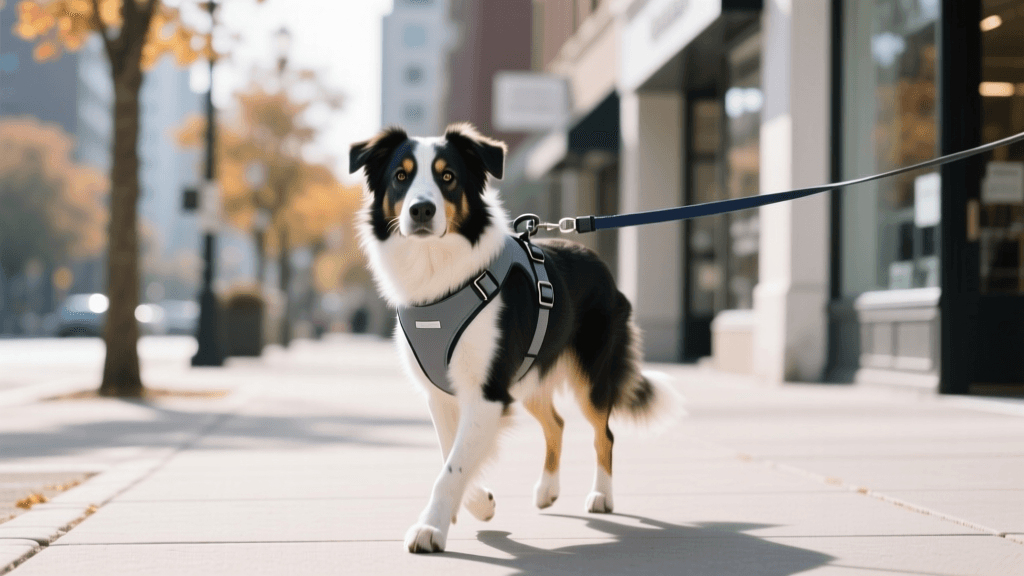
For most reactive dogs, a well-fitted Y-shaped front-clip harness paired with a 6-foot biothane or leather leash (avoid retractable leashes, which teach dogs that pulling extends the line) provides the safest balance of control and comfort.
Actionable Solutions: Threshold Training and Desensitization
Once you have diagnosed the emotion and secured the proper gear, you can begin counter-conditioning and desensitization (CC/DS). This requires high-value treats (e.g., boiled chicken, hot dogs, or freeze-dried liver, cut into pea-sized pieces) and a quiet environment to start.
Step 1: Find Your Dog's Threshold Distance
A 'threshold' is the distance at which your dog notices a trigger but remains capable of learning and taking treats. If your dog is barking, lunging, or refusing food, they are 'over threshold' and learning has shut down. Your first job is to find the exact distance—whether it is 20 feet or 100 feet—where your dog can look at another dog and still eat a piece of chicken. All initial training must occur at or slightly below this distance.
Step 2: The 'Engage and Disengage' Game
This game rewires your dog's emotional response to triggers. Stand with your dog at their sub-threshold distance.
- Engage: Wait for your dog to look at the trigger. The exact second they look, mark the behavior with a clicker or a verbal 'Yes!' and immediately deliver a high-value treat.
- Disengage: After a few repetitions, wait to see if your dog looks at the trigger and then voluntarily turns their head back to you before you mark it. When they offer this voluntary disengagement, throw a 'jackpot' of 3 to 5 treats.
This protocol teaches the dog that the appearance of a trigger predicts good things (chicken) and that looking away from the trigger is highly rewarding.
Step 3: The Emergency U-Turn
Real-world walks are unpredictable. You must train an emergency retreat for when a trigger suddenly appears inside your dog's threshold. Practice this in your living room first: say 'Let's go!' in a cheerful voice, pivot 180 degrees, and run a few steps away, rewarding heavily when your dog catches up. This becomes a fun game that you can deploy on the sidewalk when an off-leash dog suddenly rounds the corner.
According to the American Kennel Club (AKC), keeping your dog under their reactivity threshold is the single most important factor in successful behavior modification. Pushing a dog into the 'red zone' only rehearses and reinforces the neural pathways associated with panic and aggression.
Tracking Progress and Knowing When to Call a Professional
Rehabilitating a reactive dog is a marathon, not a sprint. Keep a training journal to track your dog's threshold distances, triggers, and environmental factors (e.g., 'barked at a golden retriever at 30 feet, but was calm around a poodle at 15 feet'). Expect setbacks; cortisol, the stress hormone, can remain elevated in a dog's bloodstream for up to 72 hours after a highly reactive episode. If your dog has a 'bad day' and reacts poorly, give them 2 to 3 days of mental enrichment and sniffaris in an empty field before returning to structured exposure training.
Finally, recognize your own limitations. If your dog has a bite history, if their reactivity is causing you severe anxiety, or if you are not seeing progress after 4 to 6 weeks of consistent threshold training, it is time to hire a certified professional. Look for a trainer accredited by organizations that mandate force-free, science-based methods, ensuring your dog's behavioral health is treated with the same care and expertise as their physical health.
robin-maitland
All our authors care for dogs every day — read more of their work on the authors page.