Australian Shepherd vs Basset Hound: Breed Instincts
Compare Australian Shepherd and Basset Hound instincts. Learn how herding and scent hound traits impact training, lifestyle, and daily care.
Understanding Breed Instincts Before You Choose
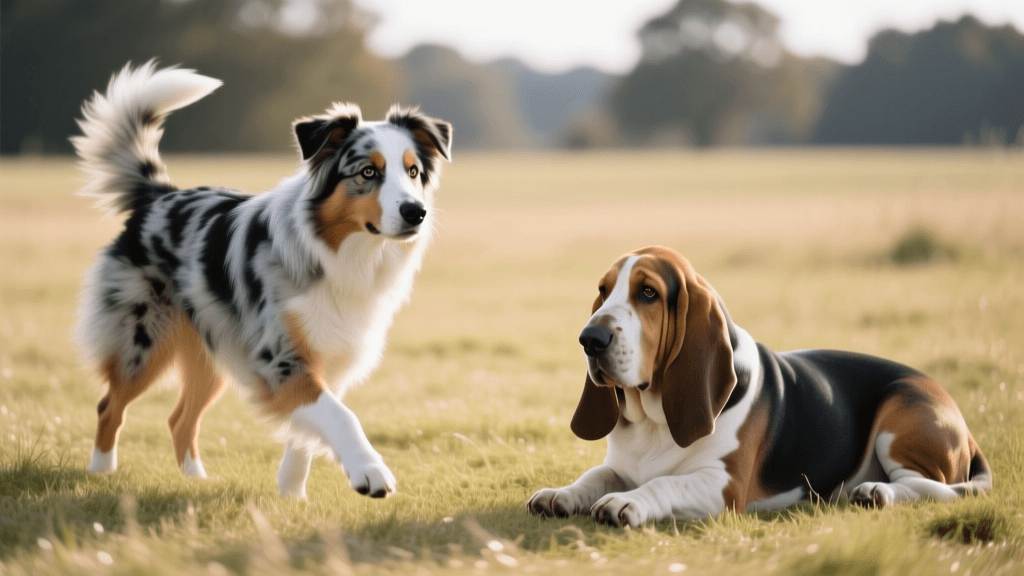
Selecting a dog based purely on physical appearance or a fleeting emotional connection is one of the most common pitfalls in pet ownership. True canine compatibility requires a deep dive into the psychology and evolutionary drives of the breed. In the realm of canine behavior, a dog's genetic blueprint dictates its baseline energy, problem-solving methods, and environmental needs. To illustrate the profound impact of breed instincts on daily life, we are comparing two vastly different, yet incredibly popular breeds: the high-octane Australian Shepherd and the methodical, low-slung Basset Hound.
By examining the psychological drivers behind a herding dog versus a scent hound, prospective owners can make informed, actionable decisions that prevent behavioral surrender and foster a lifelong bond. According to the American Kennel Club's guide on breed groups, understanding the historical 'job' of a dog is the first step in predicting its modern household behavior.
The Psychology of the Herder: Australian Shepherd Traits
The Australian Shepherd, despite its name, was refined in the American West as a premier livestock herding dog. Psychologically, Aussies are wired for high arousal, rapid decision-making, and intense visual stimulation. Their primary instinct is to control movement. This translates into a dog that is hyper-aware of its environment, quick to react to sudden noises or moving objects, and deeply motivated by cooperative work with their handler.
Because they were bred to anticipate the erratic movements of sheep and cattle, Aussies possess a strong 'eye'—a stalking behavior used to intimidate and direct livestock. In a modern suburban home, this instinct can easily be misdirected toward joggers, bicycles, or even the family children, resulting in nipping or chasing. The AKC's Australian Shepherd breed profile emphasizes that this breed requires a 'job' to remain psychologically balanced. Without an outlet for their herding drive, Aussies are prone to developing neurotic behaviors, such as shadow-chasing, obsessive light-reflection tracking, and destructive chewing.
Actionable Care and Training for Aussies
- Mental Stimulation: Physical exercise is not enough. An Aussie needs 45 to 60 minutes of dedicated cognitive work daily. Invest in advanced puzzle toys like the Nina Ottosson Dog Brick (approx. $25-$35) or enroll in agility and herding instinct classes ($150-$300 per session).
- Impulse Control Training: Teach a solid 'leave it' and 'watch me' command by 12 weeks of age to manage their reactivity to moving stimuli.
- Decompression Protocol: After high-arousal activities, provide a structured cool-down period using a snuffle mat or a frozen Kong Classic to lower their cortisol levels.
The Mind of the Scent Hound: Basset Hound Traits
On the opposite end of the behavioral spectrum is the Basset Hound. Bred in France and Belgium to hunt small game like rabbits and hares by scent, the Basset's psychology is governed entirely by its olfactory system. While the Aussie relies on its eyes and its handler's cues, the Basset relies on its nose and its own independent judgment. This is why Bassets are frequently, and unfairly, labeled as 'stubborn.' In reality, they are simply single-minded; when a Basset catches an intriguing scent, its brain effectively tunes out auditory commands.
Bassets are pack animals that thrive on companionship, but they lack the high-strung arousal of a herding dog. Their physical structure—characterized by heavy bone density, short legs, and long ears—means they are built for endurance over rough terrain at a slow, methodical pace, not for speed. However, their vocalization instincts are strong. Bassets possess a unique, deep-baying howl designed to alert hunters from miles away, which can become a nuisance in close-quarter neighborhoods if the dog becomes bored or isolated.
Actionable Care and Training for Bassets
- Scent Work and 'Sniffaris': A 45-minute walk where the dog is allowed to stop and sniff every bush is more mentally exhausting for a Basset than a two-mile forced march. Allow them to process environmental information through their nose.
- Recall Training Limitations: Never trust a Basset off-leash in an unfenced area. Their prey drive and scent focus will override years of obedience training if they catch the trail of a deer or rabbit.
- Spinal Health Management: Their elongated spines make them highly susceptible to Intervertebral Disc Disease (IVDD). Budget for orthopedic dog beds ($80-$150) and pet stairs to prevent them from jumping on and off furniture. Joint supplements like Dasuquin Advanced (approx. $50/month) are highly recommended by veterinarians for this breed.
Head-to-Head Comparison Chart
When evaluating which breed aligns with your lifestyle, consider the following structured comparison of their core needs and environmental requirements.
| Trait / Requirement | Australian Shepherd (Herding) | Basset Hound (Scent Hound) |
|---|---|---|
| Primary Drive | Visual movement, handler cooperation | Olfactory tracking, independent investigation |
| Daily Exercise Need | 90-120+ minutes (high intensity) | 45-60 minutes (low intensity, high sniffing) |
| Trainability | Highly biddable, learns complex tasks quickly | Independent, requires high-value food motivation |
| Vocalization | Alert barking, excitement whining | Deep baying, howling when lonely or on a scent |
| Space & Fencing | Requires 6-foot fence (athletic climbers) | Requires 4-foot secure fence (digging escape risk) |
| Grooming & Shedding | Heavy seasonal shedding, weekly brushing | Moderate shedding, weekly ear cleaning required |
Matching Breed Instincts to Your Daily Routine
The decision between an Australian Shepherd and a Basset Hound ultimately comes down to an honest assessment of your daily bandwidth and living environment. If you are an active individual who enjoys hiking, running, or participating in dog sports like flyball and agility, the Australian Shepherd will be a deeply rewarding partner. However, you must be prepared for the financial and time investments required to maintain their cognitive health. Expect to spend at least $500 to $1,000 annually on specialized training, dog sports entry fees, and advanced enrichment tools.
Conversely, if your lifestyle is more sedentary, or if you work from home and desire a calm, affectionate companion for leisurely neighborhood strolls, the Basset Hound is an exceptional choice. Their psychological need for 'pack' proximity makes them wonderful house dogs, provided you can manage their vocalizations and keep them at a healthy weight. The financial investment for a Basset leans heavily toward preventative veterinary care, specifically regarding joint health, obesity management, and chronic ear infections due to their pendulous ears.
Behavioral Red Flags to Watch For
Understanding your dog also means recognizing when their instincts are being frustrated by their environment. If you own an Australian Shepherd and notice them obsessively staring at shadows, pacing the fence line for hours, or exhibiting hyper-reactivity to the television, these are massive red flags indicating severe under-stimulation. You must immediately introduce structured cognitive tasks and impulse-control games.
For the Basset Hound, red flags include excessive, unprovoked baying, destructive chewing of baseboards, and refusal to eat. Because Bassets are highly social and food-motivated, a refusal to eat or a sudden spike in destructive behavior usually points to separation anxiety or profound boredom. Scent-work games, such as hiding treats around the house or enrolling in AKC Scent Work trials, can provide the mental exhaustion they desperately need without requiring strenuous physical exertion.
Conclusion
Choosing between the Australian Shepherd and the Basset Hound is not a matter of finding the 'better' dog, but rather the right psychological match for your household. By respecting the herding instincts of the Aussie and the olfactory drives of the Basset, you can tailor your training, environment, and daily routine to set your canine companion up for a fulfilled, stress-free life. Always prioritize the breed's historical purpose over their physical aesthetic, and you will build a harmonious relationship rooted in mutual understanding.
hannah-wickes
All our authors care for dogs every day — read more of their work on the authors page.