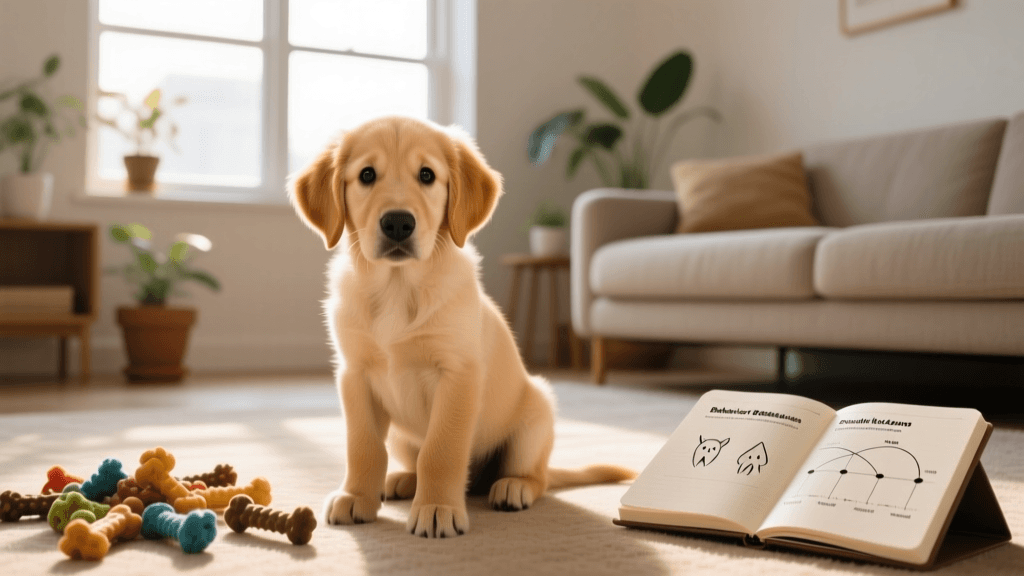
Decoding Puppy Biting: Expert Behavior Analysis Guide
Discover why puppies bite and how to teach bite inhibition using expert behavior analysis techniques, training timelines, and top-rated chew toys.

When bringing a new puppy into your home, one of the most immediate and often frustrating challenges owners face is mouthing and biting. From a clinical behavior analysis perspective, it is imperative to understand that puppy biting is not an act of malice or early-onset aggression. Rather, it is a species-typical behavior rooted in canine ethology, sensory exploration, and developmental milestones. As a senior behaviorist, I often remind clients that puppies lack opposable thumbs; their mouths serve as their primary tool for interacting with the physical world, gathering proprioceptive feedback, and initiating social play.
The Ethology of Mouthing: Why Puppies Bite
To effectively address mouthing, we must first decode the function of the behavior. In the wild and in the whelping box, littermates engage in vigorous play fighting. This play is the crucible in which puppies learn bite inhibition—the ability to modulate jaw pressure. When a puppy bites a sibling too hard, the sibling will emit a high-pitched yelp and withdraw from play. This immediate withdrawal of social reinforcement teaches the biter that hard bites result in the cessation of fun.
Furthermore, between the ages of three and six months, puppies undergo a significant physiological transition: teething. The eruption of adult teeth causes gingival inflammation, pressure, and discomfort. Chewing provides counter-pressure that soothes the gums and helps dislodge deciduous (baby) teeth. Therefore, a behaviorally sound approach does not aim to eliminate mouthing entirely, but rather to shape the intensity of the bite and redirect the behavior onto appropriate substrates.
The Critical Window for Bite Inhibition
The window for teaching bite inhibition is remarkably narrow. According to the ASPCA, the foundational learning occurs between 3 and 8 weeks of age alongside littermates. Once the puppy transitions to a human household, the new family must continue this education. Human skin is vastly more sensitive than a dog's hide, meaning the threshold for what constitutes a hard bite must be recalibrated.
| Age Range | Developmental Stage | Behavioral Focus | Intervention Strategy |
|---|---|---|---|
| 3-8 Weeks | Littermate Socialization | Initial force feedback | Allow supervised peer play |
| 8-12 Weeks | Transition to Human Family | Generalizing soft mouth to human skin | Redirect to toys; withdraw attention for hard bites |
| 3-5 Months | Teething & Premolar Eruption | Soothing gingival discomfort | Provide chilled, textured chew toys |
| 5-7 Months | Adult Tooth Eruption | Deep chewing needs & jaw strengthening | Durable rubber enrichment toys; structured chew sessions |
Applied Behavior Analysis: Shaping Soft Mouths
In applied behavior analysis (ABA), we utilize operant conditioning to modify behavior. The most effective protocol for managing puppy biting involves a combination of Differential Reinforcement of Incompatible Behavior (DRI) and Negative Punishment.
Differential Reinforcement of Incompatible Behavior (DRI)
DRI involves reinforcing a behavior that is physically incompatible with the unwanted behavior. A puppy cannot simultaneously bite your forearm and chew on a rubber enrichment toy. When a puppy approaches with the intent to mouth, preemptively present a high-value chew toy. The moment the puppy's teeth make contact with the toy, mark the behavior with a verbal 'yes' or a clicker, and offer verbal praise. You are actively reinforcing the choice to bite the toy rather than the human.
Negative Punishment and the Extinction Burst
Negative punishment involves the removal of a desired stimulus to decrease a behavior. In the context of mouthing, the desired stimulus is your attention and interaction. If the puppy's teeth touch human skin or clothing, immediately cease all interaction. Stand up, cross your arms, and look away for exactly 10 to 15 seconds.
Crucially, behaviorists warn owners to prepare for an extinction burst. When a previously reinforced behavior suddenly stops working, the puppy will often temporarily increase the frequency or intensity of the behavior before it extinguishes. They may bite harder, jump, or vocalize. Yielding to this burst by pushing the puppy away or yelling only reinforces the behavior by providing engagement. Consistency and emotional neutrality during the extinction burst are paramount.
Enrichment Protocols and Tool Selection
Redirecting requires having the right tools readily available in every room of your home. Investing in species-appropriate enrichment toys is a non-negotiable aspect of puppy management. Below is a curated matrix of behaviorist-recommended tools, including estimated costs and specific applications.
- KONG Classic Puppy (approx. $12 - $16): Manufactured from a softer, natural rubber compound designed specifically for developing puppy jaws. For maximum behavioral impact, stuff the KONG with a mixture of plain Greek yogurt, pureed pumpkin, and kibble, then freeze it for 4 hours. The freezing process extends the chewing session and provides cryotherapy for inflamed gums.
- West Paw Toppl (approx. $25): An innovative, interlocking puzzle toy that features inner prongs for trapping treats. It requires less sustained jaw pressure than traditional hollow toys, making it ideal for young puppies who may frustrate easily.
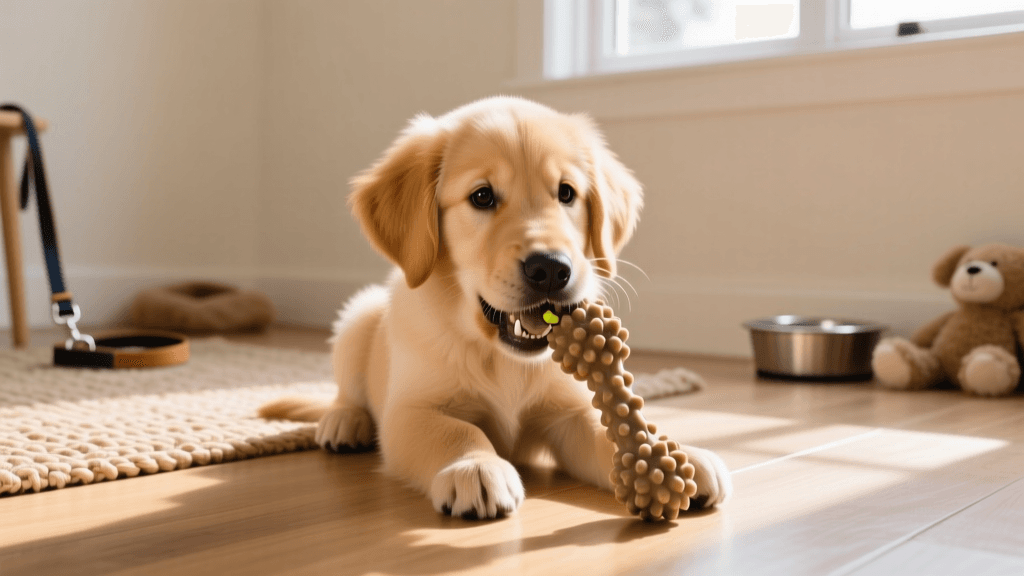
- Nylabone Puppy Chew (approx. $8): Engineered with raised nubs and bristles to mechanically clean teeth and massage gums. Behaviorists strictly advise selecting the 'Puppy' specific line; adult Nylabones are composed of a much harder nylon that risks fracturing fragile deciduous teeth.
The Fallacy of Aversive Corrections
Historically, outdated training paradigms suggested holding a puppy's mouth shut, tapping their nose, or forcing fingers down their throat to deter biting. From a modern behavioral science standpoint, these methods are not only ineffective but actively harmful.
The American Veterinary Society of Animal Behavior (AVSAB) explicitly warns against the use of aversive punishments. These techniques constitute Positive Punishment (adding an aversive stimulus) and can trigger a fear response. Instead of learning to inhibit their bite, the puppy learns to fear human hands approaching their face, which can escalate into defensive aggression and severe resource guarding later in life. Building trust through positive reinforcement and environmental management is always the superior, evidence-based route.
Structuring the Environment for Success
Behavior does not occur in a vacuum; it is heavily influenced by the environment and the animal's internal physiological state. One of the most overlooked triggers for excessive puppy biting is overtiredness.
According to the American Kennel Club (AKC), puppies require between 18 and 20 hours of sleep per day to support their rapid neurological and physical development. Much like a human toddler missing a nap, an overtired puppy loses emotional regulation and impulse control, resulting in frantic, hard biting. If your puppy has been awake for more than 60 to 90 minutes and begins exhibiting land shark behavior, the intervention is not a training session—it is an enforced nap in a quiet, dimly lit crate or playpen.
Red Flags: Differentiating Play from Pathology
While 95% of puppy biting is normal developmental behavior, behaviorists monitor for specific red flags that indicate underlying pathology or require immediate intervention by a certified professional (such as a DACVB or CAAB). Seek expert guidance if you observe:
- Hard, puncture-wound bites that persist beyond 5 months of age.
- Biting accompanied by rigid body posture, hard staring, or low-pitched growling.
- Aggressive guarding of food, toys, or sleeping areas.
- Biting that is triggered by gentle handling or grooming.
Conclusion
Navigating the puppy biting phase requires patience, consistency, and a solid understanding of canine ethology. By viewing mouthing through the lens of behavior analysis, you can replace frustration with strategic management. Utilize DRI, manage your puppy's sleep schedule, provide appropriate frozen enrichment, and allow time for the extinction burst to pass. With these expert protocols, you will successfully guide your puppy through this critical developmental milestone, resulting in a well-adjusted adult dog with a reliably soft mouth.
robin-maitland
All our authors care for dogs every day — read more of their work on the authors page.