Decoding Dog Travel Anxiety: Body Language & Road Trip Tips
Learn to decode your dog's travel anxiety body language. Discover actionable road trip tips, calming products, and coping strategies for stress-free trips.

Embarking on a road trip or cross-country adventure with your canine companion is a dream for many pet owners. However, what feels like a thrilling vacation to you might feel like a terrifying ordeal for your dog. To truly master dog-friendly travel, we must look beyond basic logistics and dive deep into canine psychology and body language. Understanding how your dog communicates stress is the first step toward transforming car rides from a source of panic into an enjoyable shared adventure.
The Hidden Language of Canine Travel Stress
Dogs are masters of non-verbal communication, but humans often miss the subtle early warnings of distress because we are focused on the destination rather than the journey. When a dog is placed in a moving vehicle, they are subjected to unfamiliar scents, erratic movements, and a loss of control. Recognizing the spectrum of canine body language is critical for intervening before a dog reaches a state of full-blown panic.
Subtle Early Warning Signs
Before a dog whines or paces, they will display calming signals and displacement behaviors. These are polite, subtle requests for space or an indication of internal conflict:
- Lip Licking and Yawning: While these can indicate tiredness or hunger, in the context of a car ride, rapid lip licking and exaggerated yawning are classic signs of nervous system arousal and stress.
- Whale Eye: This occurs when your dog turns their head slightly away but keeps their eyes fixed on you or the window, exposing the whites of their eyes (the sclera). It indicates hyper-vigilance and discomfort.
- Excessive Panting: If the car is climate-controlled and cool, but your dog is panting with a tight, retracted mouth (often called a "spatulate" tongue), this is a physiological response to adrenaline and anxiety, not heat.
- Shaking Off: If your dog shakes their entire body vigorously as if they just got out of a bath, but they are completely dry, they are attempting to "shake off" accumulated tension.
Escalated Overt Signals
If the subtle cues are ignored or the stressor (the moving car) continues to overwhelm the dog's coping mechanisms, the behavior will escalate into overt distress signals. These include relentless pacing, high-pitched whining, excessive drooling (hypersalivation), trembling, freezing in place, or gastrointestinal upset like vomiting and diarrhea. Once a dog reaches this threshold, they are incapable of learning or relaxing, and the journey must be paused.
The Psychology: Motion Sickness vs. Associative Fear
It is vital to distinguish between canine motion sickness and associative travel anxiety, as the psychological and physiological roots differ significantly. Motion sickness is primarily a vestibular issue. The inner ear structures that govern balance are fully developed in adult dogs, but the sensory mismatch between what the dog sees (a stationary car interior) and what their body feels (acceleration and turning) causes nausea. Puppies often outgrow this as their vestibular system matures.
Associative fear, however, is a psychological condition. If a dog's primary experience with cars involves stressful destinations—such as the veterinary clinic, the groomer, or being rehomed—they will develop a conditioned emotional response. The car itself becomes a predictor of trauma. According to the American Veterinary Medical Association (AVMA), gradual acclimation and positive reinforcement are the most effective ways to rewrite these negative psychological associations and build a foundation of trust.
Actionable Desensitization Training Protocol
Desensitization requires immense patience. You must break the concept of "the car" down into micro-steps, ensuring your dog remains under their stress threshold at every phase. Keep training sessions short (5 to 10 minutes) and always end on a positive note.
Phase 1: The Parked Car (Days 1-3)
Start with the car turned off in the driveway. Open the doors and toss high-value treats (like boiled chicken or freeze-dried liver) onto the floorboards and seats. Allow the dog to enter and exit freely without closing the doors. The goal is to build a positive conditioned emotional response (CER) to the smell and feel of the car's interior. Do not attempt to start the engine during this phase.
Phase 2: The Idling Engine (Days 4-6)
Once your dog happily jumps into the parked car, introduce the sound and vibration of the engine. Sit in the driver's seat with your dog secured in their travel harness or crate. Start the engine, immediately feed a steady stream of treats or offer a long-lasting chew (like a stuffed Kong), and then turn the engine off after two minutes. Repeat this until the sound of the engine predicts delicious rewards rather than fear.
Phase 3: The Block-Around Drive (Days 7-14)
Begin driving, but only for distances that do not trigger anxiety. Drive to the end of the street and back, then park and reward. Gradually increase the radius of your trips over several weeks. Crucially, ensure these short drives end at highly rewarding locations, such as a local park or a drive-thru that offers "pup cups," completely severing the associative bond between the car and the vet's office.
Essential Travel Gear: A Comparison Chart
Equipping your vehicle with the right gear not only ensures physical safety but also provides psychological security. A dog that feels physically secure is less likely to experience vestibular confusion and anxiety. Below is a comparison of top-tier travel products designed to mitigate stress and protect your pet.
| Product Name | Category | Best For | Estimated Cost |
|---|---|---|---|
| Sleepypod Clickit Sport | Crash-Tested Harness | Highway travel & physical safety | $90 - $110 |
| Adaptil Transport Spray | Synthetic Pheromone | Mild to moderate anxiety | $15 - $25 |
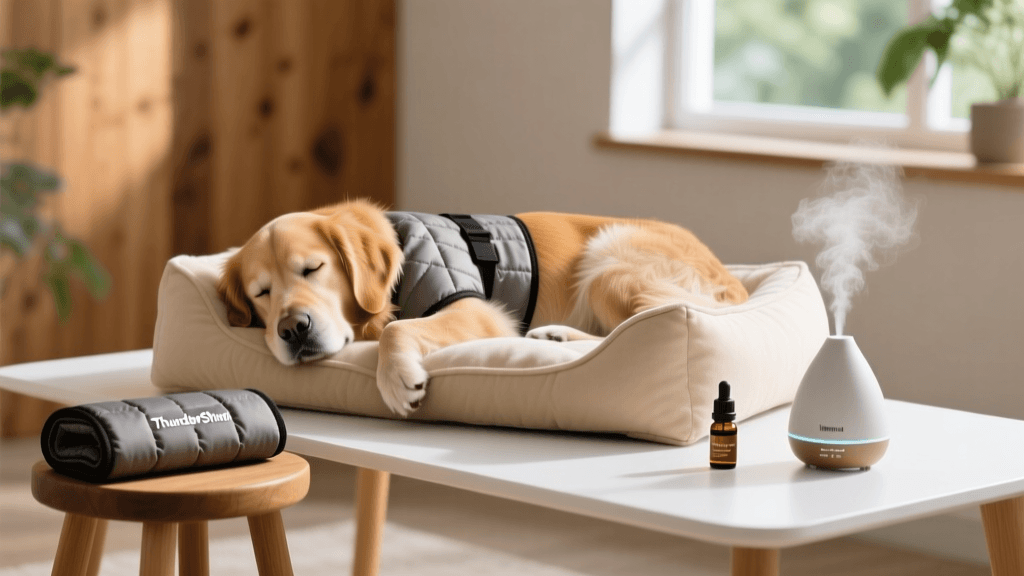
| Thundershirt Classic | Compression Wrap | General stress & proprioceptive calming | $40 - $50 |
| Kurgo Tru-Fit Smart | Dual-Use Harness | Walking & short car tethering | $30 - $45 |
When using pheromone products like Adaptil, spray the dog's crate mat or the car seat 15 minutes before loading your dog to allow the alcohol carrier to evaporate, leaving only the calming synthetic pheromones. For physical restraint, always tether a harness to a seatbelt using a short, fixed-length tether rather than an extension lead, which can cause whiplash in the event of sudden braking.
Planning the Perfect Dog-Friendly Itinerary
The Humane Society of the United States emphasizes that proper planning and frequent breaks are non-negotiable for long-distance canine travel. A rigid human schedule is the enemy of a relaxed dog. Plan to stop every 2 to 3 hours for a minimum of 15 minutes. These stops should not be limited to quick bathroom breaks on hot asphalt; they must include "sniffaris."
Allow your dog 10 minutes of unstructured sniffing in a safe, grassy area. Sniffing lowers a dog's heart rate and engages their parasympathetic nervous system, acting as a natural stress reliever. Bring a collapsible silicone travel bowl and offer small amounts of water frequently to prevent dehydration and subsequent bloat, especially in deep-chested breeds. Avoid feeding a full meal less than two hours before departure to minimize the risk of motion-induced vomiting.
When to Consult a Veterinary Behaviorist
Sometimes, despite meticulous desensitization training and premium gear, a dog's travel anxiety remains unmanageable. If your dog exhibits self-injurious behavior, escapes from crates, or remains in a state of severe panic, it is time to consult a veterinarian or a board-certified veterinary behaviorist. Modern veterinary medicine offers highly effective, short-acting anti-anxiety medications such as Trazodone, Gabapentin, or Alprazolam, which can be used specifically for travel days. Additionally, if motion sickness is the primary culprit, medications like Cerenia (maropitant citrate) can block the vomiting center in the brain without causing heavy sedation.
Pro Tip: Never use over-the-counter human motion sickness medications like Dramamine without explicit veterinary guidance, as dosages for canines are weight-dependent and certain formulations contain ingredients that are highly toxic to dogs.
Ultimately, understanding your dog's travel anxiety is an exercise in empathy. By learning to read their subtle body language, respecting their psychological limits, and utilizing science-backed training and gear, you can transform the car from a metal cage of fear into a mobile gateway to the great outdoors.
robin-maitland
All our authors care for dogs every day — read more of their work on the authors page.