Top Calming Products For Dogs With Separation Anxiety
Discover the best calming products for dogs with separation anxiety. Our buyer's guide reviews wraps, beds, and diffusers to soothe your pet's stress.
The Psychology of Canine Separation Anxiety
To effectively choose calming products for your dog, you must first understand the psychology behind their distress. Separation anxiety is not a display of spite or a lack of obedience; it is a genuine, intense panic response triggered by isolation. When a dog with hyper-attachment is left alone, their brain experiences a massive spike in cortisol and adrenaline, initiating a severe fight-or-flight response. According to the ASPCA, dogs suffering from this condition often exhibit destructive behavior, vocalization, and inappropriate elimination purely out of psychological terror, not rebellion.
Understanding this physiological panic is crucial for any pet parent shopping for anxiety relief. You are not looking for products that "train" the dog to be quiet; you are looking for tools that lower their neurological arousal threshold so that behavioral modification can actually take place.
Why Products Are Tools, Not Magic Cures
Before diving into our buyer's guide, it is vital to set realistic expectations. No single product will cure separation anxiety overnight. The VCA Animal Hospitals note that successful management of separation anxiety requires a multimodal approach. Calming products act as environmental modifiers and physiological soothers. They create a baseline of comfort that allows your dog to engage in desensitization and counter-conditioning training without immediately crossing their threshold of panic.
Top Product Categories for Anxious Dogs: A Buyer's Guide
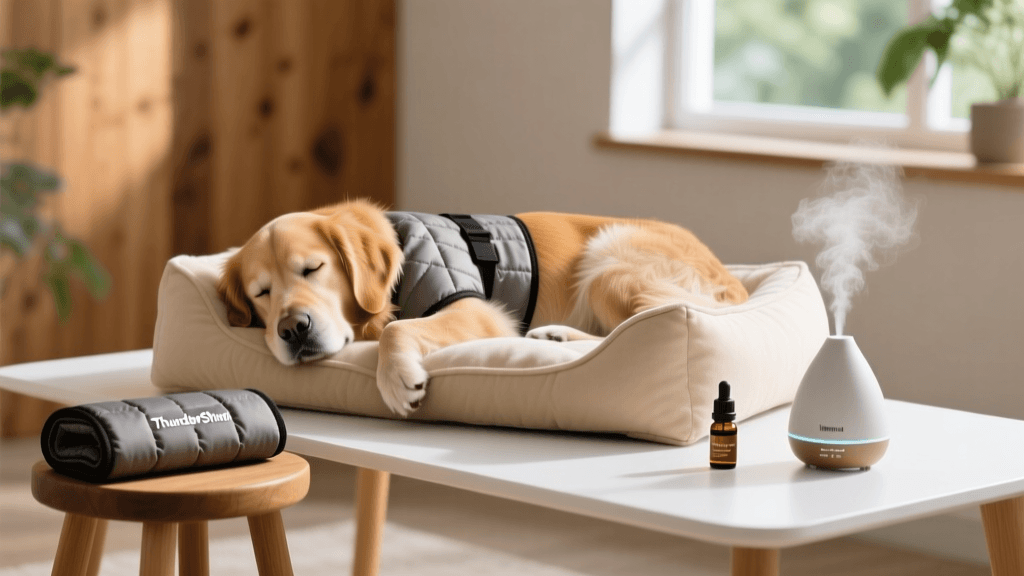
1. Deep Pressure Therapy Wraps (e.g., ThunderShirt)
The Behavioral Science: Deep Pressure Therapy (DPT) is a concept borrowed from human psychology, often used for individuals with autism or sensory processing disorders. By applying gentle, constant pressure to the dog's torso, these wraps stimulate the parasympathetic nervous system, promoting the release of endorphins and oxytocin while lowering heart rate.
Buyer's Guide & Specs:
- Top Pick: ThunderShirt Classic or Sport.
- Sizing: Do not guess your dog's size. Use a soft measuring tape to measure the widest part of your dog's ribcage. A wrap that is too loose provides no therapeutic pressure, while one that is too tight can restrict breathing and increase panic.
- Material: Look for breathable, stretchy fabrics like polyester-spandex blends to prevent overheating during extended wear.
- Average Cost: $40 - $50.
- Pro Tip: Introduce the wrap during happy, low-stress times (like mealtime or cuddling) before ever using it for departures. If the dog only sees the wrap when you leave, it will become a predictor of anxiety.
2. Synthetic Pheromone Diffusers (e.g., ADAPTIL)
The Behavioral Science: Dog-Appeasing Pheromone (DAP) is a synthetic replica of the pheromone produced by lactating mother dogs to reassure their puppies. While adult dogs do not consciously "smell" this pheromone, it is detected by the vomeronasal organ, sending a subconscious signal of safety and security to the brain's limbic system.
Buyer's Guide & Specs:
- Top Pick: ADAPTIL Calm Home Diffuser.
- Coverage: One diffuser covers approximately 700 square feet. Place it in the room where your dog spends the most time or exhibits the most anxiety. Do not plug it in behind furniture or under shelves, as the pheromone needs to rise and circulate.
- Refills: Each refill lasts about 30 days. Continuous use is recommended for chronic anxiety.
- Average Cost: $20 - $30 for the starter kit; $15 - $20 for refills.
3. Interactive Treat-Dispensing Cameras (e.g., Furbo 360)
The Behavioral Science: For dogs whose anxiety stems from a lack of environmental enrichment or who respond well to owner interaction, remote monitoring and positive reinforcement can shift their emotional state. Treat cameras allow you to interrupt the early stages of the anxiety cycle (pacing, whining) by redirecting the dog's focus to a high-value reward before the panic escalates.
Buyer's Guide & Specs:
- Top Pick: Furbo 360 Dog Camera.
- Features to Look For: 1080p or 4K video, two-way audio, bark alerts, and a reliable treat-tossing mechanism that doesn't jam. A 360-degree rotating lens is highly recommended for anxious dogs who pace in circles.
- Subscription Costs: Be aware that advanced features like cloud recording and AI activity tracking often require a monthly subscription ($5 - $10/month).
- Average Cost: $150 - $250 for the hardware.
4. Bolster and "Donut" Calming Beds
The Behavioral Science: Dogs possess a natural nesting instinct. Raised rims and deep, plush interiors mimic the feeling of burrowing and provide tactile feedback that makes the dog feel physically shielded from environmental threats. This is particularly effective for dogs who seek out small, enclosed spaces (like bathtubs or closets) when stressed.
Buyer's Guide & Specs:
- Top Pick: Best Friends by Sheri The Original Calming Donut Bed.
- Sizing: Measure your dog from the base of the tail to the tip of the nose, and add 12 inches to ensure they can fully stretch out while remaining inside the bolster.
- Maintenance: Anxious dogs may drool excessively or have accidents. Ensure the bed has a water-resistant bottom and a removable, machine-washable cover.
- Average Cost: $40 - $90 depending on size.
Comparison Chart: Matching the Product to Your Dog's Behavior
| Product Category | Mechanism of Action | Best Suited For | Behavioral Limitation |
|---|---|---|---|
| Pressure Wraps | Deep Pressure Therapy (Parasympathetic activation) | Dogs who pace, tremble, or seek physical contact | Some dogs freeze or refuse to move when first wearing it |
| Pheromone Diffusers | Limbic system soothing via vomeronasal organ | General environmental stress, mild to moderate anxiety | Takes 1-2 weeks of continuous use to see full effects |
| Treat Cameras | Redirection and positive reinforcement | Food-motivated dogs, owners who work predictable shifts | Can increase frustration if the dog hears the owner but cannot reach them |
| Calming Beds | Tactile security and nesting instinct fulfillment | Dogs who hide, burrow, or seek enclosed spaces | Not suitable for dogs who destructively chew fabric when panicked |
Products to Strictly Avoid
When trying to understand and help an anxious dog, it is equally important to know what not to buy. The American Kennel Club (AKC) and veterinary behaviorists universally condemn the use of punishment-based tools for separation anxiety.
- Static Shock Collars / Bark Collars: These devices punish the symptom (vocalization) without addressing the underlying panic. The dog is still terrified, but now they are also in pain, which can lead to severe behavioral fallout, including redirected aggression or total psychological shutdown.
- Ultrasonic Anti-Bark Devices: Similar to shock collars, these add an aversive stimulus to an already panicked animal, increasing their overall stress load.
- Confinement Crates (Without Prior Conditioning): While crates are great for management, forcing a dog with severe separation anxiety into a crate can result in broken teeth and torn nails as they attempt to escape. If your dog has not been positively crate-trained, a gated "safe room" is a much safer alternative.
Building a Comprehensive Desensitization Protocol
To get the most out of the products you purchase, you must pair them with a systematic desensitization protocol. Here is a basic framework to use alongside your new calming tools:
- Identify Departure Cues: Dogs recognize the micro-behaviors that precede your leaving (picking up keys, putting on shoes, grabbing a coat). Perform these actions randomly throughout the day without actually leaving to desensitize the dog to these triggers.
- Create a "Safe Zone": Set up the calming bed and plug in the pheromone diffuser in a designated room. Feed your dog their highest-value meals (like frozen Kongs or lick mats) exclusively in this zone to build a positive emotional response.
- Practice Micro-Departures: Put on the pressure wrap. Step outside the front door, close it, and immediately open it. Gradually increase the time you are out of sight by mere seconds, ensuring the dog remains under their anxiety threshold.
- Monitor and Adjust: Use your treat camera to observe your dog's body language. If they are panting heavily, pacing, or staring fixedly at the door, you have pushed the duration too far too fast. Return to a shorter duration.
When to Consult a Veterinary Behaviorist
If your dog is injuring themselves, destroying your home, or if their panic does not decrease after several weeks of combining calming products with desensitization training, it is time to seek professional help. A board-certified veterinary behaviorist can assess whether your dog requires anti-anxiety medication (such as SSRIs like fluoxetine) to chemically balance their brain. Medication, much like a pressure wrap or a pheromone diffuser, is simply another tool—one that lowers the neurological barrier to learning, allowing your dog to finally find peace when you are away.
priya-sutaria
All our authors care for dogs every day — read more of their work on the authors page.