Decoding Destructive Behavior: Budget DIY Enrichment Games
Learn why dogs destroy things and discover budget-friendly DIY enrichment games that satisfy breed instincts without breaking the bank.
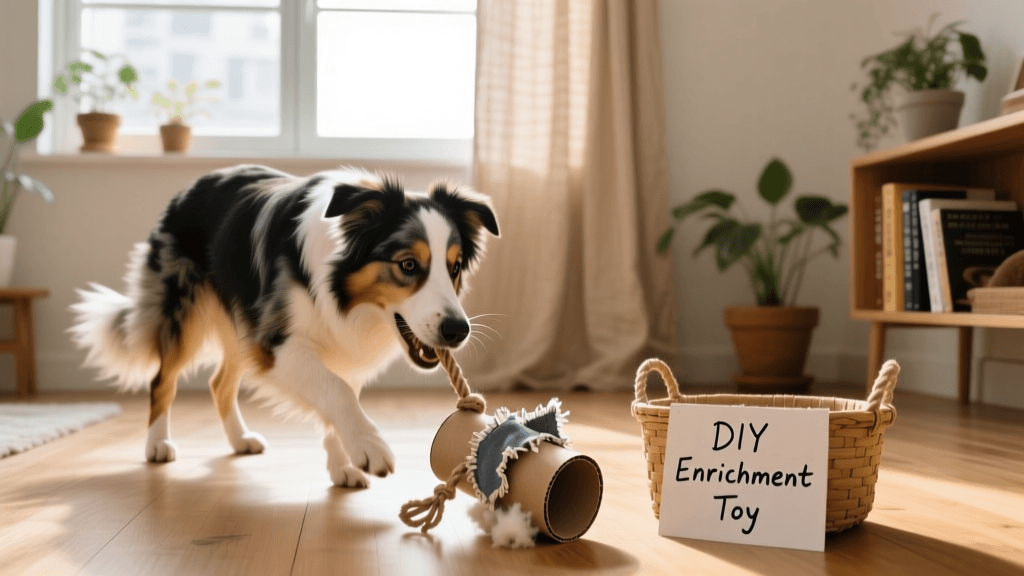
The Psychology Behind the Chew: Why Dogs Destroy
Coming home to a shredded sofa cushion, a chewed-up baseboard, or a dug-up flowerbed is a frustrating rite of passage for many dog owners. It is incredibly common for humans to project human emotions onto their pets, assuming the dog acted out of "spite" or "revenge" for being left alone. However, canine psychology tells a vastly different story. Dogs lack the complex cognitive framework required for spite. Instead, destructive behavior is almost always a symptom of unmet biological drives, boredom, separation anxiety, or a lack of appropriate mental stimulation.
From an ethological perspective, chewing and shredding are deeply ingrained survival behaviors. The act of gnawing releases endorphins in a dog's brain, acting as a natural self-soothing mechanism. When a dog is under-stimulated, they will naturally seek out items that provide satisfying resistance or carry their owner's scent—like leather shoes or wooden furniture—to self-regulate their nervous system. According to the ASPCA, destructive chewing is often a primary indicator that a dog's environment lacks the necessary outlets for their natural breed instincts.
Reading the Signs: Body Language of an Under-Stimulated Dog
Before the destruction happens, your dog is likely communicating their mental state through subtle body language. Understanding these signals can help you intervene before your favorite sneakers become a casualty. Watch for displacement behaviors and calming signals, which indicate a buildup of internal stress or pent-up energy. Common signs include:
- Pacing and Inability to Settle: Constantly moving from room to room without a clear purpose.
- Excessive Lip Licking and Yawning: When not related to food or tiredness, these are classic canine stress signals.
- Whale Eye: Showing the whites of the eyes while looking away, indicating hyper-vigilance or anxiety.
- Hyper-Mouthing: Gently nibbling or aggressively mouthing hands and arms during play, indicating a need for an appropriate chewing outlet.
The Financial Toll of Canine Boredom vs. Budget Enrichment
Ignoring your dog's psychological need for enrichment doesn't just result in a stressed pet; it results in a significantly lighter wallet. Replacing destroyed household items and paying for professional behavioral modification can cost hundreds, if not thousands, of dollars. Fortunately, satisfying your dog's innate drives can be achieved with household items and zero-dollar DIY alternatives.
| Destructive Behavior | Typical Financial Cost (Replacement) | Budget DIY Enrichment Alternative | Cost of Alternative |
|---|---|---|---|
| Chewing Furniture & Shoes | $150 - $800+ | Frozen Broth Towel | $1.50 |
| Shredding Trash & Mail | $20 - $50 (Cleaning/Replacement) | Cardboard Foraging Box | $0.00 |
| Digging Up Yard & Carpets | $50 - $200 (Landscaping/Flooring) | T-Shirt Snuffle Mat | $0.00 |
Decoding Breed Instincts for Budget Enrichment
The American Kennel Club (AKC) emphasizes that mental enrichment is just as critical as physical exercise, and it must be tailored to your dog's specific breed group. A Terrier needs to shred, a Hound needs to sniff, and a Mastiff needs to crush. Here is how to build budget-friendly DIY enrichment games that target these specific psychological needs.
1. The Shredders (Terriers, Spaniels, and Small Hounds)
Breeds like Jack Russell Terriers, Rat Terriers, and Beagles were historically bred to hunt, catch, and tear apart small vermin. If you don't give them something appropriate to shred, they will find something inappropriate. The "Shred Box" satisfies the tactile sensation of tearing while engaging their foraging instincts.
The DIY Cardboard Foraging Box (Cost: $0.00)
- Save a medium-sized cardboard box (approximately 12x12x12 inches). Ensure all tape and staples are removed.
- Save your toilet paper and paper towel cardboard tubes, along with junk mail (remove plastic windows).
- Crumple the paper and tubes into balls, hiding a portion of your dog's daily kibble allowance (about 1/2 cup) inside the crumples and at the bottom of the box.
- Place the box in an easy-to-clean area and let your dog rip, tear, and forage. The sound and feel of tearing cardboard perfectly mimics the sensation of dismantling prey, providing immense psychological satisfaction.
2. The Sniffers (Scent Hounds and Retrievers)
Bloodhounds, Basset Hounds, and Labrador Retrievers process the world primarily through their noses. A dog's olfactory cortex takes up roughly 40 times more space in their brain than it does in a human's. For these breeds, physical walking isn't enough; they need "sniffaris" to achieve true mental exhaustion.
The Upcycled T-Shirt Snuffle Mat (Cost: $0.00)
- Acquire a cheap rubber sink mat with holes (approx. 12x15 inches) or an old plastic lattice sheet.
- Cut 50 to 60 strips from old, unwashed cotton t-shirts or fleece blankets. Each strip should be about 1 inch wide and 8 inches long. (Using unwashed items provides comforting familiar scents).
- Tie each strip through the holes of the mat using a simple overhand knot, packing them tightly together so the base is completely hidden.
- Sprinkle high-value treats or kibble deep into the fleece strips. Your dog will have to use their nose and paws to root through the fabric, simulating the natural behavior of foraging for food in dense underbrush.
3. The Power Chewers (Mastiffs, Pit Bulls, and Shepherds)
Large, powerful breeds possess immense jaw pressure and a deep psychological need to chew to relieve stress and maintain dental health. Commercial chew toys are often destroyed in minutes, leading to a constant, expensive replacement cycle.
The Frozen Broth Towel (Cost: ~$1.50)
- Take a clean, 100% cotton hand towel (approx. 12x24 inches) and soak it in low-sodium chicken or beef broth. Crucial Safety Note: Ensure the broth contains absolutely no onions or garlic, as these are highly toxic to dogs.
- Wring out the excess liquid so the towel is damp but not dripping.
- Twist the towel tightly into a rope-like shape, then tie it into a loose knot or braid it.
- Place the towel in the freezer for at least 4 hours until it is rock solid.
- Hand the frozen towel to your dog. The freezing temperature soothes inflamed gums, while the dense, icy fabric provides hours of satisfying, heavy-duty chewing resistance that mimics gnawing on a bone.
The Science of Sniffing: Free Mental Exhaustion
One of the most profound yet entirely free ways to understand and support your dog's psychology is to change how you walk them. Many owners treat walks as a physical race to burn off energy, constantly pulling their dogs away from interesting smells. However, behavioral science shows that 20 minutes of intense, uninterrupted sniffing can tire a dog out as much as an hour of brisk walking. Processing complex scent molecules requires massive amounts of neurological energy. By allowing your dog to dictate the pace and route of a "sniffari," you are providing free, high-level cognitive enrichment that drastically reduces anxiety and the likelihood of destructive behavior at home.
Implementing a Zero-Dollar Enrichment Routine
Enrichment is most effective when it is predictable and rotated. Dogs habituate quickly; a toy left on the floor for a week becomes invisible to them. Animal welfare organizations like Best Friends Animal Society advocate for rotating enrichment items to keep the dog's brain engaged and curious.
Create a weekly schedule using your DIY items. Offer the Snuffle Mat during your morning coffee routine to keep your dog occupied and prevent demand-barking. Provide the Cardboard Foraging Box right before you leave for work to ease separation anxiety and redirect departure stress into a rewarding foraging task. Save the Frozen Broth Towel for the late afternoon when your dog's energy peaks and they might otherwise turn their attention to the couch cushions.
By shifting your perspective from frustration to understanding, you can decode the root causes of your dog's destructive behavior. You do not need an expensive subscription box or a massive budget to fulfill your dog's psychological needs. With a little creativity, some cardboard, and a basic understanding of canine ethology, you can provide profound mental enrichment that saves your furniture, your wallet, and your sanity.
tom-renshaw
All our authors care for dogs every day — read more of their work on the authors page.