Decoding Resource Guarding in Dogs: Expert Behavior Analysis
Discover the psychology behind canine resource guarding. Learn expert behavior analysis techniques, intervention protocols, and prevention strategies.

The Evolutionary Psychology of Resource Guarding
Resource guarding is one of the most misunderstood behaviors in canine psychology. To the untrained eye, a dog snarling over a bone or stiffening when approached while eating appears aggressive, dominant, or defiant. However, from an expert behavior analysis perspective, resource guarding is a completely normal, adaptive survival mechanism. In the wild, canines that failed to protect their scarce resources—food, mates, and shelter—simply did not survive to pass on their genetics.
When we bring dogs into our homes, we provide an abundance of resources, but the ancestral neural pathways remain intact. Guarding is not a symptom of a 'broken' dog; it is a manifestation of anxiety and a perceived threat of resource loss. The dog is communicating a clear message: 'This item has high value to me, and I am unsure if you are going to take it away.' Understanding this psychological baseline is the first step toward effective, empathetic intervention.
Breed Predispositions and Genetic Factors
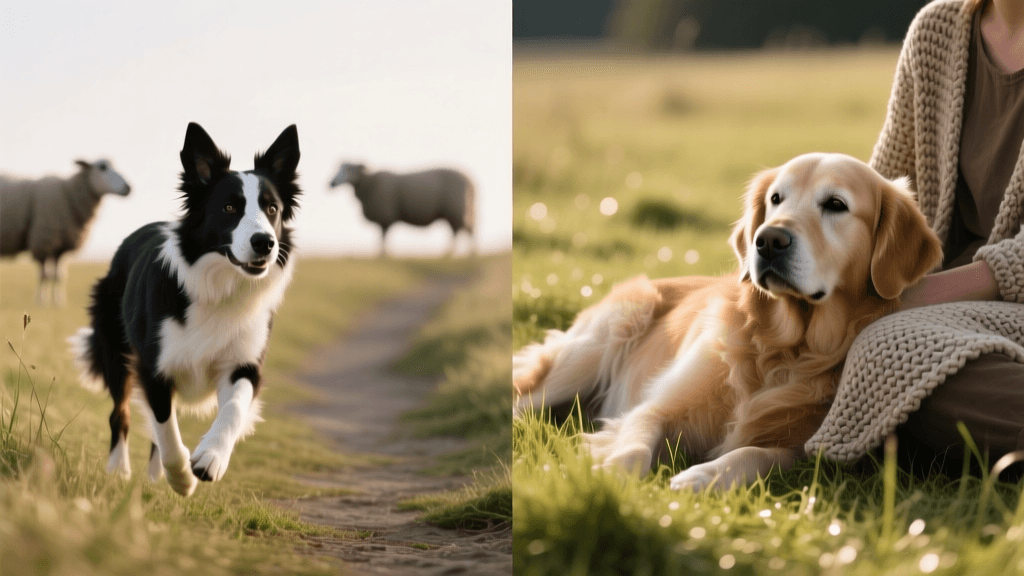
While any dog can develop resource guarding behaviors, certain genetic lines are more predisposed to scarcity mindsets. Breeds historically selected for independent foraging, vermin hunting, or livestock guarding often exhibit higher baseline vigilance. For instance, terriers and some herding breeds may display heightened reactivity over toys or moving objects due to their high prey drive and intense focus. Conversely, breeds selected for cooperative retrieving tasks, like Golden Retrievers, may show lower incidences of food guarding, though they are certainly not immune. Environmental factors, such as early weaning, competition in the whelping box, or a history of shelter scarcity, often act as epigenetic triggers that amplify these genetic predispositions.
The Canine Ladder of Aggression: Reading the Signs
Dogs rarely bite 'out of nowhere.' Instead, they progress through a well-documented behavioral sequence known as the Canine Ladder of Aggression. Expert behaviorists rely on recognizing the lower rungs of this ladder to intervene before a bite threshold is crossed. Punishing a dog for growling (a mid-level warning) effectively removes their ability to communicate discomfort, often resulting in a dog that bites without warning.
| Stage | Behavioral Indicators | Psychological State | Required Human Action |
|---|---|---|---|
| Stage 1: Calming Signals | Lip licking, yawning, turning head away, whale eye | Mild anxiety, attempting to de-escalate | Stop approaching, give the dog space |
| Stage 2: Tension & Freezing | Body stiffens, hard stare, hovering over item | Heightened arousal, assessing threat level | Do not reach for the item, retreat slowly |
| Stage 3: Active Warnings | Low growl, snarling, lifting lip, air snapping | High stress, preparing for defensive action | Leave the area entirely, manage environment |
| Stage 4: Defensive Action | Inhibited bite, full bite, puncture | Survival mode, communication has failed | Seek immediate veterinary and IAABC behavioral help |
Expert Intervention Protocols: Step-by-Step
Treating resource guarding requires a systematic approach rooted in Desensitization and Counter-Conditioning (DS/CC). The goal is to change the dog's emotional response from 'A human approaching means I will lose my item' to 'A human approaching predicts something even better.' According to the ASPCA, forcing a dog to surrender items or pinning them to the floor only exacerbates the underlying anxiety and damages the human-animal bond.
Phase 1: Establishing the Baseline Threshold
Before beginning any active training, you must identify the dog's threshold distance. If your dog stiffens when you are 5 feet away from their food bowl, your starting training distance must be 8 to 10 feet. At this distance, the dog notices you but does not exhibit Stage 1 or Stage 2 guarding signals.
Phase 2: The 'Trade-Up' Game and DS/CC
You will need high-value reinforcement that exceeds the value of the guarded item. Standard kibble will not work. Use freeze-dried beef liver, Ziwi Peak air-dried meat, or boiled chicken.
- Step 1: Stand outside the threshold distance (e.g., 10 feet). Toss a high-value treat toward the dog. Do not approach the guarded item.
- Step 2: Repeat this 10-15 times per session. The dog should begin to look up at you expectantly when you enter the room, anticipating the treat rather than bracing for a theft.
- Step 3: Gradually decrease the distance by 1-foot increments over several weeks, only moving closer if the dog remains relaxed and willingly abandons the lower-value item to consume the high-value treat.
Phase 3: The 3-Second Trade Rule
Once the dog is comfortable with you approaching and picking up the item, implement the 3-second trade rule. Offer a high-value treat with one hand. The moment the dog drops the guarded item to eat the treat (which should take less than 200 milliseconds to mark with a verbal 'Yes!'), pick up the guarded item with your other hand. Let the dog finish the treat, wait exactly 3 seconds, and then calmly return the original item. This teaches the dog that surrendering an item is a temporary loan, not a permanent loss, drastically reducing the psychological panic associated with giving things up.
Management Tools and Environmental Setup
Behavior modification takes time—typically 8 to 12 weeks of daily practice to see significant neurological rewiring. During this period, strict environmental management is non-negotiable to prevent rehearsing the guarding behavior.
- Physical Barriers: Invest in a sturdy, hardware-mounted baby gate, such as the Regalo Easy Step Walk Thru Gate (approx. $40-$50). Feed the dog in a gated area where human traffic is completely restricted during mealtimes.
- Foraging Alternatives: Ditch the food bowl. Bowls encourage rapid consumption and guarding. Use a Kong Classic (approx. $15) stuffed with soaked kibble and frozen, or scatter food in a snuffle mat. This engages the dog's natural foraging instincts and reduces the static 'defend the bowl' mentality.
- Multi-Dog Households: Never feed multiple dogs in the same room if guarding is present. Use separate rooms or heavy-duty wire crates to ensure absolute security during meals. The cost of a heavy-duty crate (e.g., ProSelect Empire Crate, ~$200) is a worthwhile investment for household safety.
Debunking the Dominance Myth
One of the most dangerous remnants of outdated canine psychology is the 'Alpha' or 'Dominance' theory, which suggests that owners must forcibly take items from their dogs to establish themselves as the 'pack leader.' The American Veterinary Society of Animal Behavior (AVSAB) has explicitly published position statements debunking this theory, noting that confrontational training methods significantly increase the risk of dog bites and worsen underlying anxiety. When a behaviorist certified by the International Association of Animal Behavior Consultants (IAABC) evaluates a guarding case, they never recommend 'alpha rolls' or food deprivation. The cost of hiring a certified professional ranges from $150 to $300 per session, but their force-free, science-based approach ensures long-term behavioral health and physical safety for the entire family.
Conclusion
Resource guarding is a profound expression of canine vulnerability and survival instinct. By shifting our perspective from frustration to empathy, and by applying rigorous, data-driven behavior analysis protocols, we can help our dogs feel secure in their environments. Through careful management, strategic counter-conditioning, and respect for the canine ladder of communication, we can transform a dog's anxiety into trust, ensuring a harmonious and safe household for years to come.
marcus-aldridge
All our authors care for dogs every day — read more of their work on the authors page.