Herding Vs Companion Dogs: Matching Instincts To Lifestyle
Discover the psychology behind herding and companion dog breeds. Learn how to match canine instincts, energy levels, and behavior to your daily lifestyle.
The Genetic Blueprint: Why Breed Instincts Matter
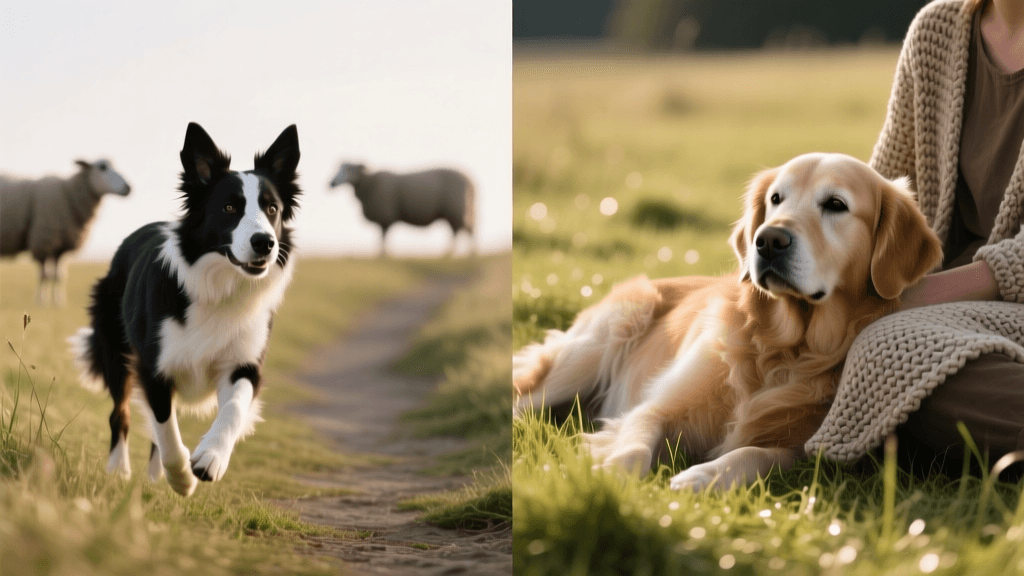
When selecting a dog, many prospective owners focus primarily on aesthetics, size, or shedding patterns. However, as a core principle of canine psychology, a dog's behavior is deeply rooted in its genetic blueprint. Understanding the historical purpose of a breed is the most critical step in successful breed comparison and selection. A dog bred to work livestock for fourteen hours a day possesses a fundamentally different neurological arousal system than a dog bred to sit on royal laps and provide emotional comfort.
To truly understand your dog, we must look at the predatory motor sequence. In wild canines, this sequence is: eye, stalk, chase, grab-bite, kill-bite, dissect, consume. Through selective breeding, humans have artificially amplified, suppressed, or isolated different parts of this sequence to create specialized working dogs. Conversely, companion breeds have been selected for neoteny—the retention of juvenile, playful, and affiliative traits into adulthood, effectively suppressing the predatory sequence entirely. In this guide, we will compare the high-arousal psychology of the Herding Group with the low-arousal affiliative nature of the Companion (Toy) Group, providing actionable advice to match the right instinct to your lifestyle.
Decoding the Herding Group: High-Arousal Athletes
Breeds such as the Border Collie, Australian Shepherd, and Australian Cattle Dog were developed to control the movement of livestock. According to the American Kennel Club (AKC) Herding Group profiles, these dogs are characterized by their intelligence, trainability, and intense focus. From a psychological standpoint, herding breeds are genetically "stuck" in the first three phases of the predatory motor sequence: the eye (intense staring), the stalk (lowered body posture), and the chase.
Behavioral Traits and Body Language
Herding dogs communicate through intense, sometimes overwhelming, body language. You will often notice a lowered head, "whale eye" (showing the whites of the eyes while tracking movement), and a stiff, quivering posture when they are stimulated. Because their instinct to chase is so deeply ingrained, they are highly prone to developing reactive behaviors toward moving stimuli—such as bicycles, cars, or running children—if not provided with an appropriate outlet. They do not just "want" to play; they possess a neurological itch that must be scratched through complex, problem-solving movement.
Actionable Enrichment and Costs
If your lifestyle involves rigorous outdoor activity and you have 2 to 3 hours daily to dedicate to active training, a herding breed may be a match. However, physical exercise alone is insufficient; they require cognitive fatigue.
- The Flirt Pole ($30 - $45): A giant wand with a lure attached. Use this for 15-minute sessions to satisfy the "chase" instinct safely. Teach a solid "drop it" and "leave it" command to manage their arousal levels.
- Herding Balls ($25 - $40): Products like the 14-inch Jolly Ball are designed to be pushed and chased, not punctured. This mimics the physical sensation of moving livestock.
- Cognitive Puzzles ($15 - $30): Outward Hound or Nina Ottosson puzzle feeders are essential. A herding dog should work for at least 30% of its daily caloric intake to prevent destructive boredom.
Decoding the Companion Group: Affiliative Lap Dogs
At the opposite end of the spectrum are the Companion and Toy breeds, such as the Cavalier King Charles Spaniel, Pug, and Bichon Frise. These dogs were not bred to perform a physical job; their "job" was to provide companionship, alert their owners to strangers, and offer physical warmth. The ASPCA notes that these breeds generally exhibit lower prey drives, higher tolerance for handling, and a strong desire for physical proximity to their human caregivers.
Behavioral Traits and Body Language
The body language of a companion dog is defined by softness and relaxation. You will see relaxed facial muscles, a softly wagging tail at mid-level, and a tendency to lean against or physically drape over their owners. Psychologically, these dogs thrive on social facilitation—they want to be wherever you are. While they do not suffer from the intense, high-stakes arousal of a herding dog, they are highly susceptible to separation anxiety and small-dog syndrome (fear-based reactivity) if they are not properly socialized and taught independent confidence.
Actionable Enrichment and Costs
These breeds are ideal for apartment dwellers, older adults, or individuals with a more sedentary lifestyle who can offer 45 to 60 minutes of daily activity. The focus here is on sensory enrichment and comfort rather than high-intensity athletics.
- Scent Work and Snuffle Mats ($20 - $35): Because they lack a strong visual "chase" drive, companion dogs often excel at olfactory games. Hide kibble in a snuffle mat to stimulate their natural foraging instincts indoors.
- Orthopedic Support ($45 - $80): Many companion breeds (especially Pugs and Cavalier Spaniels) are prone to joint issues and spinal problems. Investing in a high-density memory foam bed, like those from Furhaven or Big Barker, is a necessary medical and behavioral investment to ensure they rest comfortably.
- Short, Sniff-Focused Walks: Instead of a brisk 3-mile jog, take a 30-minute "sniffari." Allow the dog to dictate the pace and smell their environment, which provides immense mental satisfaction without physical strain.
Breed Comparison Chart: Herding vs. Companion
Use the following data table to quickly compare the baseline requirements of these two distinct psychological profiles before making a selection.
| Metric | Herding Breeds (e.g., Border Collie) | Companion Breeds (e.g., Cavalier) |
|---|---|---|
| Primary Instinct | Movement control, chasing, problem-solving | Proximity seeking, social affiliation |
| Daily Physical Exercise | 90 - 120+ minutes (running, hiking) | 30 - 60 minutes (leisurely walks) |
| Mental Stimulation | High (Advanced training, puzzles, jobs) | Moderate (Scent games, basic tricks) |
| Arousal Recovery Time | Slow (Requires active calming protocols) | Fast (Readily settles in the home) |
| Space Requirements | Large yard / Access to open fields | Highly adaptable / Apartment friendly |
| Estimated Annual Cost | $1,800 - $2,500 (High training/sports costs) | $1,200 - $1,800 (Higher grooming/medical) |
A Timeline for Selection and Training
Matching the breed to your lifestyle is only the first step. Understanding the developmental timeline of your chosen dog is vital for shaping their psychology and preventing behavioral issues.
8 to 16 Weeks: The Critical Socialization Window
The American Veterinary Society of Animal Behavior (AVSAB) strongly emphasizes that the primary socialization window closes around 16 weeks. For herding breeds, this period must involve exposure to moving objects (umbrellas, wheels, hats) to prevent movement-reactivity later in life. For companion breeds, this time should focus on handling exercises, meeting diverse people, and building independent confidence to stave off separation anxiety.
6 to 14 Months: Adolescence and Fear Periods
During adolescence, herding dogs will experience a surge in hormonal drive and energy. This is the time to enroll in structured canine sports like agility, flyball, or herding instinct tests to channel their arousal productively. Companion dogs may experience a secondary fear period during this time; it is crucial to remain calm and supportive, avoiding forced interactions with strangers or larger dogs that could trigger lifelong defensive reactivity.
18 to 24 Months: Behavioral Maturity
By this age, the dog's adult personality is fully cemented. A well-selected and properly enriched herding dog will now be capable of an "off-switch" indoors, transitioning seamlessly from high-drive worker to relaxed household member. A well-adjusted companion dog will have established a secure attachment to you, exhibiting calm, happy independence when you leave the house and deep affection when you return.
Final Thoughts on Canine Psychology
There is no inherently "good" or "bad" breed—only dogs whose genetic instincts are either aligned or misaligned with their human environment. Placing a high-drive herding dog in a sedentary apartment will result in a neurotic, destructive animal, just as forcing a fragile companion dog into a rugged, high-mileage hiking lifestyle will cause physical and mental distress. By understanding the deep-seated psychology, body language, and historical purpose of the breed you select, you pave the way for a harmonious, deeply fulfilling relationship built on mutual understanding and respect.
beth-carrasco
All our authors care for dogs every day — read more of their work on the authors page.