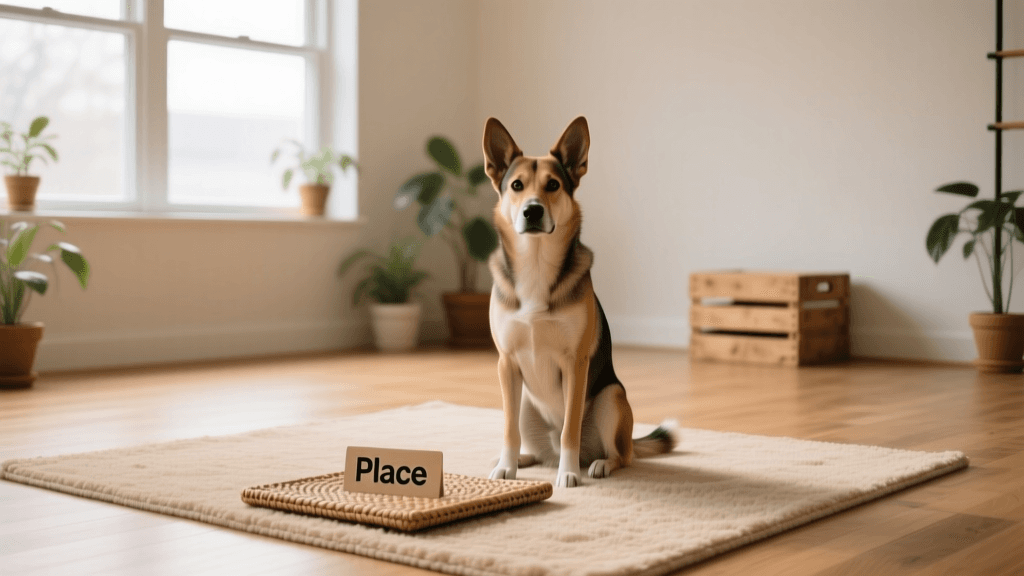
Debunking the Alpha Dog Myth: Facts About Canine Dominance
Is your dog trying to dominate you? We debunk the alpha dog myth, explore real canine psychology, and share positive training tips for better behavior.

The Enduring Legacy of the Alpha Dog Myth
For decades, dog owners have been inundated with advice centered around a single, pervasive concept: you must be the "alpha." Popularized by television dog trainers and internet forums, the dominance theory suggests that dogs are constantly vying for the top spot in a hierarchical pack structure, and that misbehavior is simply a bid for leadership. If your dog pulls on the leash, jumps on guests, or guards their food bowl, the traditional dominance-based advice dictates that you must assert your authority through physical corrections, alpha rolls, or restrictive routines.
However, modern veterinary behaviorists and canine psychologists have thoroughly debunked this myth. Understanding your dog requires looking past outdated television tropes and examining the actual science of canine cognition, learning theory, and evolutionary biology. When we replace the myth of dominance with the facts of positive reinforcement and cooperative learning, we unlock a deeper, more trusting relationship with our canine companions.
Where Did the Dominance Theory Come From?
To understand why the alpha myth is flawed, we must look at its origins. In 1947, animal behaviorist Rudolph Schenkel published a study observing wolves in captivity at the Basel Zoo in Switzerland. Because these wolves were unrelated adults forced to live in an unnatural, confined environment, they exhibited high levels of stress, competition, and aggressive social posturing. Schenkel coined the term "alpha wolf" to describe the individuals who won these aggressive encounters.
In 1970, wildlife biologist L. David Mech published a book that popularized Schenkel's findings, applying the concept of the "alpha pack leader" to wild wolves and, by extension, domestic dogs. For years, this was the accepted scientific consensus. However, as Mech spent more time observing wild wolves in their natural habitats on Ellesmere Island, he realized his earlier conclusions were fundamentally wrong.
In 1999, Mech published a landmark correction, explaining that wild wolf packs are simply families. The "alphas" are just the parents, and the "subordinates" are their offspring. Aggression is rare and usually reserved for outsiders. As noted by the International Wolf Center, the concept of an alpha wolf fighting for dominance is a myth born from observing stressed, captive animals, not natural family dynamics. Furthermore, domestic dogs diverged from wolves tens of thousands of years ago. Applying captive wolf social dynamics to a Golden Retriever living in a modern suburb is not only scientifically inaccurate but actively harmful to the human-dog bond.
Myth vs. Fact: Decoding Canine Behavior
When we view dog behavior through the lens of dominance, we misinterpret their motivations. Dogs are not plotting to overthrow you; they are simply trying to navigate a human world using the tools and instincts they possess. Below is a comparison chart breaking down common dominance myths versus the behavioral facts.
| Common Dominance Myth | Canine Behavioral Fact |
|---|---|
| Dogs want to dominate their owners to become the "pack leader." | Dogs seek resources, safety, and predictability. Misbehavior is usually a lack of training, fear, or unmet physical/mental needs. |
| You must eat before your dog to establish your superior rank. | Meal order has zero impact on canine hierarchy. Dogs do not view humans as canine pack members and do not care who eats first. |
| Letting your dog go through doors first makes them the boss. | Dogs simply want to explore their environment. Impulse control is taught through positive reinforcement, not physical blocking. |
| Alpha rolls (pinning the dog to the ground) teach submission. | Alpha rolls induce terror and defensive aggression. They destroy trust and teach the dog that human hands are dangerous. |
| Pulling on the leash is a bid for pack leadership. | Pulling is simply a result of a dog walking faster than a human and finding the outdoor environment highly rewarding. |
Why Dominance-Based Training Fails
Training methods rooted in dominance often rely on positive punishment (adding an aversive stimulus to decrease a behavior) and negative reinforcement (removing an aversive stimulus). While these methods might suppress a behavior temporarily, they do not teach the dog what to do instead. More importantly, they fail to address the underlying emotional state driving the behavior.
According to the American Veterinary Society of Animal Behavior (AVSAB), the use of dominance theory in dog training is not only unnecessary but can be detrimental. The AVSAB warns that confrontational training methods often elicit fear and anxiety, which can lead to defensive aggression. A dog that is "alpha rolled" for growling over a bone does not learn that sharing is good; they learn that growling results in a terrifying attack, so next time, they may skip the growl and go straight to a bite. True behavioral modification requires changing the dog's emotional response, which is achieved through trust, not intimidation.
Actionable Advice: Building a Cooperative Relationship
If we discard the alpha myth, how do we achieve a well-behaved dog? The answer lies in positive reinforcement, clear communication, and environmental management. Here are practical, actionable steps to implement science-based training in your daily routine.
1. Master the Timing of Positive Reinforcement
Dogs learn through immediate consequences. If you want to reinforce a behavior, the reward must be delivered within 1 to 1.5 seconds of the action occurring. If your dog sits, and you take five seconds to reach into your pocket, fumble with a treat bag, and hand them a biscuit, you may accidentally reinforce them for standing back up.
Product Recommendation: Use a dedicated treat pouch that stays open, such as the Ruffwear Treat Trader (approx. $29.95). Pair this with high-value, low-calorie training treats like Zuke's Mini Naturals (approx. $8.00 for a 16oz bag). Break the treats down into pea-sized pieces (approximately 1/4 inch in diameter). Dogs care more about the frequency of the reward than the size, and pea-sized treats allow you to reward rapid-fire successes without overfeeding.
2. Upgrade Your Walking Gear to Stop Pulling
Instead of jerking the leash to "show the dog who is boss," change the mechanics of the walk. Dogs have an opposition reflex; if you pull them back, their natural instinct is to pull forward harder. Furthermore, traditional neck collars can cause tracheal damage and thyroid issues when a dog pulls.
Product Recommendation: Invest in a front-clip harness, such as the Ruffwear Front Range Harness (approx. $39.95). When the leash is clipped to the front chest ring, any forward pulling gently redirects the dog's momentum back toward you. Combine this with the "red light, green light" game: the moment the leash goes tight, stop walking (red light). The second the dog turns to look at you or creates slack in the leash, mark the behavior with a "Yes!" and resume walking (green light). This teaches the dog that a loose leash is the key to moving forward, entirely bypassing the need for dominance-based corrections.
3. Implement "Nothing in Life is Free" Positively
Many trainers use the "Nothing in Life is Free" (NILIF) protocol to assert dominance, forcing dogs to perform tricks for every basic necessity. However, when viewed through a positive psychology lens, NILIF is actually a brilliant tool for teaching impulse control and engagement, not dominance.
Ask your dog to "sit" or "watch me" before you open the door for a walk, before you set their food bowl down, or before you clip on their leash. You are not demanding submission; you are teaching your dog that calm, polite behavior is the most effective way to get what they want. This builds confidence and reduces frustration.
Mental Enrichment Tip: Instead of feeding your dog from a bowl (which takes 30 seconds and does nothing for their brain), feed them their meals out of a Kong Classic (approx. $15.00 - $20.00) stuffed with plain pumpkin puree, kibble, and a smear of dog-safe peanut butter, then frozen. This provides 20 to 30 minutes of mental stimulation, satisfying their natural foraging instincts and reducing the anxiety that often masquerades as "dominant" behavior in the home.
The Bottom Line on Canine Psychology
Understanding your dog means recognizing them for who they truly are: intelligent, socially complex animals that rely on us for guidance and safety. They are not wolves in disguise, and they are not plotting a household coup. When your dog jumps on you, they are expressing excitement, not attempting to physically overpower you. When they guard a toy, they are expressing anxiety over losing a valuable resource, not challenging your right to own it.
By replacing the alpha myth with empathy, patience, and science-backed positive reinforcement techniques, you transform your relationship from a constant power struggle into a cooperative partnership. As highlighted by the Humane Society of the United States, reward-based training is the most effective and humane way to communicate with your dog, ensuring a lifetime of mutual trust and joyful companionship.
jonas-cole
All our authors care for dogs every day — read more of their work on the authors page.