Decoding Resource Guarding in Dogs: An Expert Behavior Analysis
Understand the psychology behind canine resource guarding. Learn expert behavior analysis techniques, intervention protocols, and prevention strategies.
The Ethology of Possession: Why Dogs Guard
Resource guarding is often misunderstood by pet owners as a display of "dominance" or stubborn disobedience. However, from an expert behavior analysis perspective, it is a deeply ingrained, adaptive survival mechanism. In the wild, canids must protect high-value caloric resources from scavengers and competitors to survive. When a domestic dog exhibits resource guarding—whether over food, toys, spatial locations, or even humans—they are not attempting to dominate their owners; they are experiencing a perceived threat to a valued commodity.
The American Veterinary Society of Animal Behavior (AVSAB) explicitly warns against using confrontational or dominance-based training methods to address guarding. Punishing a growl suppresses the warning signal without resolving the underlying emotional anxiety, often resulting in a dog that bites without warning. Instead, modern applied animal behavior relies on systematic desensitization and counterconditioning (DS/CC) to alter the dog's emotional response to the proximity of humans near their resources.
The Neurobiology of Guarding
When a dog perceives a threat to a valued resource, the amygdala—the brain's threat-detection center—activates the sympathetic nervous system. This triggers a cascade of cortisol and adrenaline, preparing the dog for a "fight or flight" response. Because the dog is chemically primed for defense, attempting to physically dominate or punish the dog during a guarding episode only validates their fear, spiking cortisol levels further and reinforcing the neural pathway that humans equal resource depletion. Expert behavior modification focuses on keeping the dog under their "aggression threshold," ensuring the prefrontal cortex remains engaged and capable of associative learning rather than reactive survival.
Recognizing the Canine Aggression Ladder
Dogs rarely bite "out of nowhere." Aggression is a distance-increasing behavior that follows a predictable escalation ladder. Understanding these subtle body language signals is critical for early intervention. Below is a structured breakdown of the resource guarding escalation sequence, adapted from established veterinary behavior models.
| Escalation Level | Behavioral Indicator | Expert Analysis & Action |
|---|---|---|
| Level 1: Tension | Freezing, hard staring, whale eye (showing whites of eyes), rapid eating. | The dog is assessing the threat. Stop approaching immediately. Do not punish the stare. |
| Level 2: Displacement | Lip licking, yawning, turning head away, pinned ears. | Calming signals indicating internal conflict and stress. Increase distance to relieve pressure. |
| Level 3: Vocalization | Low-frequency guttural growl, snarling (lifting lips to expose teeth). | A clear distance-increasing warning. The dog is pleading for space. Never scold a growl. |
| Level 4: Air Snap | Snapping at the air or a "muzzle punch" without making skin contact. | The final warning before physical contact. Evacuate the space and reassess your training protocol. |
| Level 5: Inhibited Bite | Teeth make contact with skin, but bite pressure is inhibited (no puncture). | A severe breakdown in communication. Professional intervention by a certified behaviorist is mandatory. |
| Level 6: Uninhibited Bite | Full-force bite resulting in puncture wounds, bruising, or tearing. | Immediate management required. Muzzle condition the dog and restrict access to guarded items. |
Evidence-Based Intervention Protocols
Modifying resource guarding requires changing the dog's underlying emotional state from "defensive" to "anticipatory of positive outcomes." Here are two expert-level protocols with precise measurements and timings.
Protocol 1: The "Trade-Up" Method for Object Guarding
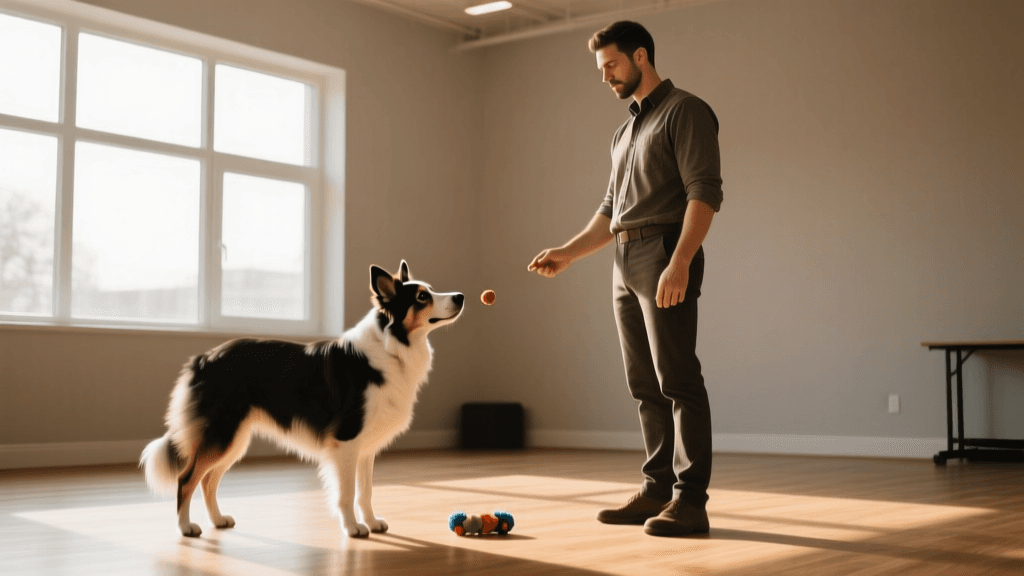
This protocol teaches the dog that relinquishing an item results in a higher-value reward, effectively eliminating the need to guard.
- Preparation: Acquire a high-value reward that the dog only receives during training. Ziwi Peak Air-Dried Beef (approximately $35 for a 2.2 lb bag) or freeze-dried beef liver are excellent choices due to their high olfactory appeal.
- The Setup: Offer the dog a low-value item, such as a standard cotton rope toy (value: ~$5).
- The Trade: Present 3 to 4 pea-sized pieces of the high-value treat near the dog's nose. The moment they drop the toy to eat the treat, use a marker word like "Yes!" or a clicker within 1.5 seconds.
- The Return: Once the dog finishes the treats, return the low-value toy. This builds trust; the dog learns that giving up an item is a temporary loan, not a permanent loss.
- Timing: Practice this for 3-minute sessions, twice daily. Expect to see a reliable "drop" response within 14 to 21 days of consistent practice.
Protocol 2: Systematic Desensitization for Food Bowl Guarding
According to the ASPCA, food guarding is one of the most common behavioral issues in shelter and domestic dogs. This protocol maps human proximity to positive reinforcement.
- Find the Threshold: Determine the exact distance at which the dog notices you but does not show Level 1 tension signals. For many dogs, this is 10 to 15 feet.
- Counterconditioning: Stand at the threshold distance. Every 5 seconds, toss a high-value treat (e.g., boiled chicken breast) toward the dog's bowl, then immediately take one step backward. This teaches the dog that your approach predicts high-value additions to their meal, and your departure is the "cost" of the treat.
- Decreasing Distance: Only decrease the distance by 1 foot after 3 consecutive successful sessions with zero guarding behaviors. If the dog freezes or eats faster, you have moved too close, too fast. Retreat to the previous successful distance.
- The Hand-Feeding Bridge: Once you can stand 2 feet away without triggering tension, transition to feeding the dog their daily kibble allotment by hand in small batches. This positions the human hand as the source of the resource, rather than a competitor for it.
Environmental Management and Tools
Behavior modification takes time. During the training period, strict environmental management is non-negotiable to prevent rehearsal of the guarding behavior. Every time a dog successfully guards a resource, the neural pathways associated with that behavior are reinforced.
Management is not a substitute for training; it is the protective scaffolding that keeps your dog and family safe while neuroplasticity and new learning take place.
Recommended Management Tools:
- Spatial Boundaries: Use a hardware-mounted baby gate, such as the Regalo Easy Step Walk Thru Gate (approx. $45), to separate the dog from high-traffic areas during meal times. This removes the perceived need to defend the bowl from passing children or other pets.
- Enrichment Feeders: Replace traditional stainless steel bowls with puzzle feeders like the Kong Classic (Red, Medium, ~$16). Stuff the Kong with canned pumpkin and kibble, then freeze it for 4 hours. Because the dog is actively working to extract the food through licking and chewing, the item is consumed and destroyed, leaving nothing left to guard once the session is over.
- Scatter Feeding: For severe spatial or bowl guarders, scatter feeding kibble across a snuffle mat or a grassy yard triggers natural foraging instincts. The resource is spread over a 10x10 foot area, making guarding a single point physically impossible.
When to Seek Professional Help
While mild to moderate guarding can often be addressed by dedicated owners, severe cases involving Level 4 or higher aggression require the expertise of a certified professional. The American Kennel Club (AKC) recommends consulting a Certified Applied Animal Behaviorist (CAAB) or a veterinary behaviorist (DACVB) if your dog has a history of uninhibited biting, or if the guarding extends to unpredictable items like stolen trash or socks.
Understanding resource guarding through the lens of expert behavior analysis shifts the paradigm from "correcting bad behavior" to "healing anxiety." By respecting the canine escalation ladder, utilizing precise counterconditioning protocols, and managing the environment, you can help your dog feel secure enough to share their world with you.
priya-sutaria
All our authors care for dogs every day — read more of their work on the authors page.