Crafting the Perfect Daily Wellness Routine for Senior Dogs
Discover how to build a daily wellness routine for senior dogs. Learn actionable tips on joint care, mental enrichment, and ideal daily schedules.

Watching your dog transition into their senior years is a profound privilege, but it also requires a significant shift in how you manage their daily life. Dogs are generally considered seniors around the age of seven, though this timeline varies significantly by breed and size. As your companion ages, their metabolic rate slows, joint cartilage naturally degrades, and cognitive sharpness may begin to wane. To maintain their quality of life, a generic daily walk and a bowl of kibble are no longer sufficient. Instead, implementing a structured, intentional daily wellness routine is critical for managing age-related conditions and keeping your dog comfortable, engaged, and happy.
The Physiology of Aging in Dogs
Before designing a routine, it is essential to understand what your senior dog is experiencing physically. According to the American College of Veterinary Surgeons (ACVS), osteoarthritis is a progressive, degenerative joint disease that affects a vast majority of older dogs, leading to pain, stiffness, and reduced mobility. Furthermore, senior dogs often experience a decline in sensory functions, such as hearing and vision, alongside potential canine cognitive dysfunction (CCD), which is similar to dementia in humans. A predictable daily routine anchors a senior dog, reducing anxiety caused by cognitive decline while providing targeted physical support for their aging joints.
Morning Wellness: Joint Mobilization and Nutrition
Mornings are often the hardest time for senior dogs. After lying still for eight to ten hours, joint fluid has settled, and stiffness is at its peak. Your morning routine should focus on gentle mobilization and anti-inflammatory nutrition.
The 15-Minute Morning Sniffari
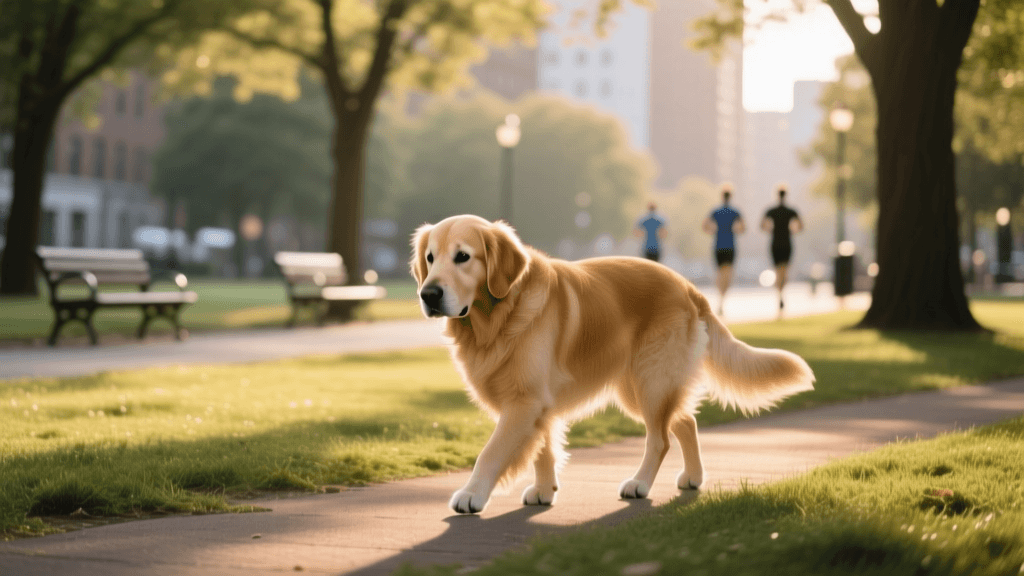
Replace high-impact morning fetch sessions with a 'Sniffari.' This involves a slow, 15-to-20-minute walk where the primary goal is olfactory enrichment rather than physical distance. Allow your dog to stop and sniff every tree, bush, and patch of grass. Sniffing lowers a dog's heart rate, provides immense mental stimulation, and encourages a natural, slow-paced gait that gently lubricates the joints without causing micro-tears in degraded cartilage. Use a well-padded, front-clip harness to avoid putting pressure on their cervical spine and trachea.
Targeted Joint Nutrition
Breakfast is the ideal time to administer joint supplements, as taking them with food increases absorption and reduces gastrointestinal upset. Look for veterinary-recommended supplements containing a combination of Glucosamine Hydrochloride, Chondroitin Sulfate, and MSM (Methylsulfonylmethane). Additionally, incorporating a high-quality fish oil rich in EPA and DHA (aim for a combined total of 300-500mg per 20 lbs of body weight, but always consult your vet first) can significantly reduce systemic joint inflammation. Mixing a spoonful of canned pumpkin or bone broth into their senior-formulated kibble can also encourage hydration, which is vital for aging kidneys.
Midday Enrichment: Cognitive Maintenance
While senior dogs sleep more than their younger counterparts—often up to 16 to 18 hours a day—the time they spend awake must be mentally engaging to stave off cognitive decline.
Low-Impact Puzzle Feeders
Instead of feeding midday treats from your hand or a standard bowl, utilize low-impact puzzle toys. A snuffle mat or a rubber lick mat (spread with plain, xylitol-free Greek yogurt or pureed pumpkin and frozen) encourages natural foraging behaviors. This type of mental work tires a dog out just as effectively as a physical walk but requires zero jumping or running. For dogs with advanced arthritis or neck pain, ensure that any puzzle toys are elevated on a small step or placed inside a raised feeder stand so they do not have to strain their neck to reach the treat.
Evening Wind-Down: Comfort and Restorative Sleep
The evening routine should signal to your dog's brain that it is time to rest, while simultaneously addressing any physical discomfort accumulated throughout the day.
Canine Massage and Passive Range of Motion
Spend 10 minutes each evening performing gentle canine massage. Use a technique called 'effleurage,' which involves long, slow, sweeping strokes with the flat of your hand along the muscle groups of the back, shoulders, and hindquarters. This promotes blood circulation and helps flush out lactic acid. If your dog is amenable, you can also perform Passive Range of Motion (PROM) exercises on their hind legs, gently bicycling the joints through their natural range of movement to maintain flexibility. Never force a joint past its natural resistance, and avoid massaging directly over inflamed or hot joints.
Orthopedic Sleep Setup
A senior dog's bed is their sanctuary. Standard stuffed beds flatten out quickly, leaving your dog's heavy joints resting directly on the hard floor. Invest in a high-density, orthopedic memory foam bed. For large breeds, the foam should be at least 4 to 7 inches thick to prevent 'bottoming out.' Place the bed in a draft-free area of the home, and consider using a heated pet blanket (with an automatic shut-off feature) during colder months to soothe aching hips and shoulders overnight.
Sample Daily Wellness Schedule
Consistency is the cornerstone of senior dog care. Below is a structured daily schedule designed to balance physical therapy, mental enrichment, and necessary rest.
| Time | Activity | Wellness Focus |
|---|---|---|
| 7:00 AM | Gentle bathroom break & joint massage | Relieves morning stiffness, promotes circulation |
| 7:30 AM | Breakfast with Omega-3 & joint supplements | Nutritional support for joints and systemic inflammation |
| 8:30 AM | 15-Minute Morning Sniffari (slow walk) | Low-impact joint mobilization and olfactory enrichment |
| 10:00 AM | Mid-morning nap on orthopedic bed | Restorative sleep and joint decompression |
| 12:30 PM | Frozen lick mat or snuffle mat activity | Cognitive stimulation and mental fatigue |
| 1:00 PM | Afternoon nap and quiet time | Energy conservation |
| 4:30 PM | Short outdoor potty break & sun exposure | Vitamin D synthesis and bladder management |
| 5:30 PM | Dinner (easily digestible senior diet) | Evening caloric intake and hydration |
| 7:00 PM | Indoor sniffing games or gentle trick training | Bonding and cognitive maintenance |
| 9:00 PM | Final potty break & effleurage massage | Bladder emptying and physical wind-down |
| 9:30 PM | Bedtime in heated orthopedic bed | Deep, uninterrupted restorative sleep |
Essential Gear for the Senior Dog Routine
To successfully execute this wellness routine, specific tools and environmental modifications are highly recommended. Budgeting for these items can drastically improve your dog's twilight years.
- Orthopedic Memory Foam Bed: Brands like Big Barker or K9 Ballistics offer high-density foam beds that guarantee against flattening. Expect to invest between $150 and $350 depending on the size. This is non-negotiable for large breeds prone to hip dysplasia.
- Non-Slip Flooring Solutions: Hardwood and tile floors are incredibly dangerous for senior dogs with weakened hindquarters. Invest in interlocking foam floor tiles or specialized dog-grip rugs (like those from Ruggable) for high-traffic areas and pathways leading to their food and water bowls. Cost: $50 - $120 per room.
- Raised, Adjustable Food Bowls: Bending down to the floor puts immense strain on an aging cervical spine and shoulders. An adjustable bamboo or metal stand that can be set to your dog's exact elbow height (usually 4 to 12 inches off the ground) promotes better digestion and posture. Cost: $25 - $60.
- Dog Ramps and Stairs: If your senior dog is still allowed on the sofa or bed, jumping down can cause catastrophic ligament tears or spinal injuries. Use a high-traction, foldable foam ramp or sturdy pet stairs to allow them to safely navigate elevated furniture. Cost: $40 - $100.
Monitoring and Veterinary Check-ins
Even the most meticulous home routine cannot replace professional veterinary care. The ASPCA strongly recommends that senior dogs visit the veterinarian at least twice a year, rather than the standard annual visit. Because dogs age much faster than humans, a six-month gap can see the rapid progression of conditions like chronic kidney disease, hypothyroidism, or dental decay. Request a comprehensive senior blood panel and urinalysis during these visits to establish baselines and catch metabolic changes before they become clinical emergencies.
Conclusion
Crafting a daily wellness routine for your senior dog is an act of profound love and dedication. By shifting your focus from high-intensity exercise to targeted joint care, cognitive enrichment, and environmental comfort, you are actively extending not just the lifespan, but the healthspan of your beloved companion. Embrace the slower pace of their golden years, and find joy in the quiet, structured moments of care that define this beautiful stage of life with your dog.
hannah-wickes
All our authors care for dogs every day — read more of their work on the authors page.