The Viral Sniffari Trend: Guide To Decompression Walks
Discover the viral sniffari trend. Learn how decompression walks reduce dog anxiety, boost mental health, and transform your daily routine.
The Viral Shift: From 'Heel' to 'Sniff'
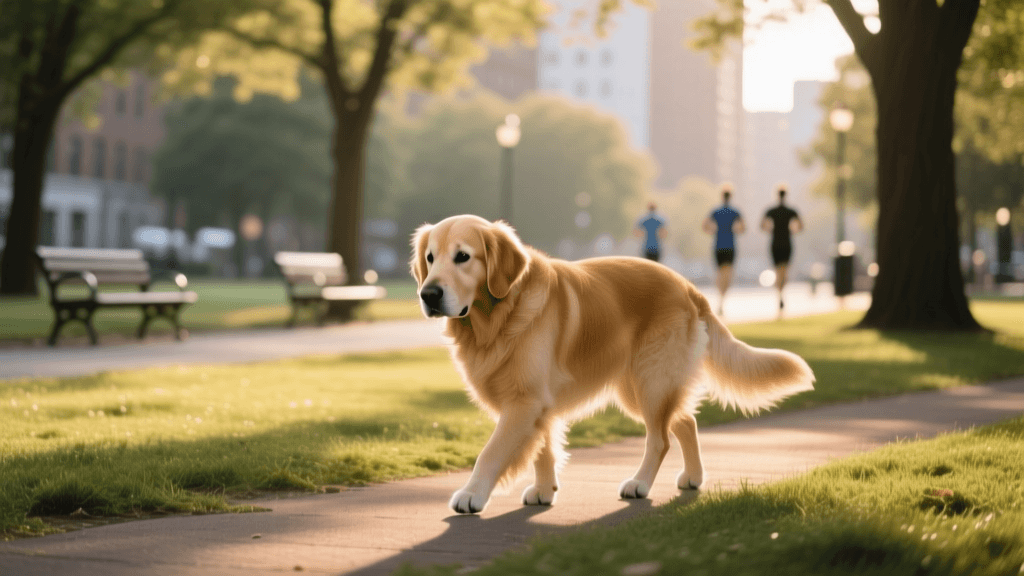
If you have spent any time on DogTok, canine Instagram, or dog behaviorist Facebook groups lately, you have likely encountered the term 'Sniffari.' This viral trend has completely flipped traditional dog walking advice on its head. For decades, dog owners were taught that a successful walk meant a dog walking perfectly at their left side in a strict 'heel' position, ignoring the environment and focusing solely on the handler. While loose-leash walking is an important skill, modern canine behaviorists and veterinary professionals are now championing the 'decompression walk'—affectionately dubbed the Sniffari—as a critical component of a dog's daily routine.
A Sniffari is an unstructured, enrichment-based walk where the dog is allowed to lead the way, stop as long as they want, and investigate their environment primarily through their nose. Rather than measuring a walk by the number of miles covered or the pace maintained, the Sniffari measures success by the depth of mental engagement and the reduction of canine stress. For dogs suffering from leash reactivity, general anxiety, or hyperactivity, this viral trend is not just a cute internet fad; it is a scientifically backed behavioral intervention that is transforming the lives of pets and their owners.
The Science of the Sniff
To understand why the Sniffari has gained such massive traction, we have to look at canine anatomy. A dog's sense of smell is their primary way of interacting with the world. While humans have about 6 million olfactory receptors, dogs have up to 300 million, depending on the breed. Furthermore, the part of a dog's brain devoted to analyzing odors is proportionally 40 times greater than ours. When a dog sniffs a fire hydrant, they are not just smelling urine; they are reading a complex chemical bulletin board that tells them the age, sex, diet, and emotional state of every dog that has passed by.
According to the American Kennel Club, sniffing is a naturally self-soothing behavior for dogs. The act of deep, rhythmic sniffing actually lowers a dog's heart rate and releases dopamine, the neurotransmitter associated with pleasure and reward. When we pull our dogs away from an interesting scent after only three seconds to maintain our walking pace, we are essentially blindfolding them and interrupting a natural calming mechanism.
Experts at Fear Free Pets emphasize that mental enrichment through scent work is often more exhausting for a dog than physical exercise. A 20-minute decompression walk where a dog is allowed to sniff freely can burn as much mental energy as an hour of vigorous running. This is a game-changer for owners of high-energy working breeds, senior dogs with arthritis, or dogs recovering from surgery who need their minds tired out without the physical strain.
Traditional Structured Walk vs. The Sniffari
Understanding the difference between a traditional neighborhood walk and a decompression walk is key to implementing this trend correctly. Both have their place in a well-rounded routine, but they serve entirely different purposes.
| Feature | Traditional Structured Walk | Sniffari (Decompression Walk) |
|---|---|---|
| Primary Goal | Physical exercise, obedience, and potty breaks | Mental enrichment, stress relief, and autonomy |
| Leash Length | 4 to 6-foot standard leash | 15 to 30-foot long line |
| Pacing | Steady, human-directed pace | Erratic, dog-directed, frequent stops |
| Mental Stimulation | Low to Moderate (focus on handler) | Extremely High (focus on environment) |
| Heart Rate Impact | Elevates heart rate (cardio) | Lowers heart rate (calming) |
| Ideal Environment | Sidewalks, paved trails, urban areas | Open fields, quiet woods, nature reserves |
Essential Gear and Costs for a Sniffari
You cannot execute a proper Sniffari with a standard 4-foot nylon leash and a collar. Giving a dog the freedom to explore requires specialized gear that ensures safety without restricting movement. Here is the exact equipment you need, along with estimated costs and product recommendations.
1. The Y-Front Harness ($25 - $50)
A Y-shaped harness is non-negotiable for decompression walks. It sits below the dog's trachea and allows for full shoulder extension, which is vital when they are stretching to sniff a bush or leaning into a slope. Avoid step-in harnesses or those with a strap that cuts horizontally across the chest, as these restrict the natural gait. Top Picks: Perfect Fit Harness (approx. $45) or the Rabbitgoo No-Pull Harness (approx. $25).
2. The Biothane Long Line ($25 - $45)
A long line gives your dog the radius needed to make their own choices. Biothane is the viral material of choice among dog trainers because it is waterproof, mud-proof, and does not tangle or burn your hands like nylon rope does. For most environments, a 15-foot to 20-foot line is ideal. If you are in an open, unfenced field, a 30-foot line provides maximum freedom. Top Picks: High Tail Trails Biothane Long Line (approx. $35) or Mendota Pets Slip Lead (adapted for long-line use, approx. $30).
3. The High-Value Treat Pouch ($10 - $20)
Even on a Sniffari, you need to be able to recall your dog or ask them to 'leave it' if they find something dangerous. A quick-access treat pouch worn on your waist keeps your hands free to manage the long line. Fill it with high-value, smelly treats like freeze-dried liver or boiled chicken to compete with the environmental scents.
4. Basket Muzzle for Scavengers ($15 - $25)
If your dog is a notorious garbage vacuum, a Sniffari can turn into a veterinary emergency. Muzzle training is a massive trend in the positive reinforcement community. A basket muzzle allows the dog to pant, drink, and even take treats, but prevents them from ingesting rotting food or toxic items. Top Pick: Baskerville Ultra Muzzle (approx. $20).
Step-by-Step Guide to Executing the Perfect Sniffari
Transitioning from a structured walker to a Sniffari guide requires a shift in your own mindset. You are no longer the drill sergeant; you are the facilitator. Here is how to plan and execute the perfect decompression walk.
Step 1: Location Scouting
Sidewalks are terrible for Sniffaris. The environment is too loud, the space is too confined, and the scents are overshadowed by exhaust fumes and human traffic. Seek out 'snail mail' locations: quiet wooded trails, empty sports fields, overgrown parks, or designated off-leash areas where you can safely use a long line. The ASPCA highly recommends varying your walking routes to provide novel scents, which maximizes the cognitive benefits of the outing.
Step 2: The Release Cue
When you arrive at your location, put your dog on their long line. Give a clear, enthusiastic release cue such as 'Go sniff!' or 'Free dog!' This verbal cue signals to the dog that the rules of the structured walk are suspended, and they are now in charge of the itinerary.
Step 3: 'Bubble Walking' and Leash Handling
The goal is to keep the leash completely loose, forming a 'J' or 'U' shape between you and the dog. Imagine you are inside a giant bubble; as the dog moves to the edge of the bubble, you take a step toward them to keep the tension off the harness. If the dog stops to sniff a single blade of grass for three full minutes, you stand still and wait. Do not sigh, do not tug the leash, and do not rush them. Patience is the core of the Sniffari philosophy.
Step 4: The Decompression Cool Down
After 20 to 40 minutes of deep sniffing, you will likely notice a physical change in your dog. Their shoulders will drop, their breathing will slow, and they may offer a 'shake off'—a natural canine behavior used to release residual tension. Once you see these calming signals, you can reel them in, switch to your standard 6-foot leash, and practice a structured 'heel' back to the car or your front door.
Troubleshooting Common Sniffari Challenges
Challenge 1: Leash Tangling and Tripping.
Managing a 20-foot leash can feel like wrangling a snake. The secret is to fold the excess leash into loops in your hand rather than letting it drag on the ground. Never wrap the long line around your wrist or fingers, as a sudden bolt by a 60-pound dog could cause severe friction burns or broken bones.
Challenge 2: Reactivity to Other Dogs.
The Sniffari is actually one of the best tools for reactive dogs, provided you do it in isolated areas. Because sniffing lowers the heart rate, dogs are less likely to trigger into a 'fight or flight' response. If you spot another dog in the distance, use the long line to guide your dog behind a visual barrier (like a tree or a parked car) and scatter high-value treats in the grass to engage their nose and keep their brain in a thinking, rather than reacting, state.
Challenge 3: The 'I'm Bored' Owner.
Let's be honest: standing in a field watching your dog sniff a dead worm for five minutes can be incredibly boring for a human. Use this time to practice mindfulness, listen to a podcast, or simply enjoy nature. Reframe your perspective: you are not 'doing nothing'; you are actively participating in your dog's mental health therapy.
Conclusion: Embracing the Sniff
The viral Sniffari trend is a rare instance where social media popularity aligns perfectly with veterinary science and behavioral best practices. By trading a few miles of brisk walking for 20 minutes of uninterrupted sniffing, you are honoring your dog's natural biology. You are giving them autonomy, reducing their anxiety, and providing a level of mental enrichment that a puzzle toy in the living room simply cannot match. Grab your biothane long line, find a quiet patch of woods, and let your dog read the news. Your dog's brain—and your bond—will thank you for it.
aaron-whyte
All our authors care for dogs every day — read more of their work on the authors page.