Dog Weight Management: Caloric Needs and Puzzle Feeders
Discover practical dog weight management strategies. Learn to calculate daily caloric needs, choose the best puzzle feeders, and build a healthy routine.
The Growing Epidemic of Canine Obesity
As dog owners, we often express our love through food, but this well-intentioned habit can lead to severe health consequences. Canine obesity is no longer just a cosmetic issue; it is a complex metabolic condition that drastically reduces a dog's lifespan and quality of life. Excess weight puts immense strain on joints, exacerbates osteoarthritis, increases the risk of cardiovascular disease, and complicates respiratory function.
According to data published by the Association for Pet Obesity Prevention (APOP), nearly 59 percent of dogs in the United States are classified as overweight or obese. This staggering statistic highlights a critical gap in how we manage our dogs' daily nutrition and routines. Effective weight management is not about starving your pet; it is about precision feeding, metabolic understanding, and incorporating daily enrichment that burns both physical and mental energy.
Decoding the Math: Calculating Your Dog's Caloric Needs
The foundation of any successful weight loss or maintenance program is understanding exactly how many calories your dog requires. Guesswork leads to failure. Veterinary nutritionists rely on specific mathematical formulas to determine a dog's caloric needs, tailored to their ideal body weight and activity level.
Step 1: Calculate Resting Energy Requirement (RER)
The RER represents the baseline calories your dog's body needs to maintain basic physiological functions at rest. The standard veterinary formula is:
RER = 70 x (Ideal Body Weight in kg)^0.75
For example, if your dog currently weighs 60 lbs (27 kg) but their ideal weight is 50 lbs (22.7 kg), you must use the ideal weight for the calculation. The RER for a 22.7 kg dog is approximately 70 x (22.7)^0.75, which equals roughly 670 kcal/day.
Step 2: Determine Daily Energy Requirement (DER)
The DER adjusts the RER based on life stage, activity level, and weight loss goals. For a dog undergoing a weight loss program, the World Small Animal Veterinary Association (WSAVA) generally recommends multiplying the RER by a factor of 0.8 to 1.0. Using our previous example, a weight loss DER would be roughly 536 kcal per day. This is the absolute maximum number of calories your dog should consume daily, including all meals, treats, and chews.
The Hidden Danger of Measuring Cups
One of the most common mistakes in daily dog care is relying on a standard plastic measuring cup to portion out kibble. Research highlighted by the Tufts University Cummings Veterinary Medical Center demonstrates that pet owners using measuring cups can overestimate or underestimate portions by up to 20 percent due to shaking, packing, or using the wrong cup size.
When dealing with a strict 536 kcal daily budget, a 20 percent error equates to over 100 extra calories a day. Over a month, this surplus translates to roughly a pound of unwanted fat gain. The solution is simple and cost-effective: invest in a $10 to $15 digital kitchen scale. Weighing your dog's food in grams ensures absolute precision and takes the guesswork out of daily feeding routines.
Nutrition Deep Dive: Kibble vs. Fresh Food for Weight Loss
When managing a dog's weight, the type of food you choose impacts both your budget and your dog's satiety. High-moisture diets often provide greater volume for fewer calories, helping dogs feel full without exceeding their DER.
| Diet Type | Example Brand | Avg. Cost Per Day (50lb Dog) | Calories Per Cup | Prep Time | Weight Loss Pros & Cons |
|---|---|---|---|---|---|
| Weight Management Kibble | Hill's Science Diet Light | $2.50 - $3.00 | ~315 kcal | 1 min | Pro: Cost-effective, easy to store. Con: Low moisture, less satiating. |
| Wet / Canned Diet | Purina Pro Plan Weight Mgt | $4.50 - $6.00 | ~250 kcal | 2 mins | Pro: High moisture, larger volume. Con: Heavy to transport, more expensive. |
| Gently Cooked Fresh Food | The Farmer's Dog / Nom Nom | $7.00 - $10.00 | Varies (Pre-portioned) | 3 mins | Pro: Highly digestible, exact portions. Con: Premium cost, requires freezer space. |
For multi-pet households, mixing a high-quality weight management kibble with water or low-sodium bone broth can increase volume and mimic the satiety benefits of wet food without the premium price tag.
Enrichment Feeders: Turning Mealtime into a Workout
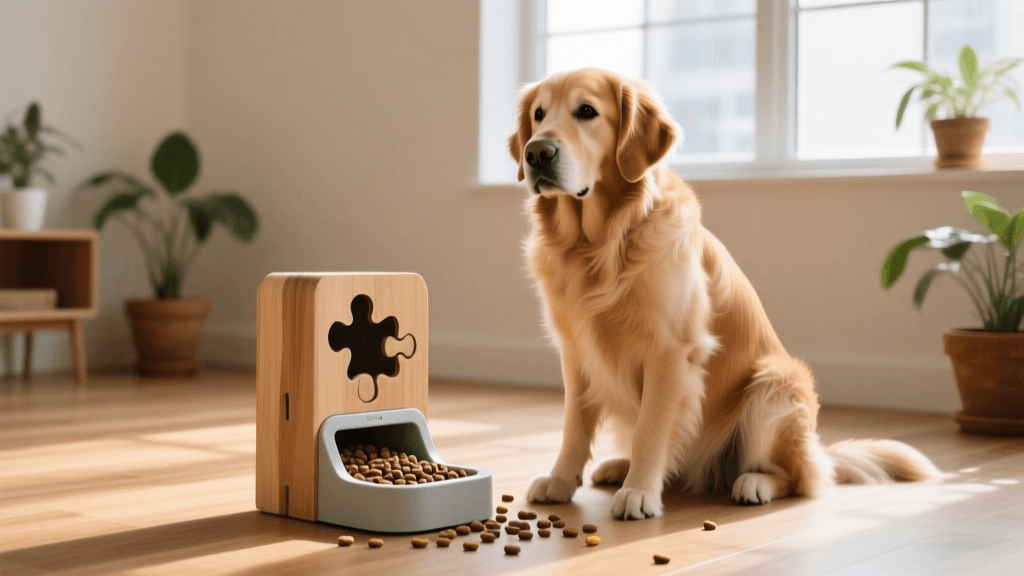
In the wild, canines spend up to 80 percent of their waking hours foraging and hunting for food. In a modern home, eating from a stainless steel bowl takes less than two minutes, leaving dogs bored and prone to begging. Puzzle feeders slow down eating, improve digestion, and provide crucial mental stimulation that tires dogs out just as effectively as a physical walk.
- Kong Classic (Red Rubber): Priced around $15, this is a staple for wet or fresh food diets. Fill the Kong with your dog's measured wet food, add a splash of water, and freeze it overnight. A frozen Kong can occupy a dog for 20 to 30 minutes, providing excellent relief for separation anxiety while keeping them within their caloric limits.
- Outward Hound Nina Ottosson Dog Brick: Costing approximately $10 to $15, this intermediate-level puzzle board requires dogs to slide compartments and lift flaps to reveal dry kibble. It engages their problem-solving skills and drastically slows down their eating pace.
- Snuffle Mat: Usually priced between $20 and $30, a snuffle mat mimics grass and forces dogs to use their olfactory senses to hunt for food. Because they are designed for dry items, you can use a portion of their daily kibble allowance or low-calorie training treats scattered deep within the fabric strips.
Low-Calorie Treat Alternatives
Treats should never make up more than 10 percent of your dog's daily caloric intake. For a dog on a 536 kcal diet, that leaves only 53 calories for treats. Traditional milk-bones or biscuit treats can contain 40 to 100 calories each, blowing the budget in a single training session. Instead, utilize high-value, low-calorie alternatives:
- Steamed Green Beans: Only 31 calories per entire cup. They are crunchy, sweet, and packed with fiber.
- Baby Carrots: Roughly 35 calories for a cup of baby carrots. Excellent for aggressive chewers.
- Zuke's Mini Naturals: A highly popular training treat that costs about $8 for a 16oz bag. Each tiny treat is only 3 calories, allowing for extensive training sessions without guilt.
- Single-Ingredient Freeze-Dried Liver: While slightly higher in calories, the intense flavor means you can break a single $12 bag of beef liver treats into tiny, pea-sized pieces that will motivate even the most stubborn dogs.
A Sample Daily Weight Management Routine
Implementing a structured daily routine ensures consistency, which is the key to long-term weight management success. Here is a practical schedule for a working pet owner:
7:00 AM - Morning Enrichment: Weigh out exactly 40% of the dog's daily kibble allowance on a digital scale. Load it into a Nina Ottosson puzzle board while you drink your coffee. This provides 15 minutes of mental stimulation and satisfies their morning hunger.
12:30 PM - Midday Sniffari: If you come home for lunch or hire a dog walker, skip the standard block walk. Instead, take the dog to a quiet field or park on a 15-foot long line. Allow them to sniff and forage for 20 minutes. Sniffing lowers a dog's heart rate and burns significant mental energy.
6:00 PM - Dinner and Foraging: Weigh out the remaining 60% of the daily food. If using kibble, scatter half of it across a Snuffle Mat. Mix the other half with a tablespoon of plain, non-fat Greek yogurt (approx. 15 kcal) and stuff it into a frozen Kong.
8:00 PM - Evening Wind Down: Replace high-calorie bedtime biscuits with a dental chew like the Virbac C.E.T. VeggieDent (ensure the specific size fits within your remaining daily calorie allowance, usually around 50-70 kcal). This satisfies the urge to chew and promotes oral health before bed.
Conclusion
Managing your dog's weight is a profound act of love that requires shifting away from emotional feeding and toward data-driven care. By calculating exact caloric needs, investing in a digital kitchen scale, utilizing puzzle feeders, and choosing low-calorie enrichment options, you can add years to your dog's life. A lean dog is a happy, active, and pain-free companion, ready to enjoy every adventure the world has to offer.
anouk-beaumont
All our authors care for dogs every day — read more of their work on the authors page.