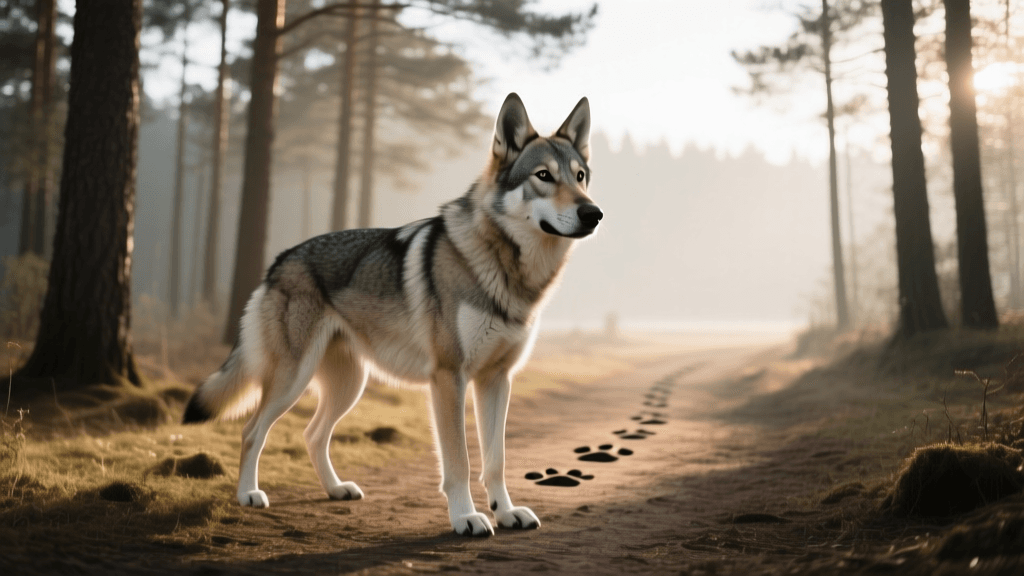
Czechoslovakian Wolfdog Training 2026: Expert Guide
Master Czechoslovakian Wolfdog training in 2026 with our expert guide on early socialization, impulse control, and managing high prey drive safely.
Understanding the Primitive Mindset of the CSV
The Czechoslovakian Wolfdog (CSV) is a breathtaking, exotic breed that continues to captivate international dog enthusiasts. Originally developed in the 1950s through a biological experiment crossing German Shepherds with Carpathian wolves, this breed retains a profoundly primitive mindset. As we navigate dog ownership in 2026, the CSV remains a highly specialized companion that demands an advanced understanding of canine behavioral conditioning. Unlike typical domestic working breeds that look to humans for constant direction, the CSV is an independent problem-solver with a deeply ingrained pack hierarchy and a remarkably high prey drive.
Training a Czechoslovakian Wolfdog requires abandoning outdated, dominance-based theories that were unfortunately popular in previous decades. Modern behavioral science in 2026 emphasizes positive reinforcement, relationship-building, and neurological development. According to the United Kennel Club (UKC), the CSV is characterized by its lively, active, and fearless demeanor, making early and intensive socialization an absolute necessity rather than a casual recommendation. If you are bringing a CSV puppy into your home, you must be prepared for a rigorous, multi-year training journey that focuses heavily on impulse control and environmental neutrality.
The Critical Socialization Window
For exotic and primitive breeds, the socialization window is the most critical period of neurological development. This window typically spans from 3 to 14 weeks of age, during which a puppy's brain is uniquely primed to accept novel stimuli without triggering a fear response. For the CSV, this window must be managed with surgical precision. Overstimulation can lead to lifelong fear-based reactivity, while under-stimulation will almost certainly result in a dog that is dangerously aloof, skittish, or aggressive toward unfamiliar triggers.
The American Veterinary Society of Animal Behavior (AVSAB) strongly advocates for structured, positive exposure to a wide variety of environments, people, and other animals during this critical period. For the CSV, socialization does not mean letting your puppy play with every dog it sees. Instead, it means teaching the puppy to remain calm, neutral, and focused on the handler in the presence of distractions. This concept, known as 'environmental neutrality,' is the cornerstone of all international breed training protocols in 2026.
Key Socialization Targets for the CSV
- Surface Variations: Walking on metal grates, wet grass, tarps, and unstable surfaces to build physical confidence.
- Auditory Desensitization: Exposure to urban noises, machinery, and thunderstorms using low-volume audio tracks paired with high-value food rewards.
- Visual Triggers: Observing livestock, small wildlife, and fast-moving objects (like bicycles) from a safe distance without allowing the puppy to chase.
- Human Neutrality: Teaching the dog that strangers are irrelevant, rather than forcing interactions that can trigger defensive behaviors.
Impulse Control and Prey Drive Management
The most significant challenge for any CSV owner is managing the breed's intense prey drive. In 2026, behavioral conditioning for high-drive sighthounds and wolfdogs relies heavily on the 'Engage-Disengage' protocol and rigorous impulse control exercises. You cannot train the prey drive out of a Czechoslovakian Wolfdog; it is hardwired into their genetics. However, you can train the dog to redirect that drive back to the handler.
Step 1: The 'Watch Me' Command
The 'Watch Me' command is your emergency brake. Begin in a low-distraction environment. Hold a high-value treat, such as freeze-dried raw liver, near your eyes. The moment the puppy makes eye contact, mark the behavior with a clicker or a verbal 'Yes!' and deliver the reward. Gradually increase the duration of eye contact and introduce mild distractions. In high-stakes environments, this command will be the tool you use to break your dog's visual lock on a potential prey animal.
Step 2: The 'Leave It' Protocol
Impulse control is built through frustration tolerance. Place a low-value item on the floor and cover it with your hand. When the puppy stops pawing at your hand and looks up at you, reward them with a high-value treat from your other hand. Progress to dropping the item, then to placing it at a distance. For a CSV, this must be practiced extensively with moving objects, utilizing a secure 30-foot Biothane long line to ensure safety while simulating the pursuit of wildlife.
Essential Training Gear for 2026
Training an exotic, powerful breed requires specialized equipment. Standard nylon leashes and flat collars are entirely insufficient and potentially dangerous for a mature CSV. In 2026, the industry standard for safe off-leash and long-line conditioning involves advanced GPS telemetry and specialized harnesses.
For safe recall training in open, unfenced areas, handlers are increasingly relying on advanced GPS tracking systems. The Garmin Pet Tracking ecosystem, particularly the latest Alpha series, provides real-time telemetry that allows handlers to monitor their dog's exact location, speed, and movement patterns in dense terrain. This technology is vital for CSV owners who engage in wilderness hiking or advanced fieldwork, ensuring that if a prey-drive episode leads the dog out of visual range, they can be located immediately.
Additionally, a well-fitted, escape-proof harness is mandatory. Brands like Hurtta and Ruffwear have released updated 2026 models with reinforced handle straps, allowing handlers to safely secure a lunging or reactive dog without risking injury to the dog's trachea or the handler's shoulders.
Structured Socialization and Conditioning Checklist
Below is a structured timeline for CSV puppy development. This chart should be used as a baseline, adjusting for the individual dog's stress thresholds and recovery times.
| Age | Stimulus Category | Primary Goal | Conditioning Method |
|---|---|---|---|
| 8-10 Weeks | Novel Surfaces | Physical Confidence | Treat scatter on tarps, grates, and wobble boards. |
| 10-12 Weeks | Strange Noises | Auditory Desensitization | Low-volume audio pairing with high-value meals. |
| 12-14 Weeks | Unknown Dogs | Pack Neutrality | Parallel walking at a distance; no forced greetings. |
| 4-6 Months | Small Wildlife | Impulse Control | Engage-Disengage game on a 30ft Biothane long line. |
| 6-12 Months | Urban Crowds | Environmental Focus | Handler-focus exercises in high-traffic areas. |
Common Behavioral Pitfalls to Avoid
When training international and exotic breeds, owners often fall into traps that exacerbate behavioral issues. The first major pitfall is the use of aversive tools, such as electronic shock collars or prong collars, to suppress prey drive or reactivity. In a primitive breed like the CSV, pain or fear-based suppression often leads to 'shut down' behaviors or unpredictable, explosive aggression. The dog learns to associate the trigger (e.g., a stranger or another dog) with physical discomfort, worsening the underlying emotional response.
The second pitfall is assuming that physical exhaustion equals mental satisfaction. A CSV can run for miles and still come home with enough energy to dismantle your living room. In 2026, canine enrichment science dictates that mental fatigue is far more effective than physical fatigue. Incorporating scent work, puzzle feeders, and complex trick-training routines will drain your dog's energy much faster than a simple game of fetch, which only serves to build more stamina and drive.
Conclusion: A Lifelong Partnership
Owning and training a Czechoslovakian Wolfdog is not a task for the faint of heart. It requires a profound respect for the animal's wild heritage, a commitment to modern, science-based behavioral conditioning, and an unwavering dedication to ongoing socialization. By focusing on environmental neutrality, building robust impulse control, and utilizing the best safety technology available in 2026, you can forge an unbreakable bond with this magnificent, exotic breed. The CSV is not a dog that blindly obeys; it is a partner that chooses to follow a handler who has earned its trust, respect, and cooperation through consistent, positive leadership.
marcus-aldridge
All our authors care for dogs every day — read more of their work on the authors page.