2026 Cooperative Care: Master The Chin Rest Technique
Discover how cooperative care chin rest training builds deep trust with your dog. Learn the 2026 step-by-step protocol for stress-free grooming and vet visits.
The Evolution of Canine Bonding: Why Cooperative Care Matters in 2026
When we think about bonding with our dogs, we often picture long hikes, enthusiastic games of fetch, or cozy cuddles on the couch. However, the true depth of the human-canine relationship is tested and forged in moments of vulnerability. Grooming, nail trimming, ear cleaning, and veterinary exams are inherently stressful for many dogs. Historically, the pet industry relied on physical restraint to get these necessary tasks done. But in 2026, the gold standard for dog training and veterinary medicine has shifted entirely toward consent-based handling. This is where cooperative care training becomes the ultimate relationship-building tool.
Cooperative care is a training philosophy that gives the dog an active role in their own husbandry. Instead of being pinned down, the dog is taught to participate voluntarily. According to the Fear Free Pets initiative, reducing fear, anxiety, and stress during handling not only prevents behavioral fallout but actively deepens the trust your dog has in you. When your dog learns that they have a voice and that you will listen to their boundaries, the bond you share transcends basic obedience. You become their advocate and their safe space.
Why the Chin Rest is the Ultimate Bonding Behavior
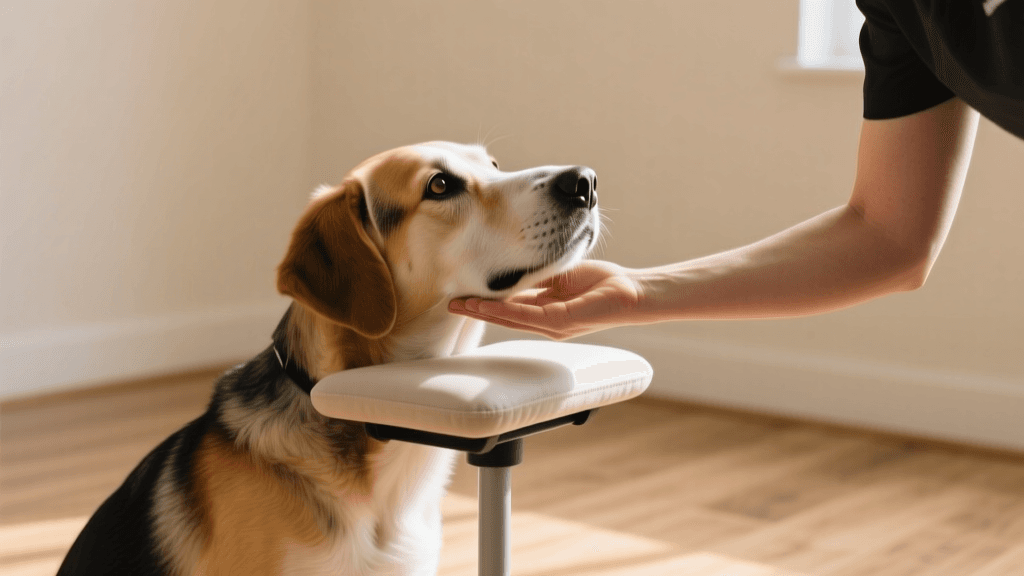
Among the various cooperative care behaviors—such as bucket work, paw targets, and lateral recumbency—the 'chin rest' is arguably the most versatile and profound. A chin rest involves the dog voluntarily placing their chin on a designated target (like your hand, a grooming table, or a specialized cushion) and holding it there while you perform a husbandry task.
The chin rest is incredibly effective for several reasons. First, it provides the dog with a clear, focal 'job' to concentrate on, which redirects their brain away from the anxiety of the grooming tool. Second, it acts as a built-in consent mechanism. If the dog lifts their head, the procedure immediately stops. This 'opt-out' feature is the cornerstone of modern behavioral conditioning. By honoring your dog's opt-out, you communicate that their comfort is your priority. Over time, dogs who are given the power to say 'no' become much more willing to say 'yes,' resulting in profoundly relaxed handling sessions.
Essential Gear for 2026 Cooperative Care Sessions
Setting up your environment for success is critical before you begin training. The modern dog training market in 2026 offers fantastic tools specifically designed for force-free husbandry. Here is a breakdown of the gear you will need to master the chin rest technique.
| Equipment | Purpose in Chin Rest Training | 2026 Estimated Cost |
|---|---|---|
| Telescopic Target Stick | Used to lure and shape the initial chin downward movement without bending over. | $18 - $25 |
| Non-Slip Husbandry Mat | Provides secure footing and acts as an environmental cue that training is starting. | $35 - $50 |
| Chin Rest Cushion / Yoga Block | A stable, comfortable surface for the dog to rest their chin on during the hold. | $10 - $20 |
| High-Value Lick Mat | Provides a continuous, soothing reward stream while the chin is resting. | $15 - $22 |
| Freeze-Dried Raw Treats | Single-ingredient, high-smell rewards (e.g., beef liver) for shaping phases. | $12 - $18 per bag |
Step-by-Step Chin Rest Training Protocol
Teaching the chin rest requires patience, precise timing, and a commitment to keeping sessions incredibly short—usually no more than three to five minutes at a time. Here is the comprehensive 2026 protocol for shaping a reliable, consent-based chin rest.
Phase 1: Capturing the Downward Movement
Begin with your dog in a relaxed state on their non-slip mat. Hold a high-value treat in your hand and place your hand slightly below your dog's snout level. The moment your dog drops their nose even a fraction of an inch toward your hand to investigate, mark the behavior with a clicker or a verbal 'Yes!' and deliver the treat. Repeat this until the dog is confidently and quickly dropping their nose to your hand. Gradually lower your hand closer to the floor or the yoga block you intend to use as the final target.
Phase 2: Adding the Physical Target and Duration
Once your dog is readily following your hand downward, introduce the physical target (the yoga block or a specialized grooming cushion). Place your hand flat on top of the block. When the dog touches your hand, mark and reward. Slowly begin to fade your hand by hovering it just above the block, then eventually removing it entirely so the dog is resting their chin directly on the cushion. To build duration, delay your marker by half-seconds. Reward heavily while the dog's chin remains in contact with the target. The American Kennel Club's training resources frequently emphasize that rewarding 'in position' rather than tossing the treat away is crucial for building duration in stationary behaviors.
Phase 3: Establishing the 'Opt-Out' and Consent
This phase is where the bonding magic truly happens. Once your dog can hold a chin rest for 5 to 10 seconds, gently introduce a mock husbandry tool, like the back of a hairbrush. Lightly touch their shoulder. If the dog keeps their chin down, mark, reward, and remove the brush. If the dog lifts their head (opts out), immediately stop, put the brush away, and take a deep breath. Do not scold or correct the dog. Simply wait for them to offer the chin rest again. By respecting the opt-out, you teach your dog that they are in control of the interaction, which drastically reduces defensive aggression and fear.
Phase 4: Generalizing to Real Husbandry Tasks
Once the chin rest is fluent with a mock tool, begin incorporating real tasks. Start with something low-stress, like gently wiping around their eyes with a damp cotton pad while they rest their chin. Keep the initial sessions to a single wipe followed by a massive jackpot reward. Over weeks of consistent, positive reinforcement, you will be able to progress to nail filing, ear inspections, and even minor veterinary procedures, all while your dog remains voluntarily anchored to their chin rest.
Reading Canine Consent and Body Language
Cooperative care is not just about the physical behavior; it is about reading the subtle emotional shifts in your dog. A dog might keep their chin on the target out of learned helplessness rather than genuine relaxation. As a dedicated owner, you must monitor their body language closely.
'True consent in animal handling is characterized by relaxed musculature, soft eyes, and a willingness to re-engage. If an animal freezes, holds their breath, or shows whale eye, they have not consented, even if they are physically in the target position.' — 2026 Veterinary Behaviorist Consensus on Fear-Free Handling.
Look for 'calming signals' such as lip licking, yawning, or a stiffened tail base. If you see these signs, your dog is tolerating the procedure, not enjoying it. This is your cue to lower your criteria, increase your rate of reinforcement, or end the session entirely to preserve the trust you have built.
Troubleshooting Common Roadblocks
- The Dog Won't Stay on the Target: This usually means you increased the duration or the distraction level too quickly. Return to Phase 1 and reward for mere contact with the target. Ensure your treats are high-value enough to compete with the environment.
- The Dog Paws at the Target: Some dogs try to use their paws to interact with the cushion. Ignore the pawing and only mark/reward when the chin makes contact. You can also place the target on a slightly elevated surface to discourage pawing.
- The Dog Becomes Frustrated and Barks: Frustration indicates a lack of clarity. Your timing on the marker might be too slow, or the session has gone on too long. End on a positive note with an easy repetition, and shorten your future sessions to under two minutes.
- The Dog Opts Out Immediately Upon Seeing the Tool: The tool has acquired a negative emotional response. You must engage in classical counter-conditioning. Present the tool at a distance where the dog is comfortable, feed a high-value treat, and put the tool away. Do not attempt to use the tool until the dog shows happy anticipation upon seeing it.
Conclusion: A Lifetime of Trust
Mastering the chin rest technique is about so much more than making nail trims easier. It is a profound exercise in communication, empathy, and mutual respect. By adopting the 2026 standards of cooperative care, you are telling your dog that their feelings matter and that you will never force them into a state of panic. The patience you invest in this training will yield a dog who looks to you for guidance and comfort, rather than fearing your approach. Ultimately, giving your dog the power of choice is the greatest gift you can offer, and the foundation of an unbreakable, lifelong bond.
robin-maitland
All our authors care for dogs every day — read more of their work on the authors page.