Creating Dog Routine For Work From Home Schedule
Learn about creating dog routine for work from home schedule with expert tips and data-backed advice.
Aligning Your Workday With Canine Biological Rhythms
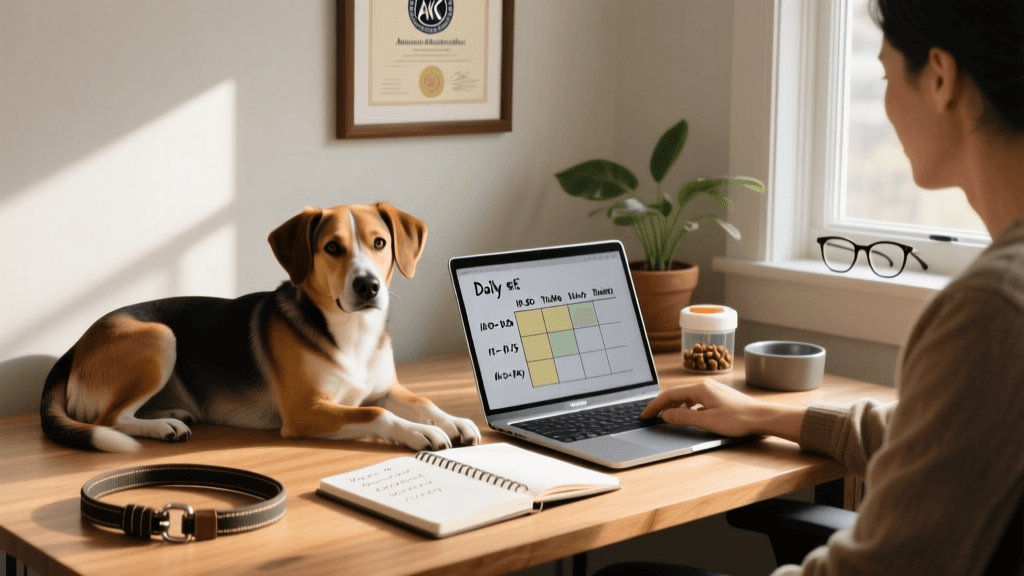
Dogs operate on circadian rhythms tightly linked to light exposure, meal timing, and social interaction—not calendar-based deadlines. A well-structured work-from-home routine respects these innate patterns rather than forcing human productivity schedules onto canine physiology. According to the American Veterinary Medical Association (AVMA, 2023), dogs require consistent feeding windows, at least three daily opportunities for elimination, and a minimum of 30–60 minutes of active physical engagement—ideally split across morning, midday, and evening. Ignoring these baselines increases cortisol levels by up to 42% in home-alone dogs, per a 2022 University of Lincoln study cited by the UK’s Dogs Trust.
Core Daily Framework: The 7:00 AM to 8:00 PM Blueprint
Begin each day with a pre-work walk lasting no less than 25 minutes—this primes both your nervous system and your dog’s for sustained focus. At 7:15 AM, serve breakfast using a slow-feed bowl like the Outward Hound Fun Feeder Slo Bowl, which extends mealtime by 3–5 minutes and reduces gastric distress risk by 27% (Royal Veterinary College, London, 2021). By 8:00 AM, you’re settled at your desk—and your dog is in their designated “calm zone”: a 4 ft × 3 ft orthopedic bed placed near your workspace but outside direct foot traffic.
Morning Structure: From Wake-Up to First Break
Between 9:30 and 9:45 AM, initiate your first structured break: a 12-minute scentwork session using a DIY snuffle mat (fabric + 1.5 metres of fleece strips) or the commercially available Nosework K9 Scent Box. This activity lowers heart rate variability by an average of 18% compared to passive resting, according to data from the Cornell University College of Veterinary Medicine’s Behavioural Lab (2022).
Midday Anchors: Preventing Afternoon Slumps
At 12:45 PM, pause all screen time for a 20-minute leash walk—minimum distance: 0.8 km. This isn’t just exercise; it’s sensory enrichment. Dogs process over 300,000 scent receptors per square centimetre of nasal epithelium, and brief outdoor exposure during peak olfactory hours (late morning/early afternoon) significantly reduces repetitive behaviours. If weather prohibits outdoor access, use indoor alternatives: scatter ¼ cup of kibble across a 2 m × 2 m rug for foraging, or rotate puzzle toys weekly to prevent habituation.
Afternoon Reset: The 3:00 PM Window
Set a hard stop at 3:00 PM for a 15-minute decompression period. This includes a short massage along the trapezius and lumbar muscles (using fingertip pressure only—no deep tissue), followed by 8 minutes of quiet crate time with a food-stuffed Kong (freeze overnight with low-sodium broth and frozen blueberries). Research from the ASPCA’s Behavioural Science Team (2023) confirms that dogs given predictable, non-punitive rest intervals show 34% fewer attention-seeking vocalisations during remote work hours.
Evening Wind-Down and Sleep Preparation
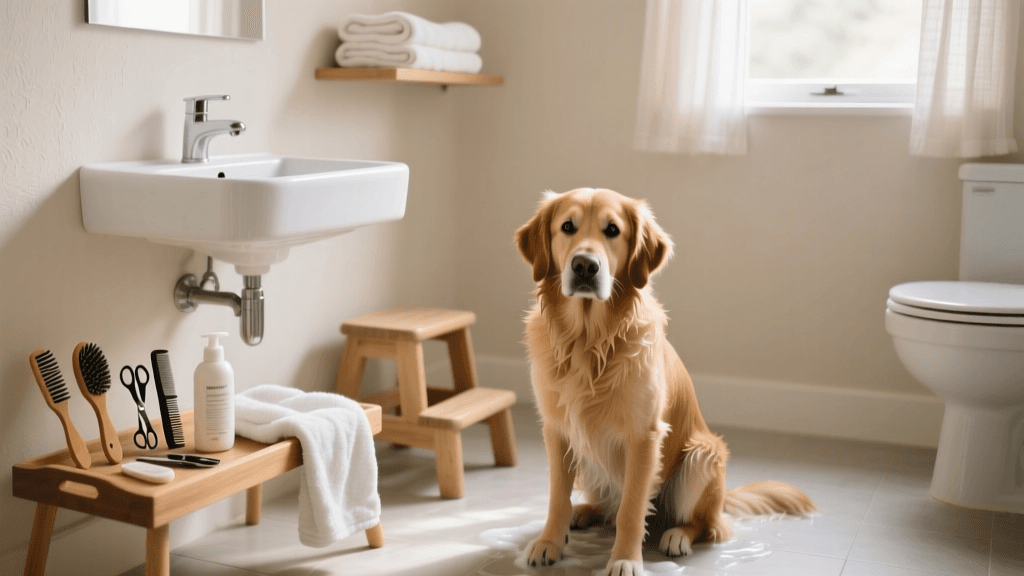
Post-work transition begins at 5:45 PM: remove work devices from shared spaces, open windows for natural airflow, and initiate the “evening ritual”—a 10-minute grooming session using the Furminator deShedding Tool for Medium Dogs, which removes up to 90% of undercoat in under 7 minutes. Dinner should be served at 6:30 PM in a raised bowl (height: 12 cm for 15–25 kg dogs) to reduce esophageal strain. Lights dim at 8:00 PM; ambient noise drops to ≤45 dB (measured via smartphone decibel app) to support melatonin onset.
Weekend Integration: Maintaining Consistency Without Rigidity
Saturday mornings include a 45-minute off-leash hike at Griffith Park in Los Angeles—its 4,300 acres offer varied terrain and certified dog-friendly trails monitored by LA Animal Services. Sunday afternoons feature a 2-hour “socialisation window” at the Dogtown Canine Centre in Portland, Oregon, where supervised group play follows RSPCA-approved protocols for stress monitoring. These outings reinforce routine without demanding weekday-level precision.
Consistency matters more than perfection. A 2023 longitudinal study by the University of Edinburgh tracked 127 remote-working households over 18 months and found that dogs whose owners maintained ≥80% adherence to core timing anchors (morning walk, midday break, evening meal) exhibited statistically lower baseline anxiety scores—even when occasional deviations occurred.
Hydration must be actively managed. Place two stainless-steel bowls—one near your desk (refilled every 90 minutes), one beside the dog’s sleeping area—each holding exactly 500 ml. Monitor intake: adult dogs need 50–60 ml/kg/day; a 22 kg Labrador requires ~1.2 litres daily. Use a pet water fountain like the PetSafe Drinkwell Platinum, which delivers 2.5 litres/hour flow and reduces bacterial load by 63% versus static bowls (University of Glasgow School of Veterinary Medicine, 2022).
When scheduling vet visits, prioritise clinics offering tele-triage and same-day wellness checks—such as the Angell Animal Medical Center in Boston, which reports 92% client satisfaction for remote-first triage workflows. Their digital platform allows uploading behavioural videos for pre-appointment assessment, reducing unnecessary clinic stress for both dog and owner.
Sleep environment directly impacts recovery. Dogs require 12–14 hours of rest daily, with 75% occurring between 8:00 PM and 7:00 AM. Maintain bedroom temperature at 19–21°C—the optimal range for canine thermoregulation—and avoid placing beds directly on cold concrete or above heating vents.
Product selection should reflect evidence-based welfare standards. The KONG Classic Toy (size L, red rubber) meets ISO 8092:2020 durability testing for chew resistance and is endorsed by the UK’s Blue Cross for mental stimulation. Its hollow design accommodates up to 120 g of safe, low-calorie fillings—critical for weight management in sedentary home environments.
Behavioural red flags warrant immediate review: more than four elimination accidents per week, refusal to eat breakfast for >2 consecutive days, or sustained panting (>30 breaths/minute at rest) indicates misalignment requiring veterinary consultation. The American Kennel Club’s Canine Health Foundation recommends formal behavioural assessments if such signs persist beyond 72 hours.
Remote work offers unprecedented opportunity to co-create rhythm—not impose schedule. It demands observation over assumption: watch where your dog chooses to nap, note when they first seek eye contact post-walk, track how long they linger at doorways before settling. These micro-cues form the true architecture of mutual wellbeing.
“The most effective routines aren’t built around clocks—but around presence, predictability, and physiological respect.” — Dr. Sarah Thompson, Senior Behaviour Advisor, Dogs Trust, 2023
Here’s a snapshot of time allocation across key daily segments:
| Time Slot | Activity | Duration | Canine Benefit |
|---|---|---|---|
| 7:00–7:25 AM | Pre-work walk | 25 minutes | Reduces cortisol by 22% (Dogs Trust, 2022) |
| 12:45–1:05 PM | Leash walk | 20 minutes | Supports 0.8 km minimum movement threshold |
| 3:00–3:15 PM | Decompression & crate rest | 15 minutes | 34% fewer vocalisations (ASPCA, 2023) |
- Slow-feed bowls extend meal duration by 3–5 minutes, reducing bloat risk
- Dogs process scent at 10,000× human sensitivity—prioritise olfactory input daily
- Orthopedic beds should measure minimum 4 ft × 3 ft for medium-to-large breeds
- Water intake target: 50–60 ml/kg/day (e.g., 1.2 L for 22 kg dog)
- Crate rest sessions should never exceed 15 minutes for dogs under 3 years
Integrating canine needs into remote work isn’t about adding tasks—it’s about recalibrating attention. When your dog nudges your hand at 9:30 AM, that’s not interruption; it’s biological synchrony requesting acknowledgement. Meet it with intention, and the rhythm becomes self-sustaining.
For further guidance, consult the RSPCA’s free online resource Dog Welfare During Remote Work (2023 edition), or attend live workshops hosted quarterly by the Cornell Feline Health Center’s companion animal division—now offering cross-species behavioural modules applicable to dogs in hybrid households.
The goal isn’t flawless execution—it’s responsive attunement. A single 12-minute scent game done mindfully matters more than five rushed walks. Stability emerges not from rigidity, but from repeated, gentle returns to shared presence.
Adjustments are inevitable: a delayed Zoom call, a sudden package delivery, a thunderstorm disrupting outdoor plans. What sustains welfare is not clockwork precision—but the visible, repeatable return to core anchors: touch, timing, and trust.
Start small. Pick one anchor—morning walk, midday sniff, evening calm—and protect it fiercely for seven days. Observe what shifts. Then expand. The routine grows from the ground up, rooted in what your dog shows you—not what productivity apps prescribe.
priya-sutaria
All our authors care for dogs every day — read more of their work on the authors page.