Crate Training Myths vs. Facts: Dog Sleep Routines
Debunk common crate training myths and discover factual, actionable dog sleep routines for a peaceful night. Expert tips on sizing, timing, and comfort.
Introduction to Canine Sleep and Crate Training
When it comes to sharing your life with a dog, few topics spark as much debate among pet parents as nighttime routines and crate training. Well-meaning friends, family members, and even some outdated training guides often perpetuate misconceptions about how dogs should sleep, where they should sleep, and what constitutes a healthy nighttime routine. Establishing a solid sleep routine is not just about getting a good night of rest for yourself; it is fundamentally tied to your dog's behavioral health, anxiety levels, and overall well-being.
In this comprehensive guide, we are separating fiction from reality. By debunking the most pervasive myths surrounding dog sleep routines and crate training, we can replace guesswork with science-backed, actionable advice. Whether you are bringing home a new puppy or trying to reset the nighttime habits of an adult rescue, understanding the facts will help you create a peaceful, secure, and restful environment for your canine companion.
Myth 1: Crates Are Cruel and Dogs Naturally Hate Them
The Myth: Many people believe that confining a dog to a crate is akin to locking them in a jail cell. This myth suggests that dogs are free-roaming animals who will feel trapped, anxious, and punished if asked to sleep inside an enclosed space.
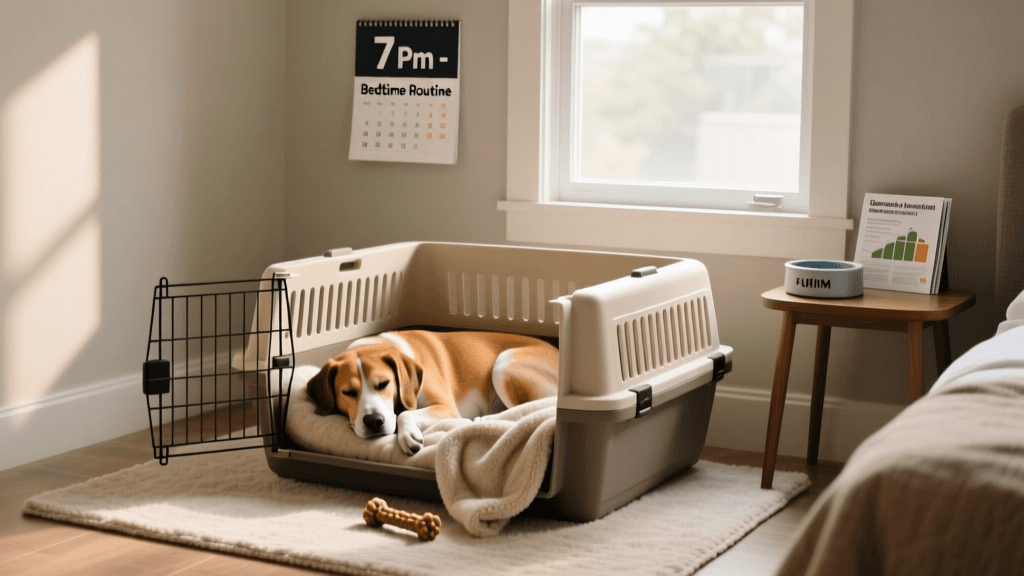
The Fact: Dogs are descended from den-dwelling ancestors, and they possess a natural instinct to seek out small, enclosed, and secure spaces for rest and protection. When introduced properly, a crate becomes a dog's personal sanctuary—a place where they can retreat from the chaotic stimuli of a busy household. According to VCA Hospitals, a crate taps into a dog's natural denning instinct, providing a sense of security that can actually reduce anxiety and prevent destructive behaviors born from stress.
The key to making this fact work for you is the introduction process. A crate should never be used as a punishment zone. Instead, it should be associated with high-value treats, comfortable bedding, and positive reinforcement. Feed your dog their meals inside the crate, leave the door open during the day, and provide a durable chew toy like a Kong stuffed with frozen peanut butter to build a positive emotional response to the space.
Myth 2: Dogs Can Hold Their Bladder All Night at Any Age
The Myth: If you put a dog in a crate at 10:00 PM, they should be able to sleep straight through until 7:00 AM without needing a bathroom break, regardless of their age.
The Fact: Bladder control is a physiological limitation, not a behavioral choice. Puppies, in particular, lack the muscular development required to 'hold it' for eight consecutive hours. The ASPCA emphasizes that setting unrealistic expectations for nighttime bladder control is a primary cause of housetraining failure and unnecessary frustration for owners.
A general rule of thumb is that a puppy can hold their bladder for one hour for every month of age, up to a maximum of about eight hours for a healthy adult dog. However, nighttime sleep states can slightly extend this, but you must still plan your routine around their biological limits.
Puppy Age vs. Maximum Nighttime Crate Time
| Puppy Age | Maximum Crate Time (Night) | Required Action |
|---|---|---|
| 8 to 10 weeks | 1 to 2 hours | Set an alarm for midnight and 3:00 AM potty breaks. |
| 11 to 14 weeks | 3 to 4 hours | One scheduled middle-of-the-night potty break. |
| 15 to 16 weeks | 4 to 5 hours | Transitioning to a single early morning break. |
| 17+ weeks | 6 to 8 hours | Most dogs can sleep through the night. |
Note: Always take your puppy out immediately before crating them for the night, and keep middle-of-the-night potty trips boring and strictly business. Do not engage in play.
Myth 3: A Bigger Crate Is Always Better for Comfort
The Myth: To ensure your dog is comfortable, you should buy the largest crate possible so they can stretch out, roll around, and have plenty of extra room for toys and water bowls.
The Fact: While it seems logical that more space equals more comfort, an oversized crate can actually sabotage your nighttime routine and housetraining efforts. Dogs instinctively avoid soiling their sleeping area. If a crate is too large, a dog will designate one corner for sleeping and the opposite corner as a bathroom, completely defeating the purpose of the den instinct.
The Humane Society of the United States advises that a properly sized crate should allow your dog to stand up without crouching, turn around in a full circle, and lie down comfortably on their side. Any extra space should be blocked off using a wire divider panel until the dog grows into it.
Ideal Crate Dimensions by Dog Weight
| Dog Weight | Breed Examples | Ideal Crate Dimensions (L x W x H) |
|---|---|---|
| 1 - 10 lbs | Chihuahua, Pomeranian | 18' x 12' x 14' |
| 11 - 25 lbs | Beagle, Corgi, Pug | 24' x 18' x 19' |
| 26 - 40 lbs | Cocker Spaniel, Bulldog | 30' x 19' x 21' |
| 41 - 70 lbs | Labrador, Golden Retriever | 36' x 23' x 25' |
| 71 - 90+ lbs | German Shepherd, Rottweiler | 42' x 28' x 30' |
Myth 4: Complete Silence and Pitch Darkness Are Required
The Myth: Dogs need a pitch-black, completely silent room to achieve deep REM sleep, much like a human infant.
The Fact: While dogs do sleep a significant portion of the day and night (often 12 to 14 hours in a 24-hour cycle), their sensory needs differ from ours. Dogs have highly attuned hearing, and sudden, sharp noises (like a car door slamming or a garbage truck backing up) can easily trigger a startle response, pulling them from deep sleep and causing nighttime barking.
Rather than enforcing absolute silence, many canine behaviorists recommend using a white noise machine or a low-volume fan. This creates a consistent acoustic blanket that masks sudden environmental noises. Furthermore, while dogs can sleep in the dark, a dim nightlight can be beneficial for senior dogs or puppies who might wake up disoriented and need to find their way to the door or their water bowl without panicking.
Temperature also plays a vital role. Dogs do not sweat like humans; they pant and release heat through their paw pads. The ideal sleeping temperature for most dogs is between 65°F and 75°F (18°C - 24°C). Providing a cooling mat in the summer or a self-warming blanket in the winter can drastically improve sleep quality.
Building an Actionable Nighttime Routine
Debunking myths is only half the battle; implementing a structured routine is where the magic happens. Dogs thrive on predictability. Here is a step-by-step evening timeline to set your dog up for success:
- 7:00 PM - Final Meal: Feed your dog their dinner at least three to four hours before bedtime to allow for proper digestion and elimination.
- 8:30 PM - Water Restriction: Pick up the water bowl to prevent unnecessary middle-of-the-night bladder filling. (Ensure they have had ample access to water throughout the day).
- 9:30 PM - Decompression Walk: Take a 15-minute 'sniffari' walk. Allow your dog to sniff at their own pace. Mental stimulation through scenting is incredibly tiring and promotes deeper sleep.
- 10:00 PM - Final Potty Break: A quick, boring trip outside on a leash to empty the bladder and bowels.
- 10:15 PM - Crate Time: Guide your dog into the crate with a high-value, long-lasting chew. Turn on the white noise machine and dim the lights.
Investing in the Right Equipment: Costs and Types
Choosing the right crate is an investment in your dog's long-term comfort. Here is a breakdown of what to expect when shopping:
- Wire Crates ($45 - $100): Excellent for ventilation and visibility. They fold flat for storage and usually come with a divider panel. Best for home use.
- Plastic / Airline Crates ($35 - $90): Provide a more enclosed, 'den-like' feel which many anxious dogs prefer. Required for air travel, but offer less ventilation in warm climates.
- Soft-Sided Crates ($40 - $80): Lightweight and portable, but strictly for fully crate-trained dogs. A teething puppy or anxious dog will chew through the mesh in minutes.
- Furniture-Style Crates ($150 - $400+): Double as end tables or nightstands. While aesthetically pleasing and great for human home decor, ensure the interior dimensions still meet your dog's sizing requirements.
Conclusion
Living with a dog means adapting your lifestyle to meet their biological and psychological needs. By discarding outdated myths about crate training and embracing the facts about canine sleep cycles, bladder limits, and den instincts, you can transform nighttime from a stressful battle of wills into a peaceful, restorative experience. Remember that patience and consistency are your greatest tools. A well-executed sleep routine not only protects your furniture and your sanity but, more importantly, provides your dog with the secure foundation they need to thrive in your shared home.
priya-sutaria
All our authors care for dogs every day — read more of their work on the authors page.