Decompression Walks: A Behaviorist Guide to Calming Reactive Dogs
Learn how expert behaviorists use decompression walks to lower cortisol, reduce reactivity, and improve your dog's mental health with actionable protocols.
The Misunderstood Daily Walk
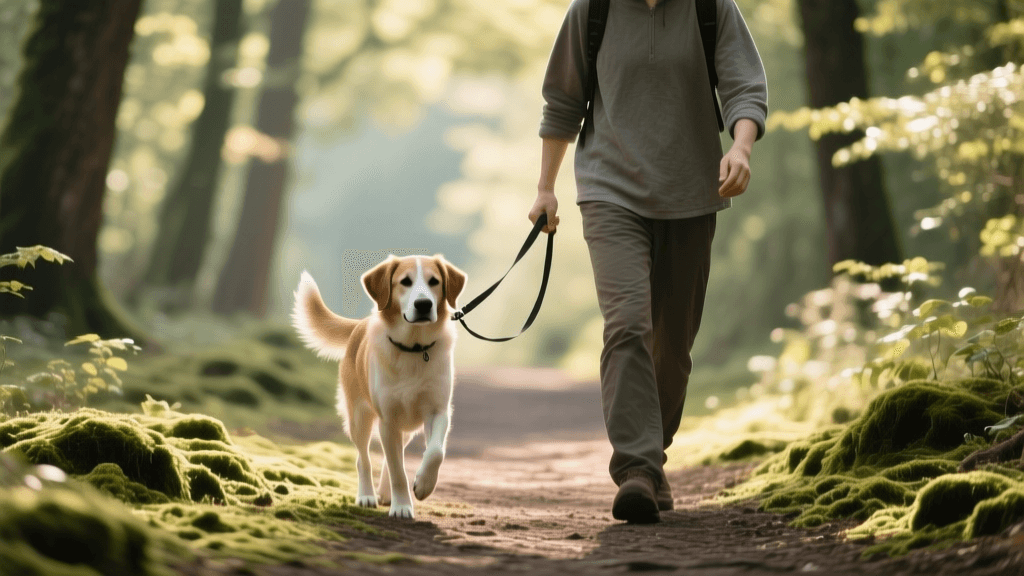
For decades, the prevailing advice in dog ownership has been to enforce a strict, heel-oriented daily walk. While structured leash walking is a valuable skill, treating it as the sole form of canine exercise is a fundamental misunderstanding of dog behavior. For reactive, anxious, or highly aroused dogs, a traditional neighborhood walk often acts as a trigger-stacking exercise, continually elevating cortisol levels and reinforcing fear-based responses. Enter the decompression walk—a scientifically backed behavioral intervention designed to engage the parasympathetic nervous system, lower heart rates, and allow dogs to process their environment through their most powerful sense: olfaction.
As a behaviorist, I frequently prescribe decompression walks (often colloquially called "sniffaris") as the foundational pillar of any behavior modification plan. This article will break down the neurology of sniffing, the exact gear required, and a step-by-step protocol to implement decompression walks safely and effectively.
The Neurology of the Sniffari
To understand why decompression walks work, we must look at canine neuroanatomy. A dog's olfactory bulb is proportionally 40 times larger than a human's, and the area of the brain dedicated to analyzing odors is vastly more complex. When a dog sniffs deeply and continuously, they are not just gathering information; they are engaging in a cognitively demanding task that naturally lowers their heart rate.
Research highlighted by the Horowitz Dog Cognition Lab demonstrates that sniffing is an inherently rewarding and calming behavior. The act of prolonged sniffing releases dopamine and endorphins, effectively acting as a natural anxiolytic. Furthermore, just 15 to 20 minutes of intensive, off-leash or long-line sniffing in a novel environment can yield the same mental fatigue as an hour of vigorous physical exercise. For reactive dogs, mental fatigue is far more effective at promoting household calmness than physical exhaustion, which can sometimes lead to an over-aroused, overtired state.
Traditional Structured Walks vs. Decompression Walks
Understanding the distinction between a training walk and a decompression walk is critical for managing your dog's daily stress budget. Below is a behavioral comparison of the two modalities.
| Aspect | Traditional Heel Walk | Decompression Sniffari |
|---|---|---|
| Primary Goal | Impulse control, obedience, physical exercise | Mental enrichment, stress reduction, autonomy |
| Leash Tension | Short (4-6 ft), loose leash at the handler's side | Long line (15-30 ft), allowing maximum radius |
| Pace & Direction | Determined by the human; steady and predictable | Determined by the dog; erratic, slow, with frequent stops |
| Sensory Focus | Visual and auditory (watching the handler) | Olfactory (processing environmental scents) |
| Cortisol Impact | Can elevate if triggers are present (trigger-stacking) | Actively lowers baseline cortisol and heart rate |
| Ideal Environment | Suburban sidewalks, paved trails, urban streets | Empty fields, wooded trails, private rentals (Sniffspot) |
Essential Gear for Canine Decompression
You cannot safely execute a decompression walk with standard neighborhood walking gear. The objective is to provide the dog with a sense of freedom while maintaining safety. Budget approximately $90 to $140 for the following specialized equipment:
1. The Y-Front Harness ($50 - $80)
Avoid back-clip harnesses that restrict shoulder movement or tighten around the chest. A well-fitted Y-front harness, such as the Perfect Fit Harness or the Haqihana Harness, ensures that if the dog hits the end of the long line, the force is distributed safely across their sternum and ribcage, preventing tracheal damage and avoiding the opposition reflex that triggers reactivity.
2. The Biothane Long Line ($30 - $50)
Standard nylon long lines absorb water, collect burrs, and cause severe rope burn if pulled through your hands. Invest in a 15-foot to 30-foot Biothane long line (3/4-inch or 1-inch width depending on your dog's weight). Biothane is waterproof, mud-proof, and glides easily through the hands. Brands like Mighty Dog Gear or High Tail Treks offer excellent, durable options.
3. High-Value Foraging Treats ($15 - $25)
Decompression is about engaging the brain. Bring freeze-dried beef liver, green tripe, or boiled chicken to scatter in tall grass. This encourages "nose-to-ground" foraging, which is deeply grounding for an anxious nervous system.
The Behaviorist’s 4-Step Implementation Protocol
Transitioning a reactive dog to a decompression walk requires a strategic approach to prevent overwhelming their threshold.
Step 1: Location Scouting and Timing
Do not attempt a decompression walk in a high-traffic area. Use apps like Sniffspot to rent private, fenced-in pastures or wooded areas. If using public land, go during "low-traffic" hours (typically dawn or dusk, or mid-day on weekdays). The environment must be predictable enough that you can manage unexpected triggers.
Step 2: The "Check-In" and Threshold Management
Upon arriving at the location, do not immediately unclip the short leash and attach the long line. Stand by your car or at the trailhead and wait. Allow your dog to observe the environment. When they offer a voluntary "check-in" (making eye contact or orienting their body toward you), mark with a calm "yes" and toss a treat into the grass. This establishes you as a safe base camp before the exploration begins.
Step 3: Long-Line Handling Mechanics
Handling a 30-foot line requires practice to avoid tangles and injury. Never wrap the leash around your wrist or fingers. Instead, use the "mushering" technique: gather the leash in large, loose loops in your non-dominant hand, allowing the line to slide freely through your grip if the dog suddenly bolts. Step on the trailing loops to create an emergency brake if a trigger (like a deer or off-leash dog) appears.
Step 4: The Cool-Down and Cortisol Reset
The International Association of Animal Behavior Consultants (IAABC) frequently notes that cortisol (the primary stress hormone) can remain elevated in a dog's bloodstream for up to 72 hours after a stressful event. After your sniffari, transition back to the house calmly. Provide a LickiMat or a stuffed Kong upon returning home. Licking and chewing are self-soothing behaviors that help complete the stress cycle and return the dog to a parasympathetic baseline.
Reading Your Dog's Calming Signals
During a decompression walk, your primary job is not to train, but to observe. Familiarize yourself with canine calming signals, a concept pioneered by Norwegian dog trainer Turid Rugaas. If your dog exhibits the following behaviors, they are attempting to self-soothe or communicate mild stress:
- Ground Sniffing: While often a sign of exploration, sudden, intense sniffing when a stranger approaches is a displacement behavior used to avoid direct confrontation.
- Lip Licking and Yawning: If your dog yawns or licks their lips when not tired or eating, they are processing environmental pressure.
- Curving: Dogs naturally move in arcs rather than straight lines to appear non-threatening. Allow your dog to walk in wide semicircles rather than forcing them down a narrow, straight path.
When you observe these signals, advocate for your dog. Increase your distance from the perceived stressor and allow them to return to their olfactory work.
Conclusion: Patience in the Process
Implementing decompression walks requires a paradigm shift for the handler. You must relinquish the desire for a "perfect heel" and embrace the erratic, slow, and seemingly aimless nature of the sniffari. By prioritizing your dog's sensory needs and allowing them autonomy in a safe environment, you will see a profound reduction in household reactivity, leash frustration, and anxiety. As emphasized by Fear Free Pets, reducing fear, anxiety, and stress (FAS) is the cornerstone of modern animal care. Swap one of your daily neighborhood loops for a 30-minute sniffari, and watch your dog's behavior transform from the inside out.
aaron-whyte
All our authors care for dogs every day — read more of their work on the authors page.