2026 Cooperative Care Dog Training: Build Trust and Bond
Discover 2026 cooperative care training techniques to build trust. Learn target stick and lick mat routines for stress-free grooming and vet visits.
The Shift to Cooperative Care in 2026
In the landscape of modern canine behavioral science, the year 2026 marks a definitive turning point. The outdated dominance-based handling methods and forced restraint techniques of the past have been entirely replaced by cooperative care training. Also known as consent-based husbandry, cooperative care is a revolutionary approach that empowers dogs to actively participate in their own grooming, veterinary exams, and daily handling. For dog owners looking to deepen their bond and build unshakeable trust, this methodology is the ultimate relationship-building exercise. When your dog learns that they have a voice and that you will respect their boundaries, the psychological bond between you transforms from mere obedience to profound mutual trust.
Cooperative care relies on the principle of the "start button"—a specific behavior your dog offers to signal they are ready for handling. If they withdraw the behavior, the handling stops immediately. This opt-in/opt-out system drastically reduces fear, anxiety, and stress (FAS), making it a cornerstone of modern relationship building. According to the guidelines championed by Fear Free Pets, eliminating forced restraint not only makes veterinary and grooming visits safer but also enriches the dog's emotional well-being at home.
The Science of Trust: Oxytocin vs. Cortisol
Why is cooperative care so effective for bonding? The answer lies in canine neurochemistry. When a dog is forcibly held down for nail trims or brushing, their brain releases cortisol, the primary stress hormone. Over time, this creates a negative conditioned emotional response (CER) to both the grooming tools and the owner holding them. Conversely, when a dog voluntarily participates in their care and receives high-value reinforcement, their brain releases oxytocin and dopamine. This "bonding hormone" loop strengthens the human-canine attachment. By utilizing cooperative care in 2026, you are actively wiring your dog's brain to associate your presence and handling with safety, pleasure, and reward.
Essential Tools for Cooperative Training
To implement a successful cooperative care routine, you need the right equipment. The market in 2026 offers highly specialized, force-free tools designed to facilitate clear communication between you and your dog.
- Karen Pryor Clicker Training Target Stick: Retailing for approximately $15.99 in 2026, this telescoping stick with a brightly colored ball on the end is essential for teaching spatial awareness and positioning. It allows you to guide your dog into a grooming station or scale without ever grabbing their collar. Karen Pryor Clicker Training remains the gold standard for these positive reinforcement tools.
- Hyper Pet IQ Treat Mat (Suction Cup Edition): Priced around $12.49, this lick mat attaches securely to walls, bathtubs, or grooming tables. Filling the grooves with high-value spreads keeps the dog engaged and triggers the soothing, endorphin-releasing act of licking.
- Zuke's Mini Naturals Training Treats: At roughly $18.99 for a bulk pouch, these low-calorie, high-value treats are perfect for rapid-fire reinforcement during shaping sessions without risking obesity.
- Chris Christensen Big G Slicker Brush: A premium grooming tool (approx. $74.00) that features flexible pins designed to glide through coats without scratching the skin, ensuring that the physical sensation of brushing remains entirely painless.
Step-by-Step: Teaching the "Start Button"
Building a cooperative care routine requires patience, precise timing, and a commitment to honoring your dog's choices. Here is a foundational protocol for teaching a "chin rest" start button, which is highly effective for face handling, ear cleaning, and veterinary exams.
Phase 1: Target Stick Familiarization
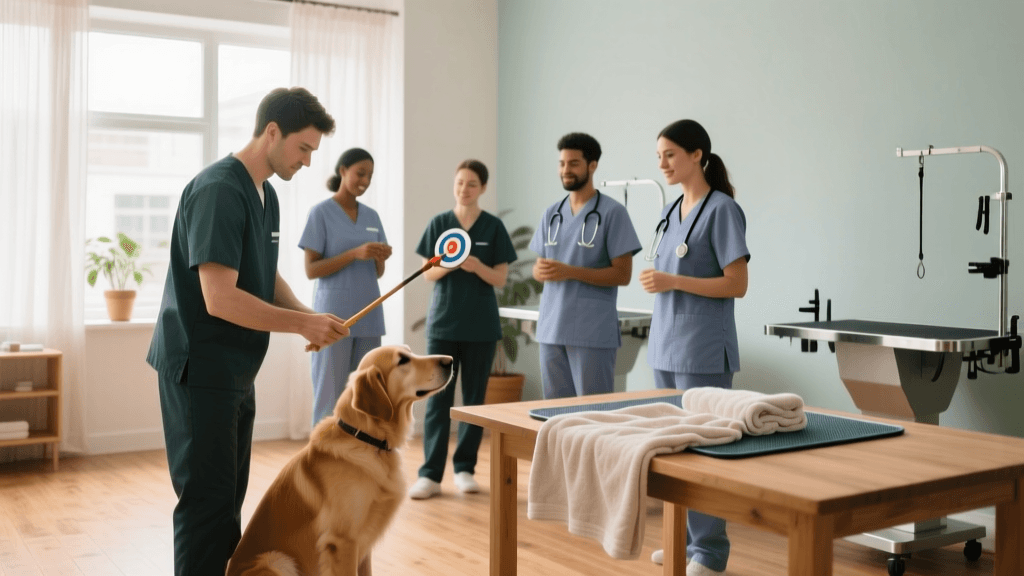
Before introducing physical touch, teach your dog to target an object. Hold the target stick near your dog's nose. The moment they sniff or look at the ball, click your clicker (or use a verbal marker like "Yes!") and deliver a treat. Repeat this until the dog eagerly bumps the ball with their nose. You can then use the target stick to guide them onto a grooming mat or into a specific standing position, rewarding them heavily for staying in place. This builds confidence and establishes a game-like atmosphere.
Phase 2: The Chin Rest Consent Protocol
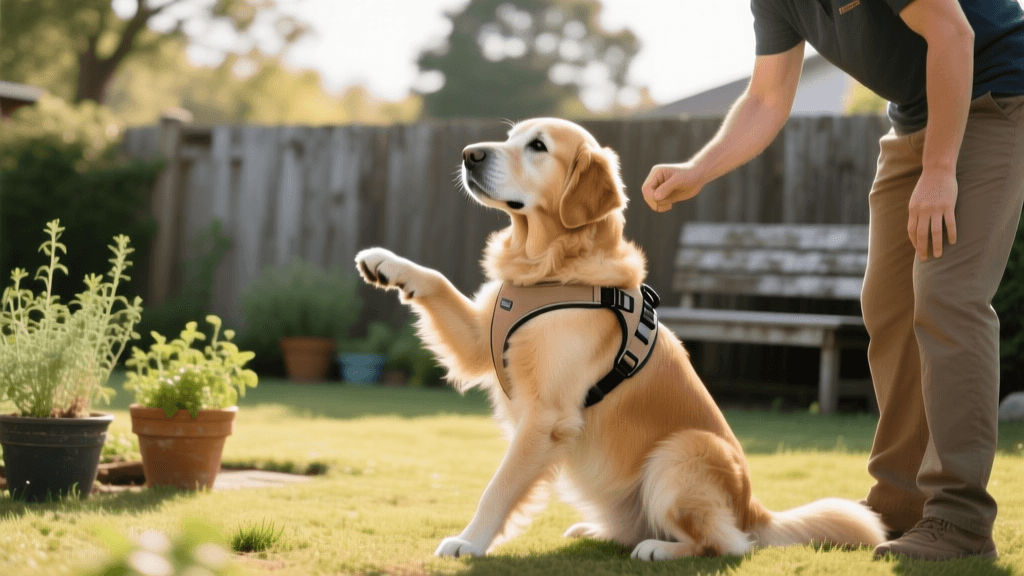
Place your hand or a designated soft cushion at your dog's chest level. Wait for them to investigate. The second their chin drops onto your hand, mark and reward. Gradually increase the duration they must keep their chin on your hand before the reward is delivered. This chin rest becomes their "start button." As long as their chin remains on your hand, you have consent to brush their coat, examine their teeth, or wipe their eyes. If they lift their head, you must immediately stop all handling. This immediate cessation of pressure is what teaches the dog that their communication works, thereby deepening their trust in you.
Phase 3: Introducing the Grooming Tool
With your dog in a chin rest, introduce the brush. Let them sniff it, mark, and reward. Then, perform one single, gentle stroke on their shoulder while they maintain the chin rest. Mark and reward. Slowly increase the number of strokes, the pressure, and the sensitivity of the areas you brush. If the dog breaks the chin rest, calmly reset them and lower your criteria. Never force the brush through a tangle while they are restrained; instead, use the target stick to reposition them and try again when they offer consent.
Traditional Restraint vs. Cooperative Care (2026 Standards)
The following table illustrates why the veterinary and behavioral communities, including the American Veterinary Medical Association (AVMA), strongly advocate for low-stress, cooperative handling techniques over traditional forced restraint.
| Handling Aspect | Traditional Restraint | Cooperative Care (2026 Standard) | Impact on the Human-Canine Bond |
|---|---|---|---|
| Nail Trimming | Dog is pinned on side; owner forces paw extension. | Dog targets a mat; owner shapes paw lift with a verbal cue and rewards. | Eliminates fear of owner's touch; builds cooperative partnership. |
| Bathing | Leash tied to tub spout; dog attempts to escape. | Lick mat on tub wall; dog voluntarily enters tub for high-value spread. | Transforms a stressful chore into a highly anticipated bonding game. |
| Ear Cleaning | Owner hugs dog from behind, trapping the head. | Dog offers a chin rest on a stool; cleaning occurs only during rest. | Dog learns owner respects boundaries, increasing overall household trust. |
| Vet Exams | Muzzled or heavily restrained by technicians. | Dog stations on a scale via target stick; voluntary blood draws. | Reduces owner guilt and dog anxiety; strengthens the safety bond. |
Weekly Bonding and Husbandry Schedule
To integrate cooperative care into your relationship-building routine, consistency is key. Keep sessions incredibly short—no more than 3 to 5 minutes—to prevent frustration and keep the experience overwhelmingly positive.
- Monday (Targeting & Positioning): Spend 3 minutes using the target stick to guide your dog onto their grooming mat. Reward heavily for standing still on the mat. No tools are introduced today.
- Tuesday (Lick Mat Engagement): Smear the Hyper Pet IQ Mat with plain pumpkin puree or dog-safe peanut butter. Attach it to the wall and let your dog lick for 5 minutes while you sit nearby, offering calm praise. This builds a positive association with the grooming zone.
- Wednesday (Chin Rest Shaping): Practice the chin rest start button. Aim for 5 successful repetitions of a 3-second hold. Reward with Zuke's Mini Naturals.
- Thursday (Tool Desensitization): While the dog is licking the mat, gently place the brush on the floor near them. Click and treat for looking at it. Pick it up, click, and treat. No brushing occurs.
- Friday (Active Consent Brushing): Ask for the chin rest. Perform three gentle brush strokes on the shoulder. Mark, reward, and release. End the session on a high note before the dog loses interest.
- Saturday (Paw Handling): Use the chin rest protocol to gently touch your dog's paws. If they tolerate it, mark and reward. If they pull away, respect the boundary and try a lighter touch next time.
- Sunday (Rest & Free Play): No formal husbandry training. Engage in unstructured play, sniffaris, or cuddle time to reinforce that your relationship is not just about work and grooming.
Troubleshooting Common Setbacks
When implementing cooperative care, owners often encounter moments where the dog simply walks away or refuses to offer the start button. In traditional training, this might be viewed as disobedience. In cooperative care, this is a massive success. If your dog walks away, it means they trust you enough to know that you will not chase them, grab them, or force them to comply. Celebrate this communication! It means your consent protocol is working perfectly. Simply end the session, evaluate if the environment was too distracting, or if the previous step was too difficult, and try again the next day with a lower criterion.
Another common issue is "poisoned cues," where a dog learns that offering their paw always results in a painful nail trim. To fix this, spend several weeks asking for the paw, rewarding it, and completely putting the nail clippers away. You must rebuild the trust that offering the paw is a safe, highly rewarded choice.
Conclusion
As we navigate dog ownership in 2026, the emphasis has rightfully shifted from mere compliance to genuine connection. Cooperative care training is not just a grooming technique; it is a profound relationship-building tool that honors your dog's autonomy and emotional state. By utilizing target sticks, lick mats, and consent-based start buttons, you are communicating to your dog that their comfort matters. This mutual respect drastically reduces household stress, eliminates the need for forceful restraint, and cultivates a deeply rooted, unbreakable bond built on trust, patience, and positive reinforcement.
marcus-aldridge
All our authors care for dogs every day — read more of their work on the authors page.