Senior Dog Trick Training 2026: Top Joint Supplements Guide
Discover how to adapt trick training for senior dogs in 2026. Learn which joint supplements support mobility and keep aging pups engaged and pain-free.
The Intersection of Canine Cognitive Health and Joint Mobility
As we navigate the evolving landscape of canine behavioral conditioning in 2026, one of the most vital yet overlooked aspects of senior dog care is the continuation of trick and obedience training. Many owners mistakenly believe that once a dog reaches their golden years, training should cease. In reality, mental stimulation through learning new tricks is crucial for staving off canine cognitive dysfunction (CCD). However, a significant barrier to this mental enrichment is physical discomfort. Osteoarthritis, hip dysplasia, and general joint degradation can make traditional training sessions painful, leading to frustration for both the handler and the dog. This is where the strategic integration of joint supplements into your training regimen becomes essential.
In 2026, veterinary sports medicine and behavioral science have merged to create multimodal approaches for aging dogs. By utilizing advanced joint supplements, trainers and owners can effectively manage pain and inflammation, thereby reopening the window for positive reinforcement training. This guide explores how to leverage the latest joint support formulations to keep your senior dog mentally sharp, physically comfortable, and eager to learn.
The Behavioral Misinterpretation: Pain vs. Stubbornness
Before diving into specific supplements, it is critical to address a common behavioral misinterpretation in dog training. When a senior dog refuses to perform a previously known cue—such as 'sit,' 'down,' or 'roll over'—owners often label the dog as 'stubborn' or 'disobedient.' From a behavioral conditioning standpoint, this is rarely the case. Dogs do not possess the cognitive capacity for spite. Instead, refusal is almost always an avoidance behavior driven by physical discomfort.
For example, a dog with undiagnosed or under-managed hip dysplasia will naturally avoid the biomechanical stress of folding their hindquarters into a tight 'sit.' If a trainer pushes the dog to comply without addressing the underlying pain, the dog will begin to associate the training session, the handler, and the specific cue with negative experiences. This leads to learned helplessness and a breakdown in the human-animal bond. By introducing high-quality joint supplements and allowing them to reach therapeutic efficacy, you remove the physical barrier, allowing the dog to once again engage in operant conditioning willingly and joyfully.
Key Joint Supplements Enabling Training in 2026
The supplement market has seen significant advancements in bioavailability and targeted delivery systems by 2026. When selecting a joint supplement to support a senior dog's training stamina, look for formulations that go beyond basic glucosamine. Here are the top ingredients currently recommended by canine rehabilitation specialists:
1. Liposomal Curcumin and Green-Lipped Mussel
Curcumin, the active compound in turmeric, is a potent anti-inflammatory. However, traditional curcumin has poor bioavailability in dogs. In 2026, liposomal delivery systems encapsulate the curcumin in a lipid layer, allowing it to bypass the harsh stomach environment and absorb directly into the bloodstream. When paired with New Zealand Green-Lipped Mussel (which provides a unique profile of omega-3 fatty acids and glycosaminoglycans), this combination rapidly reduces joint swelling, making low-impact trick training much more comfortable for the dog.
2. High-EPA/DHA Marine Omega-3s
Omega-3 fatty acids, specifically Eicosapentaenoic acid (EPA) and Docosahexaenoic acid (DHA), are foundational for joint health. EPA directly inhibits the enzymes that break down cartilage, while DHA supports neural pathways, offering a dual benefit for senior dogs undergoing cognitive and physical training. According to the World Small Animal Veterinary Association (WSAVA), ensuring your dog's diet or supplement regimen meets therapeutic levels of Omega-3s is a cornerstone of managing osteoarthritis.
3. Undenatured Type II Collagen (UC-II)
UC-II works through a mechanism called oral tolerance, where it interacts with the gut-associated lymphoid tissue to downregulate the immune system's attack on the dog's own joint cartilage. This is particularly useful for dogs with autoimmune-mediated joint issues or severe rheumatoid-like arthritis, allowing them to maintain the flexibility needed for tricks like 'weave' or 'spin.'
4. Broad-Spectrum Hemp Extract (CBD)
While not a structural joint builder, hemp-derived CBD is heavily utilized in 2026 for its analgesic and anxiolytic properties. For senior dogs that experience anxiety or frustration during training due to their physical limitations, a carefully dosed CBD supplement can reduce pain perception and keep the dog in a calm, receptive learning state.
Comparing Joint Supplements for Training Efficacy
| Active Ingredient | Primary Mechanism | Training Impact | Time to Efficacy |
|---|---|---|---|
| Liposomal Curcumin | Reduces acute inflammation | Decreases post-session stiffness, improving next-day willingness | 3 to 7 days |
| Green-Lipped Mussel | Provides cartilage building blocks | Supports long-term joint cushioning for repetitive trick practice | 4 to 6 weeks |
| High-EPA Omega-3s | Inhibits cartilage-degrading enzymes | Enhances overall mobility and cognitive focus during sessions | 4 to 8 weeks |
| UC-II Collagen | Modulates immune response in joints | Improves range of motion for complex tricks like 'bow' or 'crawl' | 2 to 4 weeks |
| Hemp Extract (CBD) | Binds to endocannabinoid pain receptors | Reduces training-related anxiety and acute pain flare-ups | 45 to 60 minutes |
Modifying High-Impact Tricks for Arthritic Dogs
Even with the best joint supplements supported by the U.S. Food and Drug Administration (FDA) guidelines for animal safety, senior dogs should not be subjected to high-impact training. The goal of trick training in a dog's twilight years is cognitive engagement, not physical exertion. As a trainer or owner, you must adapt your behavioral conditioning techniques to accommodate your dog's physical reality.
From 'Jump' to 'Paw Target'
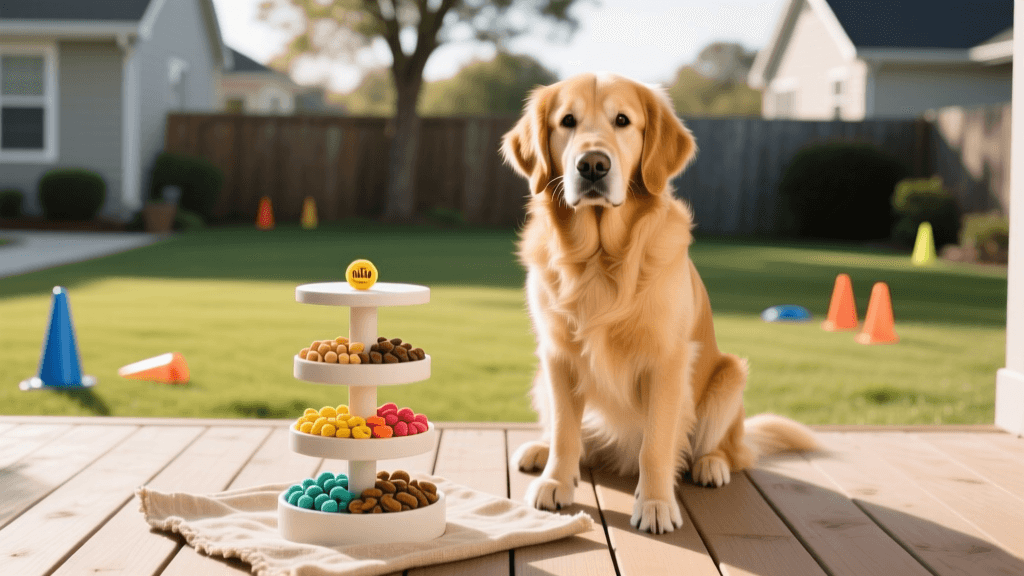
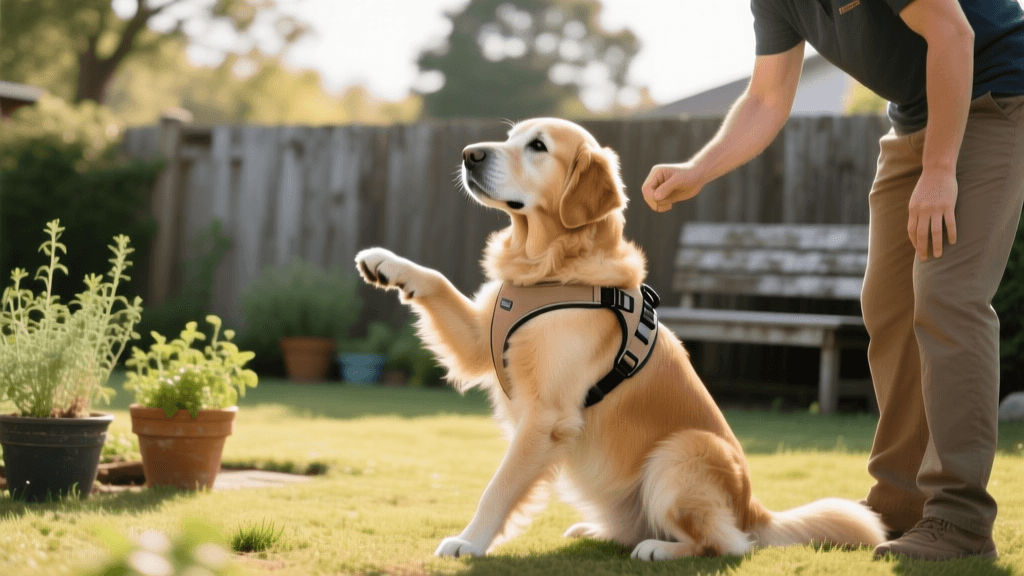
Teaching a dog to jump through a hoop or over a bar is a classic trick, but it places immense concussive force on the carpal and shoulder joints. Instead, transition to 'Paw Targeting.' Place a small, distinct mat or a plastic lid on the ground. Use a clicker or a marker word like 'Yes!' to reward the dog simply for walking over and placing one paw on the target. This engages the dog's problem-solving skills and teaches precise body awareness without requiring them to leave the ground.
From 'Roll Over' to 'Spin on a Mat'
The 'roll over' trick requires significant spinal flexion and hip rotation, which can be agonizing for a dog with lumbar spondylosis or hip dysplasia. A fantastic alternative is the 'Spin' or 'Twist.' Hold a high-value treat at the dog's nose and slowly lure them in a tight circle on a non-slip orthopedic mat. This encourages gentle, controlled movement of the spine and hindquarters, promoting synovial fluid circulation in the joints without the strain of lying down and getting back up.
The 'Chin Rest' for Focus and Calm
The 'Chin Rest' is an invaluable trick for senior dogs. It teaches the dog to rest their chin on a designated object (like your palm or a small stool) and hold still. This is entirely low-impact but requires immense mental focus and impulse control. It is also an excellent foundation trick for cooperative care, making veterinary exams and grooming sessions much less stressful for an aging dog.
Timing Supplements Around Training Sessions
Understanding the pharmacokinetics of your chosen supplements is vital for optimizing your training schedule. Not all supplements work on the same timeline, and timing them correctly can mean the difference between a successful session and a frustrated dog.
- Cumulative Supplements (Omega-3s, UC-II, Green-Lipped Mussel): These must be given daily with a meal containing dietary fat to ensure proper absorption. They do not provide immediate relief. Their efficacy builds over weeks, meaning your training routine should remain low-impact during the initial loading phase (the first 4 weeks).
- Acute Anti-inflammatories (Liposomal Curcumin): While still cumulative, these can begin to reduce systemic inflammation within days. You may notice your dog stretching more frequently or showing less hesitation when approaching the training mat after the first week of administration.
- Situational Support (Hemp Extract/CBD): If you are planning a slightly more demanding training session, or if your dog is experiencing a high-pain day due to weather changes (barometric pressure drops heavily impact arthritic joints), administer CBD 45 to 60 minutes before the session. This allows the compound to peak in the bloodstream precisely when you begin your behavioral conditioning work.
Creating the Ideal Training Environment
Supplements work internally, but you must also manage the external environment to protect your dog's joints. In 2026, canine rehabilitation experts universally recommend training senior dogs exclusively on high-traction surfaces. Slippery hardwood or tile floors force dogs to engage their stabilizing muscles constantly, leading to rapid fatigue and micro-strains in the joints. Invest in interlocking foam puzzle mats or lay down thick, rubber-backed area rugs in your designated training zone. This provides the confidence your dog needs to shift their weight and perform tricks without the fear of slipping.
Veterinary Oversight and Safety Guidelines
Before introducing any new supplement to your dog's regimen, especially if they are already on prescription NSAIDs (Non-Steroidal Anti-Inflammatory Drugs) for pain management, consult your veterinarian. Certain supplements, like high-dose fish oils and curcumin, possess mild blood-thinning properties and can interact with prescription medications. The Tufts University Cummings Veterinary Medical Center frequently emphasizes that supplements are meant to be part of a comprehensive, veterinary-guided pain management plan, not a replacement for medical diagnosis.
Furthermore, always choose supplements that undergo third-party testing. The animal supplement market is loosely regulated, and products that carry the National Animal Supplement Council (NASC) Quality Seal have passed rigorous audits for ingredient purity, label accuracy, and the absence of heavy metals or contaminants.
Conclusion: A New Chapter of Connection
Training a senior dog is not about demanding physical perfection; it is about maintaining a vibrant, communicative relationship. By recognizing the subtle signs of joint pain and proactively utilizing advanced joint supplements, you can remove the physical barriers that prevent your dog from engaging with you. In 2026, we have better tools, deeper scientific understanding, and more compassionate training methodologies than ever before. With the right nutritional support and modified trick routines, your aging companion can continue to learn, play, and thrive, proving that you truly can teach an old dog new tricks—provided you take care of their joints first.
beth-carrasco
All our authors care for dogs every day — read more of their work on the authors page.