Force-Free Vet Care 2026: Bucket Training & Muzzle Guide
Learn force-free cooperative vet care in 2026. Master bucket training and muzzle conditioning to reduce canine stress during medical exams.
The Evolution of Veterinary Handling in 2026
The landscape of veterinary medicine has undergone a massive paradigm shift over the last decade. As of 2026, the days of pinning down a terrified dog for a routine blood draw or vaccination are widely recognized as not only psychologically damaging but medically counterproductive. Today, the gold standard in canine health and wellbeing is cooperative care—a force-free methodology that prioritizes the dog's emotional state and gives them agency during medical procedures.
According to the American Veterinary Society of Animal Behavior (AVSAB), humane handling and positive reinforcement are critical for preventing behavioral fallout and ensuring accurate medical readings. When a dog is subjected to traditional, forceful restraint, their sympathetic nervous system triggers a fight-or-flight response. This floods their body with cortisol and adrenaline, which can artificially elevate heart rates, spike blood pressure, and alter blood glucose levels, leading to inaccurate diagnoses. By embracing positive reinforcement and force-free methods, we can safeguard both the mental and physical health of our dogs.
What is Cooperative Care?
Cooperative care is a training philosophy where the dog is taught to voluntarily participate in their own husbandry and medical care. Instead of being held down, the dog is trained to perform a specific behavior—such as resting their chin on a target or presenting their paw—that signals consent. Crucially, cooperative care includes an 'opt-out' mechanism. If the dog becomes overwhelmed or experiences pain, they can break their target behavior, signaling to the handler and veterinarian that the procedure must pause. This build of trust is foundational to force-free handling.
Bucket Training: The Foundation of Force-Free Exams
One of the most effective and widely adopted cooperative care techniques in 2026 is 'Bucket Training' (often referred to as the Bucket Game or chin targeting). This technique involves teaching the dog to rest their chin on a stable object, such as an inverted bucket, a yoga block, or a specialized vet target stand, while remaining still for tactile stimulation and medical procedures.
Step 1: Introducing the Target
Begin with a stable, non-slip object at your dog's chest height. Use high-value, lickable treats like freeze-dried liver paste or squeeze tubes. Lure or capture the moment your dog's chin touches the top of the bucket. The instant their chin makes contact, mark the behavior with a clicker or a verbal 'yes' and deliver the treat. Repeat this until the dog is eagerly offering the chin rest.
Step 2: Building Duration and Continuous Reinforcement
Once the dog understands the target, begin to delay the click and treat. Require one second of chin contact, then two, then five. In 2026, modern positive reinforcement protocols heavily emphasize continuous reinforcement for duration. Instead of giving one treat at the end of a 30-second hold, feed small amounts of a lickable treat continuously while the dog's chin remains on the bucket. This keeps the dog's parasympathetic nervous system engaged, as licking is naturally soothing.
Step 3: Adding Tactile Stimuli (The Vet Simulation)
With the dog happily resting their chin and eating from a squeeze tube, begin introducing gentle touches. Start by touching their shoulder, then their back, then their paws. If the dog lifts their head, the treat stops immediately. This teaches the dog that keeping their chin on the bucket makes the good things happen, and that the handler's touch is a predictor of positive outcomes, not a precursor to pain.
Step 4: The Opt-Out Mechanism
The most critical element of bucket training is honoring the opt-out. If the dog lifts their head off the bucket, you must stop the procedure, remove your hands, and wait. Do not force their head back down. Wait for the dog to voluntarily replace their chin on the target before resuming. This agency drastically reduces canine anxiety and builds profound trust between the dog and the handler.
Force-Free Muzzle Conditioning for 2026
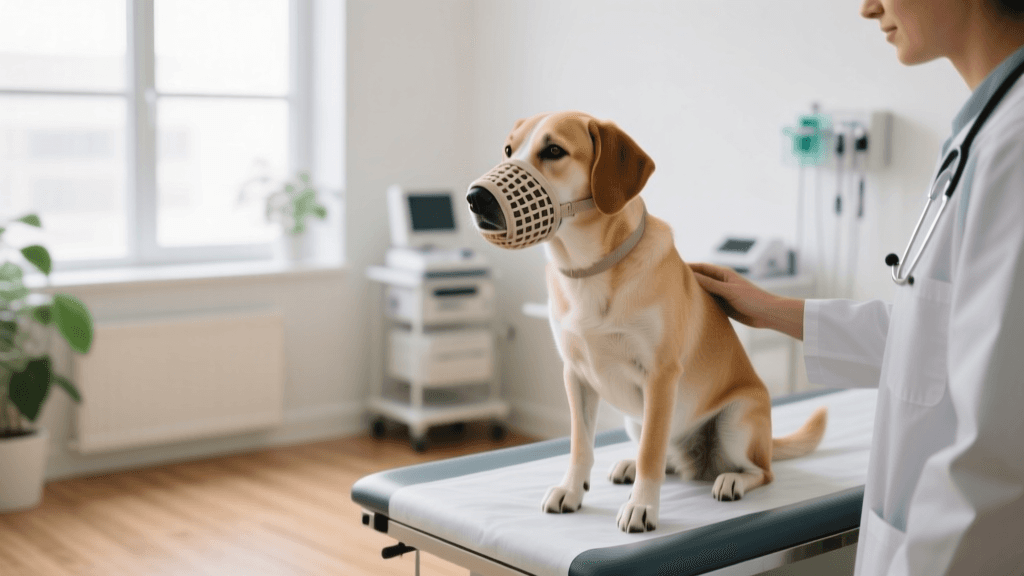
The muzzle is no longer viewed as a punitive device; in the force-free community, it is recognized as an essential welfare tool. A properly conditioned muzzle allows a dog to safely receive necessary medical care without the risk of a fear-induced bite, which could result in heavy sedation or euthanasia. The ASPCA's guidelines on muzzle training emphasize that conditioning must be done gradually, using classical and operant conditioning, long before a veterinary emergency arises.
Choosing the Right Equipment
In 2026, the market is dominated by welfare-centric muzzles. Basket muzzles made from BioThane or custom 3D-printed, lightweight polymers are the standard. These designs allow the dog to pant fully (essential for thermoregulation during stressful vet visits), drink water, and receive treats through the front grill. Avoid nylon or fabric 'grooming muzzles' that hold the mouth shut, as these are dangerous and highly aversive.
Step-by-Step Muzzle Conditioning Protocol
- Week 1: The Treat Bowl. Place high-value treats (like boiled chicken or cheese) inside the muzzle cup. Let the dog eat from it without attempting to strap it on. The muzzle becomes a predictor of amazing food.
- Week 2: Nose Targeting. Hold the muzzle and wait for the dog to voluntarily push their nose into the cup. Mark and treat. Gradually increase the duration their nose stays inside before you click and treat.
- Week 3: Strap Desensitization. With the dog's nose in the cup, gently touch the straps behind their ears. Feed continuously. Remove the muzzle when the treats stop. Do not buckle it yet.
- Week 4: Buckling and Movement. Buckle the strap loosely for one second, treat heavily, and unbuckle. Slowly increase the time the muzzle is buckled while engaging the dog in fun activities like scatter feeding or a short walk.
Traditional Restraint vs. Cooperative Care: A Physiological Comparison
The data supporting force-free veterinary care is overwhelming. Below is a comparison of physiological and behavioral metrics observed in canine patients during routine veterinary exams, contrasting outdated restraint methods with modern 2026 cooperative care standards.
| Metric | Traditional Forceful Restraint | Cooperative Care (2026 Standard) |
|---|---|---|
| Cortisol Levels | Spike 200-300% above baseline | Remain near baseline or slight elevation |
| Heart Rate Recovery | Requires 45+ minutes post-visit | Returns to baseline within 5-10 minutes |
| Behavioral Fallout | High risk of aggression/fear at next visit | Neutral or positive anticipation of next visit |
| Need for Chemical Sedation | Frequent for routine bloodwork/vaccines | Rare, reserved for painful/invasive procedures |
Finding a Fear-Free Veterinary Team
Training your dog at home is only half the equation; the environment and the handling style of the veterinary staff are equally important. The Fear Free certification program has become a benchmark for veterinary clinics committed to reducing fear, anxiety, and stress. When searching for a vet in 2026, look for clinics that advertise Fear Free Elite certification. These clinics utilize non-slip mats, pheromone diffusers, separate waiting areas for dogs and cats, and staff trained in reading subtle canine body language and utilizing cooperative care techniques.
Troubleshooting Common Setbacks
Even with meticulous force-free training, setbacks can occur. Dogs go through fear periods, and a single painful experience (like a sore joint being bumped) can cause a regression in bucket training. If your dog suddenly refuses to engage with the target or the muzzle, do not force the issue. Drop the criteria back to the very first step of the training protocol. Re-establish the positive emotional response before asking for duration or adding tactile stimuli again. Remember, cooperative care is a lifelong conversation with your dog, not a one-time obedience test.
Conclusion
Embracing positive reinforcement and force-free methods for veterinary care is one of the most profound ways you can advocate for your dog's wellbeing. By investing time in bucket training and muzzle conditioning, you are not just making vet visits easier; you are actively protecting your dog's nervous system, ensuring accurate medical diagnostics, and deepening the bond of trust between you and your canine companion. As veterinary standards continue to evolve in 2026, cooperative care stands out as a testament to the fact that we do not need to use force to achieve compliance; we simply need to use empathy, science, and a well-timed squeeze tube of liver paste.
marcus-aldridge
All our authors care for dogs every day — read more of their work on the authors page.