Force-Free Muzzle Conditioning for Vet Visits: 2026 Guide
Discover force-free basket muzzle conditioning for vet visits in 2026. Learn cooperative care steps to boost your dog's mental wellbeing and reduce stress.
The 2026 Paradigm Shift: Muzzles as Wellness Tools
In the landscape of modern veterinary care and canine behavioral health, the year 2026 has cemented a profound shift in how we approach medical handling. Historically, muzzles were viewed through a punitive lens, often associated with aggression or used as a last resort for difficult dogs. Today, the veterinary and behavioral communities overwhelmingly recognize the muzzle as a vital welfare tool. When introduced through positive reinforcement and force-free methods, a muzzle becomes a 'safety vest' for the face, granting dogs the ability to participate in their own healthcare without fear or restraint.
The widespread adoption of the Fear Free Happy Visit Program has revolutionized clinic environments, but the foundation of a stress-free veterinary experience begins at home. Canine mental wellbeing is deeply tied to their sense of agency. When dogs are forcibly restrained and muzzled, their amygdala triggers a massive cortisol and adrenaline release, leading to 'fight, flight, or freeze' responses. This not only causes immediate psychological distress but also creates long-term aversive associations with veterinary clinics, making future care increasingly difficult and dangerous.
By utilizing cooperative care techniques, we replace forced compliance with voluntary participation. The American Veterinary Society of Animal Behavior (AVSAB) strongly advocates for humane, force-free training methods, emphasizing that positive reinforcement builds trust and resilience. In 2026, force-free muzzle conditioning is considered a fundamental husbandry skill, just as critical as leash walking or recall.
Selecting the Right Basket Muzzle for Canine Comfort
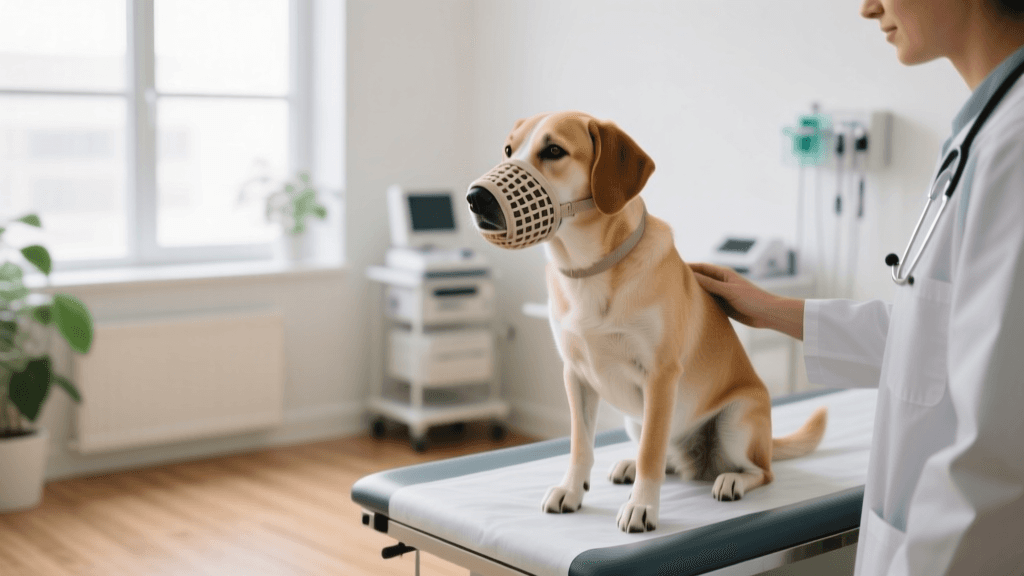
The cornerstone of force-free muzzle training is selecting the correct equipment. Nylon or 'grooming' muzzles that hold the dog's mouth shut are entirely contraindicated for behavioral conditioning and veterinary visits. They prevent panting, which is a dog's primary method of thermoregulation and stress relief, and they make treat delivery impossible. For cooperative care, a well-fitted basket muzzle is the only acceptable option.
In 2026, the market offers exceptional advancements in muzzle design. While traditional rubber and plastic basket muzzles remain popular, custom 3D-printed muzzles have become highly accessible and affordable. These bespoke muzzles are mapped to the exact topography of your dog's snout, ensuring zero chafing and optimal airflow.
| Muzzle Type | Panting and Drinking | Treat Delivery | Force-Free Suitability |
|---|---|---|---|
| Traditional Basket (e.g., Baskerville Ultra) | Excellent | Excellent | High |
| Custom 3D-Printed (2026 Meshed Designs) | Superior | Superior | Very High |
| Nylon / Grooming Muzzle | Poor (Dangerous) | Impossible | Low (Aversive Risk) |
The Force-Free Muzzle Conditioning Protocol
Conditioning a dog to voluntarily wear a muzzle requires patience, high-value reinforcement, and a strict adherence to the dog's body language. The goal is to change the dog's emotional response (classical conditioning) while simultaneously teaching them to perform a specific action (operant conditioning). Below is the step-by-step protocol recommended by the International Association of Animal Behavior Consultants.
Stage 1: Choice and Targeting (The 'Chin Rest' Game)
Never force the muzzle onto your dog's face. Instead, teach the dog that placing their snout inside the muzzle yields incredible rewards. Hold the basket muzzle in one hand like a bowl. The moment your dog investigates or sniffs the opening, mark the behavior with a clicker or a verbal 'yes' and deliver a high-value treat (such as boiled chicken or freeze-dried liver) directly into the muzzle.
Once the dog is confidently eating from the muzzle, wait for them to push their nose deeper inside to reach the treat. Gradually shape this behavior until the dog is voluntarily resting their chin at the bottom of the basket. If the dog pulls back, do not follow them with the muzzle. Simply reset and try again. This ensures the dog retains the power of choice, which is critical for reducing anxiety.
Stage 2: Duration and Positive Associations
Once the dog is happily targeting the muzzle, begin building duration. Instead of handing treats through the front, smear the inside edges of the basket with dog-safe peanut butter, plain yogurt, or a bone-broth gel. Alternatively, use a specialized silicone lick mat designed to suction to the inside of the muzzle.
Allow the dog to lick and chew while their snout is inside. Start with just three seconds of licking, then remove the muzzle and end the session. Gradually increase the duration to 10 seconds, 30 seconds, and eventually a full minute. Keep training sessions exceptionally short—no more than three to five minutes at a time—to prevent mental fatigue and frustration.
Stage 3: Fastening and Environmental Generalization
When your dog can comfortably keep their snout in the muzzle for a minute while licking, introduce the neck straps. Let the dog eat a high-value chew (like a bully stick or a stuffed Kong) while you gently bring the straps behind their ears. Do not buckle it yet; simply hold it in place for a few seconds, then release and give a jackpot of treats.
Over several sessions, progress to clipping the buckle. The moment it clicks, feed continuously for five seconds, then unclip. Once the dog is comfortable with the fastened muzzle, begin moving around the house. Play their favorite tug game, practice basic cues, or go for a short walk. This generalizes the muzzle to fun, everyday activities, proving to the dog that the muzzle is not solely a predictor of the veterinary clinic.
Integrating Muzzle Training with Vet Visits
In 2026, technology offers incredible support for monitoring canine stress levels during training and vet visits. Wearable biometric collars, such as the PetPace 3, allow owners and behaviorists to track Heart Rate Variability (HRV) and cortisol proxies in real-time. If your dog's HRV drops significantly upon entering the clinic waiting room, it is a clear physiological indicator that you need to increase distance, use calming pheromones, or engage in a familiar cooperative care game to bring their nervous system back into balance.
Before the actual appointment, schedule a 'Happy Visit' at the clinic. This involves bringing your dog to the veterinary office purely to practice their muzzle targeting and chin-rest games in the lobby and the exam room, without any medical procedures taking place. Pair the scent of the clinic, the sound of the scale, and the presence of the veterinary staff with high-value reinforcement. When the day of the actual appointment arrives, the muzzle and the clinic environment will already be deeply associated with safety and reward.
Cooperative care is not merely a training technique; it is a fundamental welfare requirement that grants dogs agency over their own bodies and medical care. When we prioritize consent, we transform veterinary visits from traumatic ordeals into manageable, even enjoyable, experiences.
Troubleshooting: Avoiding Flooding and Aversive Associations
The most common mistake owners make is 'flooding'—forcing the dog to endure the muzzle before they are emotionally ready, or keeping the muzzle on for too long during a stressful event. If your dog exhibits avoidance behaviors, such as turning their head away, lip licking, yawning, or freezing, you have pushed too far, too fast.
- Never use the muzzle as a punishment: The muzzle must only appear when good things happen. If it is used to stop scavenging or barking at home, the dog will develop a negative emotional response.
- Watch the clock: Even a well-conditioned dog should not wear a basket muzzle for extended periods without a break. During a long vet visit, ask the veterinary team to remove the muzzle for short breaks in a secure, closed exam room to allow the dog to pant freely and drink water.
- Advocate for your dog: If a veterinary technician attempts to grab the dog or force them into a corner to apply the muzzle, intervene immediately. Use your pre-trained 'chin rest' cue and allow your dog to voluntarily opt-in to the equipment.
Conclusion
Force-free muzzle conditioning is a profound investment in your dog's lifelong mental and physical health. By embracing the cooperative care protocols of 2026, utilizing modern basket muzzles, and prioritizing your dog's emotional state over human convenience, you empower your canine companion to navigate veterinary care with confidence. Remember that behavioral wellness is a journey, not a destination. Celebrate the small victories, respect your dog's boundaries, and watch as their trust in you—and in their veterinary team—flourishes.
priya-sutaria
All our authors care for dogs every day — read more of their work on the authors page.