Comparing Dog Trainability By Breed Group For Owners
Compare dog trainability across herding, hound, and terrier breeds. Use this breed selection guide to match your lifestyle with a trainable companion.
The Science of Breed and Trainability
When selecting a canine companion, prospective owners often prioritize appearance, size, or hypoallergenic coats. However, if your goal is a well-behaved, obedient dog, evaluating trainability by breed group is a critical step. Trainability is not merely a measure of intelligence; it is a reflection of a breed's genetic predisposition to work alongside humans, their problem-solving style, and their primary environmental triggers. According to a landmark 2022 study published in Science by the Darwin's Ark project, while breed explains only about 9% of behavioral variation in individual dogs, ancestral breed group still heavily influences specific behavioral factors like biddability, prey drive, and scent focus. Understanding these inherited traits allows you to select a breed whose natural learning style aligns with your training patience, lifestyle, and goals.
Herding Breeds: The Workaholics of the Dog World
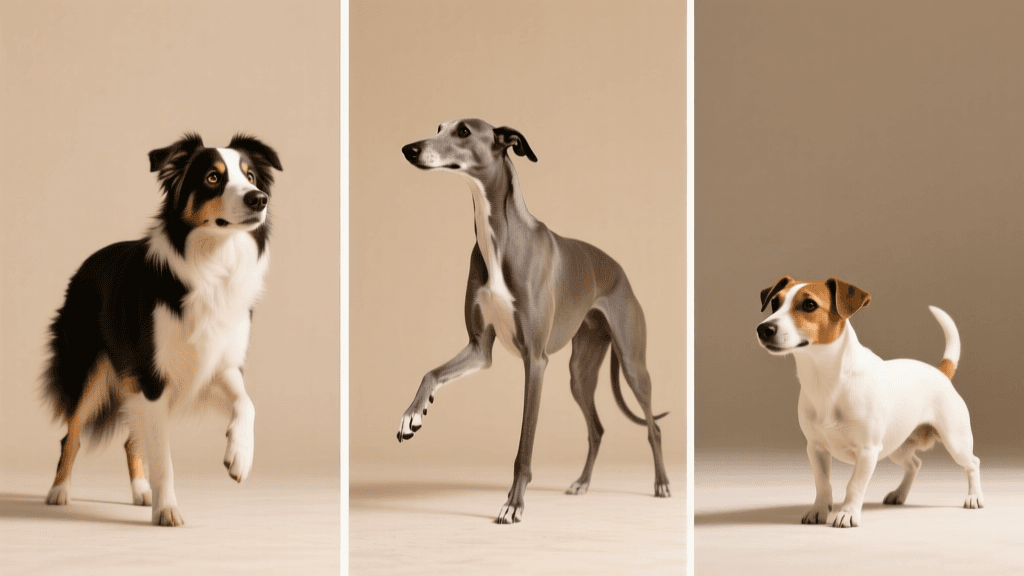
Herding breeds, such as the Border Collie, Australian Shepherd, and Shetland Sheepdog, are widely considered the most trainable dogs in the world. Bred to respond to subtle whistles and hand signals from shepherds across vast distances, these dogs possess an innate desire to collaborate with humans. This trait, often referred to as 'biddability,' makes them exceptionally receptive to positive reinforcement training.
Training Strengths and Challenges
Herding dogs excel in advanced obedience, agility, and complex trick training. They learn new commands in fewer than five repetitions. However, their high intelligence is a double-edged sword. A herding dog that is not mentally stimulated will invent its own 'jobs,' which often manifest as destructive behaviors, neurotic pacing, or herding children and cars.
Actionable Training Strategies
- Mental Over Physical Exercise: A 30-minute session using puzzle toys like the Outward Hound Nina Ottosson Dog Brick will exhaust a herding dog faster than a three-mile run.
- Impulse Control: Because of their high prey and motion drive, teaching the 'Leave It' and 'Place' commands is non-negotiable. Use high-value treats like Zuke's Mini Naturals to reward eye contact when distractions (like squirrels or joggers) are present.
- Structured Play: Utilize a flirt pole or a Chuckit! Launcher to engage their chase drive, but demand a 'Sit' or 'Down' before every single throw to reinforce obedience amidst high arousal.
Hound Breeds: Scent-Driven and Independent
Hounds, including Beagles, Bloodhounds, and Coonhounds, were bred to track game over miles of rugged terrain. Unlike herding dogs that look to their handlers for direction, hounds were bred to trust their noses above all else. This makes them incredibly independent and, in the eyes of many novice owners, notoriously 'stubborn.' The American Kennel Club notes that hounds require immense patience, as their olfactory system processes the world in a way that easily overrides auditory commands.
Training Strengths and Challenges
Hounds are generally food-motivated and gentle, making them excellent candidates for scent-work and rally obedience. Their primary challenge is recall. If a Beagle catches an interesting scent trail, their brain essentially tunes out human voices, making off-leash reliability incredibly difficult to achieve without specialized training.
Actionable Training Strategies
- Long-Line Conditioning: Never trust a hound off-leash in an unenclosed area. Invest in a 30-foot Biothane long-line. Practice the 'Come' command at varying distances, rewarding heavily with real meat or cheese when they return.
- Scent-Based Rewards: Turn training into a game of hide-and-seek. Hide treats around the yard and command them to 'Find It.' This satisfies their genetic need to track while reinforcing their bond with you.
- Short, Engaging Sessions: Hounds bore easily with repetitive drills. Keep training sessions under 10 minutes to maintain their focus and end on a positive note before they wander off to sniff a bush.
Terrier Breeds: Feisty Problem-Solvers
Terriers like the Jack Russell, Airedale, and Bull Terrier were bred to independently hunt and dispatch vermin. This required a specific type of intelligence: the ability to make split-second decisions underground without human guidance. Consequently, terriers are highly intelligent but fiercely independent. They do not obey simply to please you; they obey if it benefits them.
Training Strengths and Challenges
Terriers are energetic, fearless, and excel in earth-dog trials and fast-paced agility. Their challenge lies in their high prey drive, dog-selectiveness, and tendency to dig or bark. They can also be sensitive to heavy-handed corrections, often shutting down or becoming defensively aggressive if treated unfairly.
Actionable Training Strategies
- Premack Principle: Terriers want to move and explore. Use the environment as a reward. Ask for a 'Sit' at the door; if they comply, the reward is opening the door to the yard. If they break the sit, the door closes.
- Digging Boxes: Instead of fighting their genetic urge to dig, build a designated sandbox in your yard. Bury Kong Classic toys filled with peanut butter and encourage them to excavate there, redirecting them from your garden.
- Desensitization to Handling: Terriers can be reactive when touched unexpectedly. Implement daily handling exercises, rewarding them for allowing you to touch their paws, ears, and muzzle, which is crucial for grooming and vet visits.
Breed Group Training Comparison Chart
| Breed Group | Primary Motivation | Trainability Level | Best Training Method | Estimated Time to Reliable Recall |
|---|---|---|---|---|
| Herding | Praise, Toys, Movement | Very High (Biddable) | Shaping, Clicker Training | 3 - 6 Months |
| Hound | Food, Scent Games | Moderate (Independent) | Lure/Reward, Long-Line Work | 12 - 18+ Months |
| Terrier | Food, Environmental Access | Moderate (Stubborn) | Premack Principle, Impulse Control | 6 - 12 Months |
Budgeting for Breed-Specific Training
When selecting a breed, you must also factor in the financial and temporal costs of training. According to the Humane Society of the United States, aligning a dog's energy and behavioral needs with your lifestyle is the best way to prevent surrender. If you select a high-drive herding dog but work 10-hour days, you may need to budget for doggy daycare ($30-$50 per day) or a professional dog walker to prevent behavioral degradation.
Furthermore, while basic group obedience classes generally cost between $150 and $300 for a six-week course, independent breeds like Hounds or reactive Terriers may require private behavioral conditioning. Private behaviorists typically charge $100 to $250 per hour. Investing in the right equipment upfront—such as a $40 GPS tracker for a scent-hound or a $60 set of agility weave poles for a herding dog—can save hundreds of dollars in property damage or lost-dog recovery efforts later on.
Final Thoughts on Breed Selection
Ultimately, there is no universally 'easiest' dog to train. A Border Collie is a dream for a competitive agility handler but a nightmare for a sedentary apartment dweller. A Beagle's disregard for recall might frustrate a hiking enthusiast, but their gentle, food-motivated nature makes them a stellar therapy dog candidate. By looking past the aesthetic appeal of a breed and critically evaluating their genetic training requirements, you set the foundation for a harmonious, lifelong partnership. Choose the learning style that complements your patience, schedule, and training ambitions, and you will find your perfect canine student.
aaron-whyte
All our authors care for dogs every day — read more of their work on the authors page.