How To Train A Dog To Fetch And Return
Learn about how to train a dog to fetch and return with expert tips and data-backed advice.
The Science Behind Fetch: What Your Dog Is Actually Learning
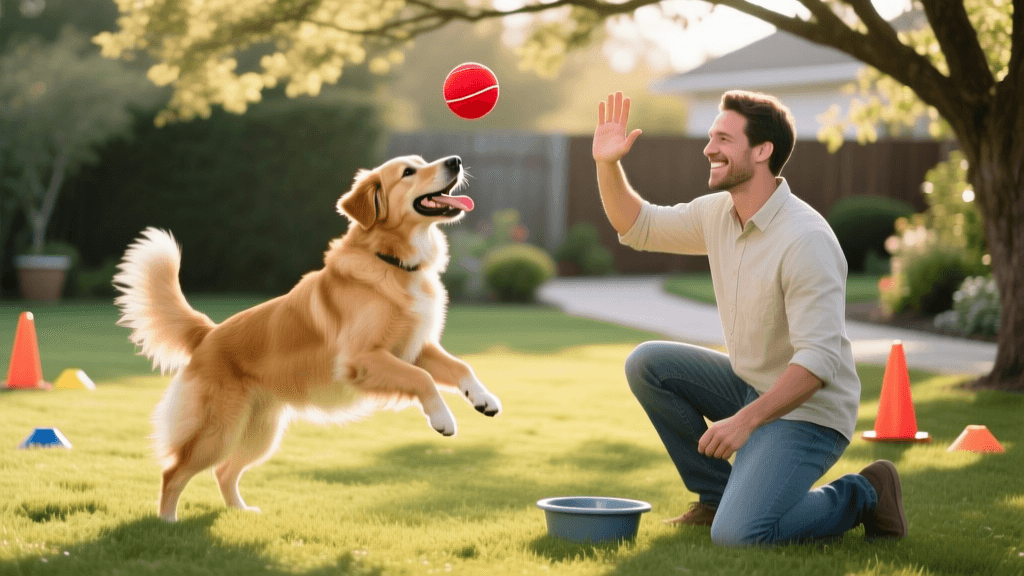
Teaching a dog to fetch and return is one of the most rewarding exercises in canine training, but it is rarely as simple as throwing a ball and hoping for the best. What looks like play is actually a layered sequence of behaviours — chasing, picking up, carrying, returning, and releasing — each of which must be taught and reinforced individually before the full chain comes together reliably. Understanding the behavioural mechanics at work makes the difference between a dog that retrieves once and loses interest, and one that brings the ball back enthusiastically every single time.
Operant conditioning, first described systematically by B.F. Skinner and later applied to animal training by researchers at institutions such as the University of California, Davis School of Veterinary Medicine, explains how dogs learn through consequences. When a behaviour produces a reward, the dog is more likely to repeat it. When it produces nothing — or something unpleasant — the behaviour fades. Fetch training relies almost entirely on positive reinforcement: the dog performs a step in the retrieve chain, receives a high-value reward, and the neural pathway associated with that behaviour is strengthened.
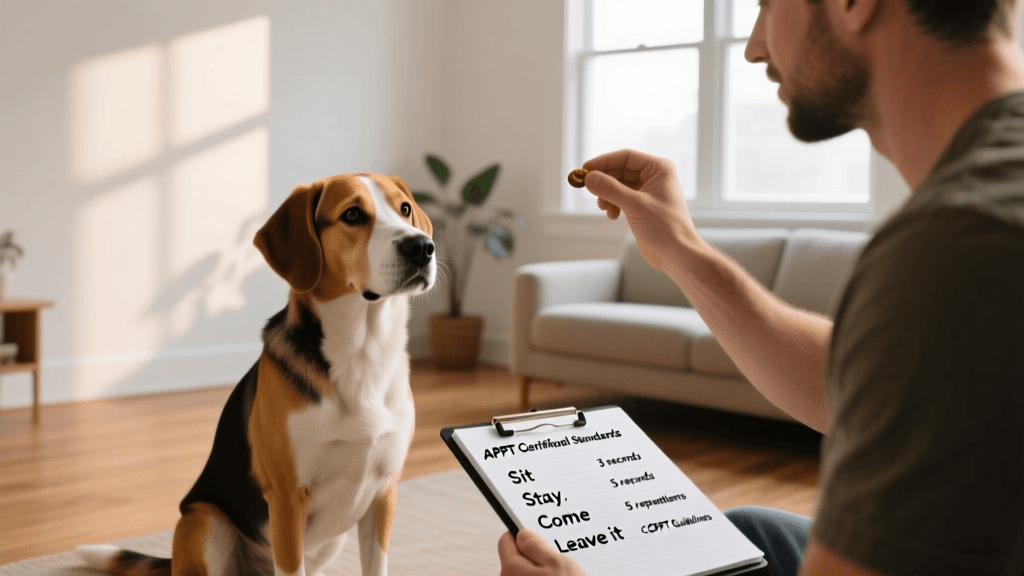
The Association of Professional Dog Trainers (APDT), founded in 1993, recommends that trainers work in sessions no longer than 5 minutes for puppies and 10 to 15 minutes for adult dogs, citing research showing that attention and retention drop sharply beyond these windows. Keeping sessions short and ending on a success is not just good practice — it is grounded in how canine memory consolidates during rest periods following learning.
Equipment and Environment: Setting Up for Success
Before the first throw, the right setup dramatically increases the probability of success. Choose a low-distraction environment for the first 10 to 15 sessions. A hallway inside the house is ideal for early stages because it physically channels the dog back toward you, removing the option to run sideways or stop and sniff. A fenced garden works well once the dog understands the basic pattern.
Select a retrieve object that fits comfortably in your dog's mouth. For most medium-sized dogs, a tennis ball or a purpose-made canvas dummy works well. The Kennel Club in the United Kingdom recommends dummies between 200g and 400g for dogs in the 10–25kg weight range, as objects outside this range can cause the dog to drop the item prematurely or avoid picking it up altogether.
- Tennis ball or canvas dummy sized to the dog's mouth
- High-value treats (small, soft, and fast to consume — chicken, cheese, or commercial training treats under 1g each)
- A 5-metre training lead for early outdoor sessions
- A clicker or consistent verbal marker such as "yes"
- A treat pouch worn at the hip for fast delivery
Reward delivery speed matters more than most owners realise. Research published by the Companion Animal Psychology journal indicates that a marker signal (click or verbal cue) delivered within 1 second of the target behaviour, followed by a treat within 3 seconds, produces significantly faster learning than delayed reinforcement. Practise your timing before you begin training the dog.
Phase One: Building Drive and the "Take It" Command
Many dogs will not naturally pick up an object on cue. Before teaching the full retrieve, build what trainers call "toy drive" — genuine enthusiasm for interacting with the retrieve object. Spend two to three sessions simply making the object interesting. Wiggle it along the ground, hide it briefly behind your back, and reward any nose touch or paw swipe with a treat and enthusiastic praise. Do not ask the dog to do anything formal yet. The goal is to make the object the most exciting thing in the environment.
Teaching "Take It"
Once the dog is showing interest, introduce the cue "take it." Hold the object at the dog's nose height. The moment the dog opens its mouth and makes contact, say "take it," mark with a click or "yes," and reward. Repeat this 10 times per session for 3 sessions before moving on. By the end of this phase, the dog should be eagerly grabbing the object the moment you present it and say the cue.
If the dog is reluctant, try rubbing a small amount of food on the object to transfer scent, or use a toy the dog already values. Never force the object into the dog's mouth — this creates negative associations that are difficult to undo and can set training back by weeks.
Teaching "Hold" and "Drop It"
A retrieve is only useful if the dog brings the object back and releases it. Teach "hold" by asking the dog to take the object, then gently supporting it under the chin for 2 seconds before marking and rewarding. Gradually extend the hold duration to 5, then 10 seconds over multiple sessions. Introduce "drop it" by presenting a treat at the dog's nose while it holds the object — the moment the dog opens its mouth to take the treat, say "drop it" and reward. After 15 to 20 repetitions, the verbal cue alone should prompt the release.
Phase Two: The Throw and the Return
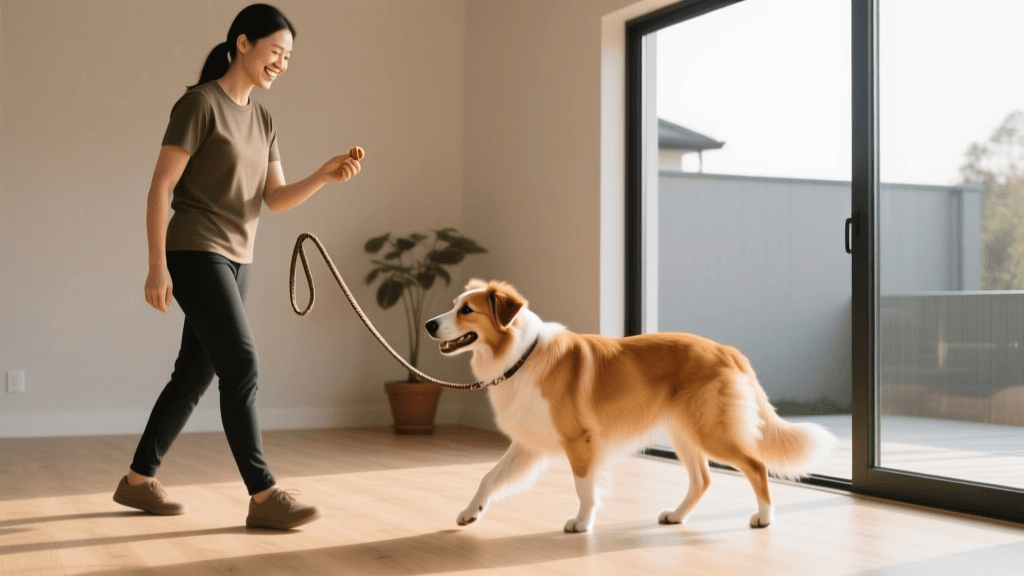
With "take it," "hold," and "drop it" solid, you are ready to introduce distance. Start in a hallway. Roll the object gently along the floor — do not throw it yet — just 1 to 2 metres ahead. Use your "take it" cue as the dog moves toward it. The moment the dog picks it up, crouch down, open your arms, and use an excited recall cue such as "come" or "here." When the dog arrives, ask for "drop it," mark, and reward generously.
The Certification Council for Professional Dog Trainers (CCPDT), which has certified over 4,000 trainers across North America, emphasises that the return is the most commonly broken link in the retrieve chain. Dogs learn quickly that returning the object ends the game, so they begin to avoid coming back. Counter this by making your body language and voice irresistibly inviting on the return, and by immediately throwing the object again after the drop — this teaches the dog that returning does not end the fun, it restarts it.
- Never chase the dog if it does not return — this rewards the avoidance behaviour
- Turn and walk away if the dog stalls; most dogs will follow
- Reward the return itself, not just the drop — treat the dog before asking for "drop it"
- Keep early throws short: 2–3 metres for the first 5 sessions, increasing by 1 metre per session as reliability improves
Gradually increase throw distance over 10 to 14 sessions. By session 15, most dogs with consistent daily practice of 5 to 10 minutes are reliably retrieving from 10 to 15 metres. Move training outdoors once the dog is performing at 90% reliability indoors across three consecutive sessions.
Introducing the Outdoor Environment
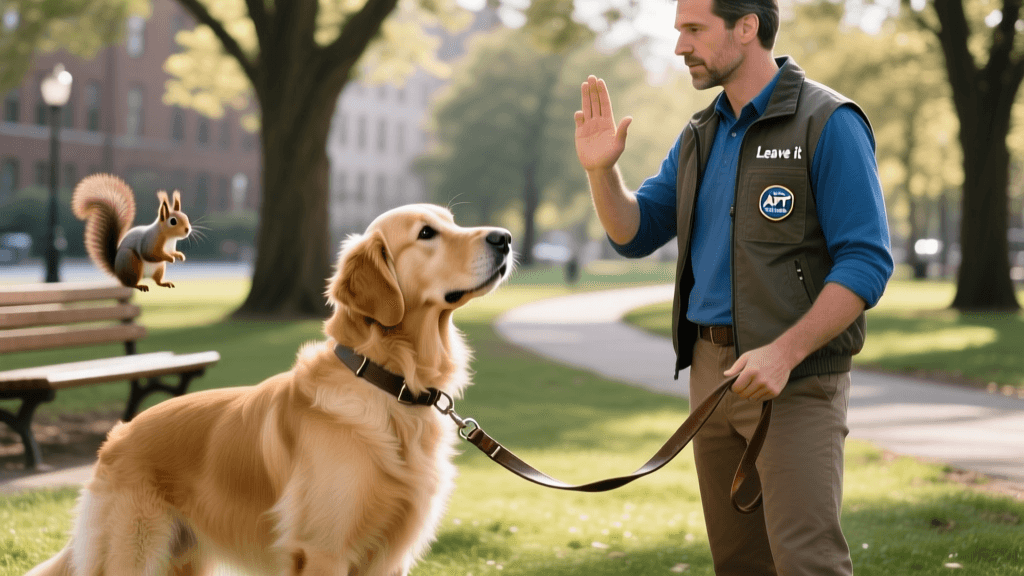
Outdoors introduces competing reinforcers: smells, other animals, people, and open space. Attach a 5-metre training lead to the dog's harness (not collar, to avoid neck pressure) for the first 5 outdoor sessions. This is not to drag the dog back — it is a safety net that prevents the dog from self-rewarding by running off with the object. Keep the lead loose and only use it to gently guide if the dog begins to move away. Reward outdoor returns even more generously than indoor ones to compensate for the higher distraction level.
Troubleshooting Common Problems
Even with careful training, specific problems arise. The table below outlines the most frequent issues, their likely causes, and evidence-based solutions.
| Problem | Likely Cause | Solution |
|---|---|---|
| Dog picks up object but won't return | Return ends the game; dog has learned to keep object | Reward the return before asking for drop; immediately re-throw |
| Dog drops object halfway back | Hold duration not sufficiently trained | Return to "hold" exercises; reward for carrying longer distances |
| Dog chases but won't pick up | Low toy drive or object aversion | Rebuild toy drive with play sessions; try a different object |
| Dog loses interest after 2–3 throws | Sessions too long; reward value too low | Shorten sessions to 3–5 minutes; upgrade treat value |
| Dog returns but won't release | "Drop it" cue not fully conditioned | Practise "drop it" separately with 20+ repetitions before reintegrating |
Resource guarding — where the dog growls or snaps when you reach for the object — requires a different approach entirely and should not be addressed through punishment. If you observe guarding behaviour, consult a certified professional trainer. The CCPDT's trainer directory and the APDT's member search tool both allow you to filter for trainers with experience in resource guarding and behaviour modification.
Building Duration, Distance, and Distraction
Professional trainers use the "three Ds" framework — duration, distance, and distraction — to systematically proof any behaviour. The critical rule is to increase only one D at a time. If you increase throw distance, keep the environment low-distraction. If you move to a busy park, shorten the throw distance back to 3 metres until reliability is re-established at the new distraction level.
A structured progression might look like this: weeks 1 and 2 focus on indoor sessions with short throws and high reward rates. Weeks 3 and 4 move outdoors on lead with moderate distances of 5 to 8 metres. By weeks 5 and 6, the dog should be working off lead in a low-distraction outdoor space at distances up to 15 metres. Weeks 7 and 8 introduce moderate distractions such as other people or mild traffic noise, keeping distance at 10 metres until reliability returns to 90% or above.
"The dog that retrieves reliably in a quiet garden but falls apart at the park has not learned the behaviour — it has learned the context. Proofing across environments is not optional; it is the behaviour." — Dr. Ian Dunbar, founder of the Association of Pet Dog Trainers and developer of the SIRIUS Puppy Training programme, writing in Dog Behavior: An Owner's Guide to a Happy, Healthy Pet (1999).
Data from a 2018 study conducted at the University of Bristol's Anthrozoology Institute found that dogs trained with positive reinforcement across varied environments showed a 34% higher reliability rate on trained behaviours in novel locations compared to dogs trained exclusively in a single environment. This underscores the importance of deliberately varying training locations rather than assuming the behaviour will generalise automatically.
Consistency in cue language is equally important. Use the same word, the same tone, and the same hand signal every time. If "fetch," "get it," and "go on" are used interchangeably, the dog must learn three separate cues for the same behaviour — tripling the training load unnecessarily. Pick one cue for the send and one for the recall, and use them exclusively from the first session onward.
With patience, short daily sessions, and a clear understanding of the behavioural principles at work, most dogs — regardless of breed — can learn a reliable fetch and return within 6 to 8 weeks of consistent training. The process builds not just a useful skill but a communication channel between dog and owner that strengthens the relationship far beyond the game itself.
Aaron Whyte
All our authors care for dogs every day — read more of their work on the authors page.