CBD Oil for Dogs: Separating Viral Hype from Veterinary Facts
Is CBD oil safe for dogs? We break down the viral trends, veterinary science, exact dosages, and top product types for canine anxiety and joint pain.
The Viral Phenomenon of Canine CBD
Scroll through TikTok, Instagram Reels, or YouTube Shorts, and you will inevitably encounter the viral trend of dog owners administering CBD oil to their pets. From 'calming drops' given before thunderstorms to hemp-infused treats for senior dogs with stiff joints, cannabidiol (CBD) has taken the pet wellness industry by storm. The global pet CBD market is projected to reach billions of dollars in the coming years, driven heavily by social media influencers and anecdotal success stories. But as a responsible dog owner, you must ask: is this viral trend backed by hard science, or is it just clever marketing?
At Paws-Tales, we believe in separating internet hype from peer-reviewed veterinary medicine. While CBD holds genuine therapeutic potential for our canine companions, the unregulated nature of the market means that not all viral products are safe or effective. This comprehensive guide will walk you through the clinical science, exact dosing measurements, safety warnings, and actionable advice you need to make an informed decision for your dog's health and wellbeing.
What the Veterinary Science Actually Says
Before diving into dosages and product types, it is crucial to look at what peer-reviewed veterinary studies have discovered about CBD use in dogs. Unlike many holistic trends that lack clinical backing, CBD has been the subject of rigorous academic research over the last decade.
One of the most cited studies regarding canine CBD is a landmark 2018 study by Cornell University published in Frontiers in Veterinary Science. Researchers found that administering 2 mg/kg of CBD oil twice daily significantly increased comfort and activity levels in dogs suffering from osteoarthritis. The study noted a reduction in pain-related behaviors without severe adverse side effects, making it a promising complementary therapy for aging dogs.
Furthermore, a 2019 clinical trial from Colorado State University investigated the use of CBD for canine epilepsy. The study revealed that 89% of dogs who received CBD in addition to their traditional anti-seizure medication experienced a reduction in seizure frequency. While researchers noted that larger sample sizes are still needed, the results highlighted CBD's potential as an adjunctive treatment for neurological conditions.
However, it is important to note the regulatory stance. The American Veterinary Medical Association (AVMA) maintains that while research is promising, the FDA has not yet approved CBD for animal use. Consequently, the market is flooded with products of varying quality, making it imperative for owners to know how to identify safe, lab-tested options.
Understanding the Endocannabinoid System in Dogs
To understand why CBD works, you must understand the Endocannabinoid System (ECS). Like humans, all mammals possess an ECS, a complex cell-signaling system responsible for maintaining homeostasis (internal balance). The ECS regulates critical functions including sleep, immune response, pain perception, and mood.
Dogs actually have a higher concentration of CB1 and CB2 receptors in their brains and central nervous systems than humans do. This means that dogs are highly sensitive to cannabinoids. While this makes CBD potentially more effective for canines, it also means that dosing must be handled with extreme precision to avoid overwhelming their system.
Types of CBD Products: Which One Fits Your Dog?
The viral pet market is saturated with different delivery methods. Here is a breakdown of the most common types, including their onset times and average costs.
- CBD Oils and Tinctures: These are liquid extracts usually administered sublingually (under the tongue) or mixed into food. Onset: 20 to 45 minutes. Duration: 4 to 6 hours. Cost: $40 to $80 per 30ml bottle. Oils are the gold standard because they allow for exact, adjustable dosing down to the milligram.
- CBD Soft Chews and Treats: Highly palatable and easy to administer, making them viral favorites on social media. Onset: 45 to 90 minutes (must pass through the digestive tract). Duration: 4 to 6 hours. Cost: $25 to $45 per bag. These are great for daily maintenance but less ideal for acute anxiety events like fireworks.
- CBD Topicals and Balms: Applied directly to the skin, often used for localized joint pain, hot spots, or dry paw pads. Onset: 15 to 30 minutes. Cost: $20 to $40 per tin. Topicals do not enter the bloodstream in significant amounts, making them very safe but limited to localized relief.
The Ultimate CBD Dosage Chart for Dogs
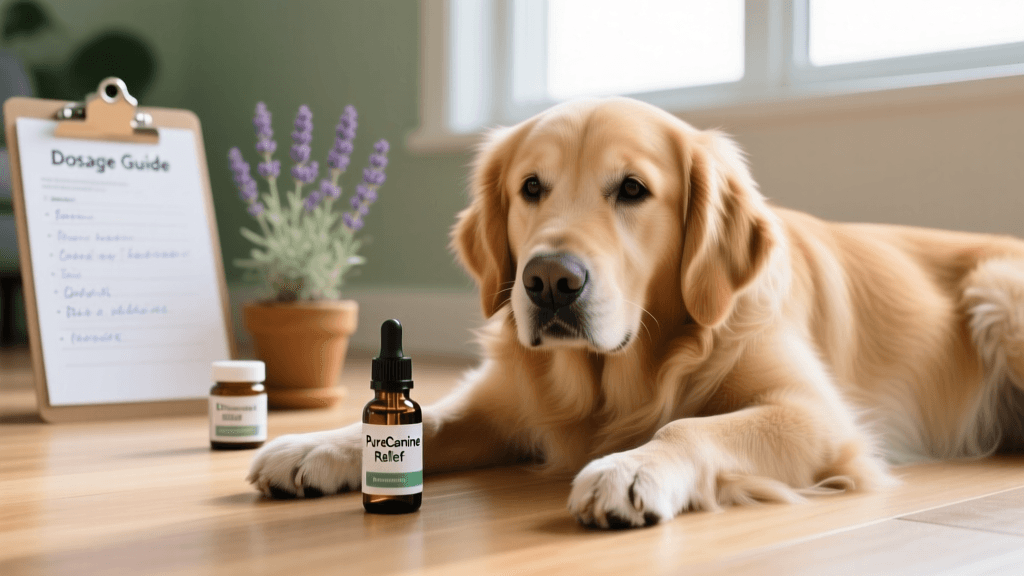
Dosing CBD is not a one-size-fits-all endeavor. The general veterinary rule of thumb is to start low and go slow. The standard starting dose is 1 mg of CBD per 10 lbs of body weight, administered twice daily. If no results are seen after two weeks, the dose can be gradually increased.
Below is a structured dosage chart to help you calculate the exact milligrams your dog requires based on their weight and condition severity.
| Dog Weight | Starting Dose (Mild) | Moderate Dose (Joint Pain) | Strong Dose (Severe Anxiety/Pain) |
|---|---|---|---|
| 10 lbs | 1 mg | 2 mg | 3 mg |
| 25 lbs | 2.5 mg | 5 mg | 7.5 mg |
| 50 lbs | 5 mg | 10 mg | 15 mg |
| 75 lbs | 7.5 mg | 15 mg | 22.5 mg |
| 100 lbs | 10 mg | 20 mg | 30 mg |
Note: Always check the concentration of your specific bottle. A 30ml bottle containing 300mg of CBD delivers 10mg per full dropper (1ml). A 30ml bottle containing 1200mg delivers 40mg per full dropper.
Actionable Administration Tips and Timing
To maximize the bioavailability and effectiveness of CBD, timing and administration methods matter. Here are practical tips used by veterinary professionals:
- The Fat-Soluble Hack: CBD is fat-soluble, meaning it binds to lipids for better absorption. Mixing your dog's CBD oil with a small amount of MCT oil, a spoonful of plain canned pumpkin, or their favorite peanut butter (xylitol-free) can increase absorption rates by up to 30%.
- Timing for Acute Anxiety: If you are using CBD for situational anxiety (e.g., Fourth of July fireworks, thunderstorms, or vet visits), administer the oil 45 to 60 minutes before the triggering event. Once the dog's cortisol levels have already spiked, CBD is significantly less effective.
- Consistency for Chronic Issues: For osteoarthritis or age-related cognitive dysfunction, CBD must be given consistently every 12 hours to maintain stable levels in the bloodstream. Skipping doses will result in a breakdown of the anti-inflammatory effects.
Safety, Side Effects, and Toxicity Warnings
While CBD derived from industrial hemp is generally recognized as safe, there are severe risks associated with poor-quality products and improper dosing.
The Danger of THC Toxicity
By federal law, hemp-derived products must contain less than 0.3% THC (the psychoactive compound in marijuana). Dogs are extraordinarily sensitive to THC. Ingestion of marijuana or high-THC CBD products can lead to severe toxicity, characterized by lethargy, ataxia (loss of coordination), urinary incontinence, and in extreme cases, coma. Always ensure your product is derived from industrial hemp, not marijuana.
The Xylitol Threat in Viral Treats
Many cheap, viral CBD dog treats use artificial sweeteners or sugar alcohols to enhance flavor. Xylitol (sometimes labeled as birch sugar) is highly toxic to dogs, causing rapid insulin release, hypoglycemia, and liver failure. Always read the inactive ingredients list on any CBD chew.
Drug Interactions
CBD is metabolized by the Cytochrome P450 (CYP450) enzyme system in the liver—the exact same pathway used to process many common veterinary medications, including NSAIDs (like Carprofen), anti-seizure drugs, and heart medications. CBD can inhibit these enzymes, causing other medications to build up to toxic levels in your dog's bloodstream. Always consult your veterinarian before combining CBD with prescription drugs.
How to Read a Certificate of Analysis (COA)
Because the FDA does not regulate pet CBD, independent third-party testing is the only way to verify a product's safety and potency. Reputable brands (such as ElleVet Sciences, King Kanine, and Honest Paws) provide a batch-specific Certificate of Analysis (COA) via a QR code on the packaging.
The Golden Rule of Pet CBD: Never buy a CBD product for your dog that does not provide a batch-specific Certificate of Analysis (COA) from an independent, third-party laboratory. If a brand refuses to share this data, walk away.
Key Metrics to Check on a COA:
- Cannabinoid Profile: Verifies the exact amount of CBD and confirms that THC levels are below 0.3% (or entirely non-detectable for broad-spectrum products).
- Heavy Metals: Hemp is a 'bioaccumulator,' meaning it readily absorbs toxins from the soil. The COA must show that lead, arsenic, mercury, and cadmium are below safe limits.
- Pesticides and Herbicides: Ensures the hemp was grown organically without harmful chemical sprays.
- Microbials: Confirms the product is free from harmful bacteria, yeast, and mold.
Full-Spectrum vs. Broad-Spectrum vs. Isolate
When shopping for viral CBD drops, you will encounter three main terminology categories:
- Full-Spectrum: Contains all naturally occurring hemp compounds, including trace amounts of THC (under 0.3%). This creates the 'entourage effect,' where compounds work synergistically. However, some owners prefer to avoid any THC exposure.
- Broad-Spectrum: Contains multiple beneficial cannabinoids and terpenes, but the THC is entirely removed through an extra filtration process. This is often considered the safest and most effective choice for dogs.
- CBD Isolate: Pure CBD with all other plant compounds removed. While safe, it lacks the synergistic benefits of the entourage effect, often requiring higher doses to achieve the same results.
Final Thoughts: Consult Your Veterinarian
The viral nature of CBD oil for dogs has undoubtedly accelerated research and provided new avenues for managing canine pain and anxiety. However, it has also spawned a market filled with snake oil and mislabeled products. By relying on peer-reviewed veterinary science, adhering to precise weight-based dosages, and rigorously checking third-party lab results, you can safely harness the benefits of CBD for your furry friend.
Before starting any new supplement regimen, always schedule a wellness exam with your primary care veterinarian. They can help you assess potential drug interactions, establish a baseline for your dog's joint or neurological health, and monitor their progress as you integrate CBD into their holistic wellness routine.
hannah-wickes
All our authors care for dogs every day — read more of their work on the authors page.