Step-by-Step Guide to Brushing Your Dog's Teeth at Home
Learn how to brush your dog's teeth with our step-by-step training guide. Discover the best enzymatic toothpastes, tools, and desensitization tips.
Why Canine Dental Health is Non-Negotiable
When we think about our dog's health, we often focus on diet, exercise, and joint care. However, oral hygiene is one of the most critical, yet frequently overlooked, aspects of canine wellbeing. According to VCA Hospitals, over 80% of dogs over the age of three suffer from some form of periodontal disease. If left untreated, the bacteria from infected gums can enter the bloodstream, potentially causing severe damage to the heart, liver, and kidneys.
While professional veterinary dental cleanings under anesthesia are necessary for removing hardened tartar, daily home care is the ultimate preventive measure. Training your dog to accept tooth brushing does not happen overnight. It requires patience, positive reinforcement, and a structured desensitization protocol. This comprehensive, step-by-step guide will walk you through the exact process of turning a potentially stressful chore into a manageable, and even enjoyable, daily routine.
Understanding Canine Dental Anatomy
Before you begin brushing, it helps to understand what you are cleaning. Adult dogs have 42 teeth, categorized into four types:
- Incisors (12): The small front teeth used for nibbling and grooming.
- Canines (4): The long, pointed teeth used for tearing and holding.
- Premolars (16): Located behind the canines, used for shearing and chewing.
- Molars (10): The flat teeth at the very back of the mouth, used for heavy grinding.
Plaque accumulates most heavily on the outer surfaces of the upper premolars and molars, as well as the canine teeth. These will be your primary focus areas during the brushing process.
Gathering Your Dental Arsenal
Using the correct tools is paramount for safety and effectiveness. Never use human toothpaste, as it often contains fluoride and xylitol, both of which are highly toxic to dogs.
1. Enzymatic Toothpaste
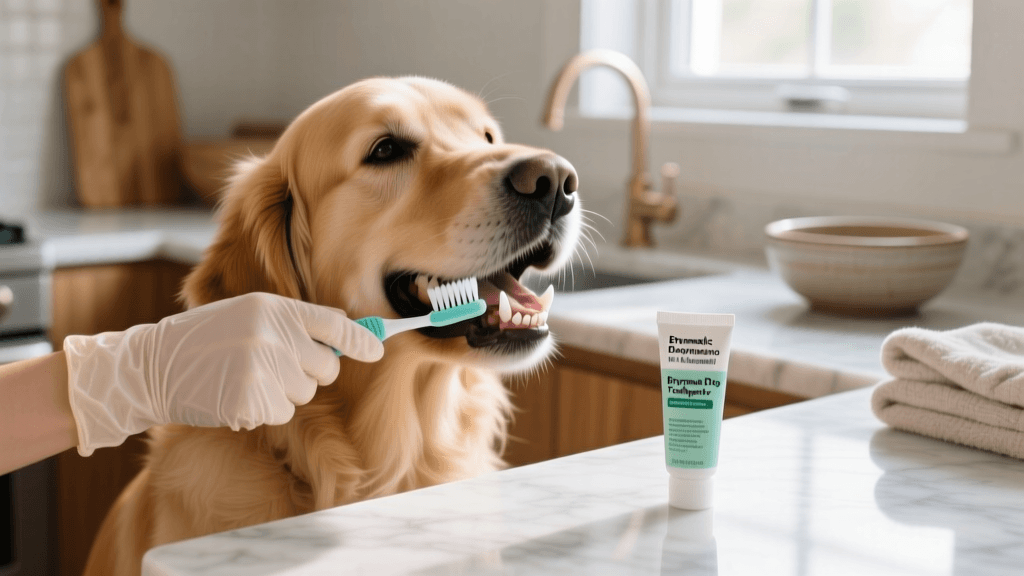
Enzymatic toothpastes are formulated to break down plaque chemically while being safe to swallow. A top-tier recommendation is the Virbac C.E.T. Enzymatic Toothpaste (Poultry or Seafood flavor), which typically costs around $12 to $15. The dual-enzyme system actively inhibits bacterial growth.
2. The Right Brush
For beginners, a Petrodex Finger Brush (approx. $5) is excellent for acclimating the dog to the sensation. Once the dog is comfortable, transition to a dual-head dog toothbrush or a pediatric soft-bristle brush. Dual-head brushes allow you to clean the outer and inner surfaces of the teeth simultaneously.
3. High-Value Training Treats
You will need a high-value reward to create a positive association. Soft, low-calorie treats like Zuke's Mini Naturals (approx. $6 for a 6oz bag) are perfect because they can be consumed quickly without interrupting the training flow.
Setting the Environment and Timing
Choose a quiet, familiar room with minimal distractions. Avoid times when your dog is highly energetic, such as immediately after you return home from work or right before a walk. The best time is usually after a moderate exercise session or a meal when your dog is naturally more relaxed and slightly tired. Ensure you have all your supplies within arm's reach before you invite your dog into the space.
The 4-Week Desensitization Training Plan
Rushing the process will result in a dog that fights the toothbrush. Follow this progressive timeline, spending at least one week on each phase before moving to the next.
Week 1: Taste and Touch (Days 1-7)
Goal: Associate the toothpaste flavor with a positive experience.
- Squeeze a pea-sized amount of the Virbac enzymatic toothpaste onto your index finger.
- Allow your dog to lick it off freely. Praise them calmly.
- Once they enjoy the taste, gently lift their upper lip with your non-dominant hand and rub the toothpaste along their outer gums and canine teeth using just your bare finger.
- Keep sessions to 10-15 seconds. Reward immediately with a treat and verbal praise.
- Repeat once daily.
Week 2: Introducing the Tool (Days 8-14)
Goal: Desensitize the dog to the physical presence of the brush.
- Apply toothpaste to the silicone finger brush.
- Let the dog sniff and lick the brush.
- Gently lift the lip and rub the brush along the outer gums in slow, circular motions. Do not focus on scrubbing the teeth yet; focus on the gums and the sensation of the silicone bristles.
- If the dog pulls away, stop immediately, ask for a simple 'sit', reward, and try again for just 5 seconds.
Week 3: Targeted Brushing (Days 15-21)
Goal: Begin actual plaque removal on the easiest teeth.
- Transition to the dual-head or soft-bristle toothbrush with toothpaste.
- Start with the canine teeth and the front incisors, as these are the most visible and accessible.
- Hold the brush at a 45-degree angle to the gum line. Use small, gentle circular motions.
- Gradually work your way back to the premolars. Keep the session under 30 seconds.
Week 4: The Full Routine (Days 22+)
Goal: Complete mouth brushing.
- Aim to brush all outer surfaces of the teeth. According to the American Kennel Club, focusing on the outer surfaces is sufficient for home care, as the dog's tongue naturally helps keep the inner surfaces relatively clean.
- Work systematically: left side upper, left side lower, right side upper, right side lower.
- Aim for a total brushing time of 60 to 90 seconds.
Dental Tool Comparison Chart
Choosing the right tool depends on your dog's size, temperament, and your own dexterity. Below is a comparison of the most common home dental tools.
| Tool Type | Best For | Avg Cost | Pros | Cons |
|---|---|---|---|---|
| Silicone Finger Brush | Puppies, small breeds, initial desensitization | $4 - $8 | Gentle, allows owner to feel the teeth, less intimidating | Hard to reach back molars, risk of accidental biting |
| Dual-Head Brush | Medium to large breeds, established routines | $6 - $12 | Cleans inner and outer surfaces simultaneously, long handle | Bulky for small mouths, requires specific angling |
| Pediatric Soft Brush | Flat-faced breeds (Pugs, Bulldogs), precise cleaning | $3 - $5 | Small head reaches tight spaces, very soft bristles | Only cleans one surface at a time, takes longer |
| Dental Wipes | Dogs that absolutely refuse a brush | $8 - $15 | Easy to use, no bristle aversion, portable | Less effective at removing plaque from gum crevices |
Troubleshooting Common Training Roadblocks
Even with a careful step-by-step approach, you may encounter resistance. Here is how to handle common behavioral hurdles:
- The Dog Bites the Brush: This usually means the dog views the brush as a toy or feels threatened. Switch to a silicone finger brush temporarily, and practice the 'leave it' command with the brush before applying toothpaste.
- Stress Signals (Whale Eye, Yawning, Lip Licking): If your dog exhibits these calming signals, they are overwhelmed. End the session immediately on a positive note with a treat, and take a step back in the desensitization phases for a few days.
- Hating the Flavor: Dogs have individual preferences. If your dog rejects poultry, try beef, vanilla-mint, or seafood flavors. You can also mix a tiny amount of low-sodium chicken broth into the paste initially.
Alternatives and Supplementary Care
While brushing is the gold standard, it is not always possible for every dog or owner. If your dog remains entirely intolerant to brushing after months of patient training, consult your veterinarian about supplementary options. Look for products that carry the Veterinary Oral Health Council (VOHC) seal of acceptance. VOHC-approved dental chews, like specific formulations of Greenies or Purina Pro Plan Dental Chews, utilize mechanical abrasion to reduce tartar. Water additives containing chlorhexidine or zinc can also help reduce bacterial loads in the mouth, though they should never completely replace mechanical brushing if brushing is achievable.
When to Seek Professional Veterinary Care
Home brushing is for maintenance, not for curing existing disease. Before starting your home care routine, have your dog's mouth evaluated by a vet. If you notice red or bleeding gums, severe bad breath (halitosis), loose teeth, or if your dog is dropping food or pawing at their mouth, stop home brushing and seek professional help immediately. The American Veterinary Medical Association (AVMA) emphasizes that professional scaling and polishing under general anesthesia is the only way to safely remove subgingival tartar and assess the health of the tooth roots via dental radiographs.
Conclusion
Training your dog to accept teeth brushing is a marathon, not a sprint. By investing a few weeks into proper desensitization, utilizing high-quality enzymatic products, and maintaining a calm, positive environment, you can protect your dog from the painful and systemic effects of periodontal disease. Consistency is your greatest ally; a quick 60-second daily brush is vastly superior to a stressful 10-minute battle once a month. Start today, follow the steps, and give your dog the gift of a healthy, pain-free smile for life.
aaron-whyte
All our authors care for dogs every day — read more of their work on the authors page.