Step-by-Step Guide: How to Brush Your Dog's Teeth at Home
Learn how to brush your dog's teeth at home with our step-by-step training guide. Prevent dental disease with proven techniques and top product picks.
The Hidden Dangers of Poor Canine Dental Health
When we think about our dog's health, we often focus on diet, exercise, and joint care. However, oral hygiene is one of the most critical—and most overlooked—aspects of canine wellbeing. According to the American Veterinary Medical Association (AVMA), periodontal disease is the most common clinical condition occurring in adult dogs. By the age of three, most dogs have some evidence of dental disease, which can lead to pain, tooth loss, and even systemic infections affecting the heart, liver, and kidneys.
Unlike humans, dogs do not naturally clean their teeth through their diet, and wild canids rely on chewing raw bones to scrape away plaque. For our domesticated pets eating soft or kibble diets, daily brushing is the gold standard of preventive care. Training your dog to accept tooth brushing doesn't happen overnight. It requires patience, high-value rewards, and a structured desensitization protocol. This step-by-step training guide will transform a stressful chore into a positive bonding experience.
Gathering Your Canine Dental Toolkit
Before you begin training, you need the right tools. Never use human toothpaste on dogs. Human toothpaste often contains fluoride, which can cause severe gastrointestinal upset, and xylitol (an artificial sweetener), which is highly toxic and potentially fatal to dogs. Instead, invest in veterinary-formulated enzymatic toothpaste that is safe to swallow and comes in dog-friendly flavors like poultry, beef, or peanut butter.
- Enzymatic Toothpaste: Brands like Virbac C.E.T. or Petrodex contain enzymes that continue to break down plaque even after brushing. Cost: $8 - $12.
- Dog-Specific Toothbrushes: Look for dual-headed brushes with ultra-soft bristles angled to reach the gum line. Cost: $4 - $7.
- Finger Brushes: Made of soft silicone, these are excellent for puppies or small breeds. Cost: $3 - $5.
- High-Value Training Treats: Use soft, strong-smelling treats like freeze-dried beef liver or boiled chicken breast (approx. 2-3 calories per piece) to reward compliance.
Dental Tool Comparison Chart
| Tool Type | Best Suited For | Pros | Cons | Avg. Cost |
|---|---|---|---|---|
| Silicone Finger Brush | Puppies, toy breeds, beginners | Gentle, gives owner tactile control | Lacks reach for back molars, dogs may chew on finger | $4.00 |
| Dual-Headed Canine Brush | Adult dogs, medium/large breeds | Cleans inside and outside simultaneously, long handle | Can be bulky for small mouths, requires acclimation | $6.50 |
| Enzymatic Dental Wipes | Senior dogs, rescue dogs with bite history | Quick, no brush aversion, easy to travel with | Cannot reach deep into the gingival sulcus (gum line) | $8.00 |
The 14-Day Step-by-Step Desensitization Training Guide
According to the American Kennel Club (AKC), forcing a dog to accept a toothbrush can result in fear, aggression, and a lifelong phobia of mouth handling. The goal is classical conditioning: pairing mouth handling with positive outcomes. Keep training sessions short—no more than 2 to 3 minutes per day.
Phase 1: Taste Testing and Positive Association (Days 1-3)
Do not introduce the brush yet. Your only goal is to make your dog love the toothpaste.
- Place a pea-sized amount of enzymatic toothpaste on your index finger.
- Allow your dog to lick it off freely. Use a marker word like 'Yes!' or a clicker the moment they lick it, followed by praise.
- Repeat this twice a day, ideally before meals when your dog is slightly hungry and more food-motivated.
Phase 2: Lip Lifting and Gum Touching (Days 4-7)
Now, we introduce mouth handling without the brush.
- Put a dab of toothpaste on your finger. Let your dog lick half of it.
- Gently lift your dog's upper lip on one side to expose the canine teeth and premolars.
- Run your toothpaste-covered finger along the outer surface of their teeth and gums for just 2 seconds.
- Mark ('Yes!'), reward with a high-value treat, and end the session.
- Gradually increase the time your finger is in the mouth over the next few days, working up to 10 seconds per side.
Phase 3: Introducing the Toothbrush (Days 8-10)
It is time to introduce the physical tool.
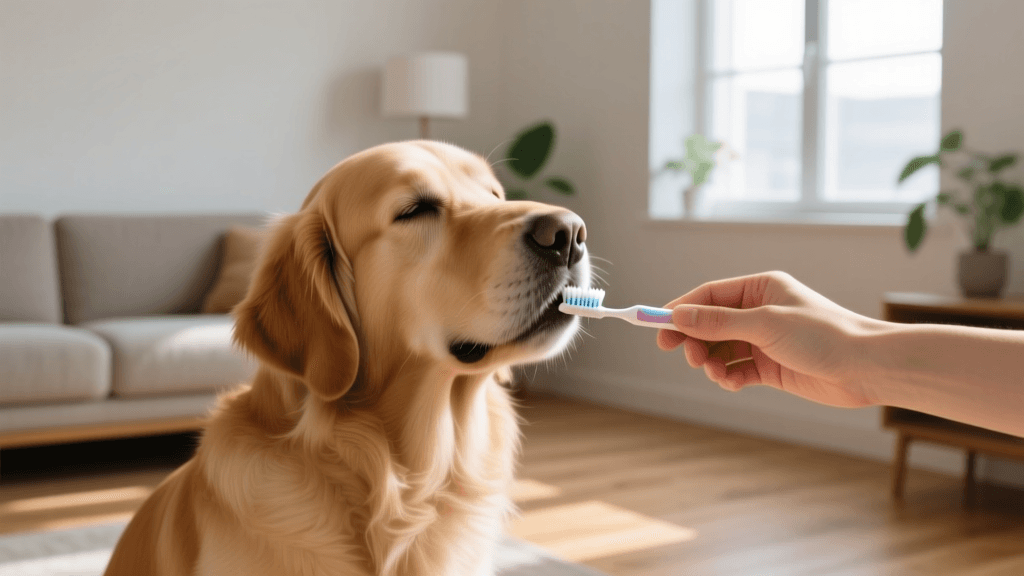
- Let your dog sniff the dry toothbrush. Mark and reward.
- Apply toothpaste to the bristles and let them lick it directly off the brush. This teaches them that the brush is a treat-delivery device, not a weapon.
- Gently lift the lip and touch the wet brush to the front canine teeth for just one second. Do not scrub yet. Just touch, mark, reward, and remove.
Phase 4: The Full Brush (Days 11-14)
Once your dog is comfortable with the brush touching their teeth, you can begin the actual brushing motion.
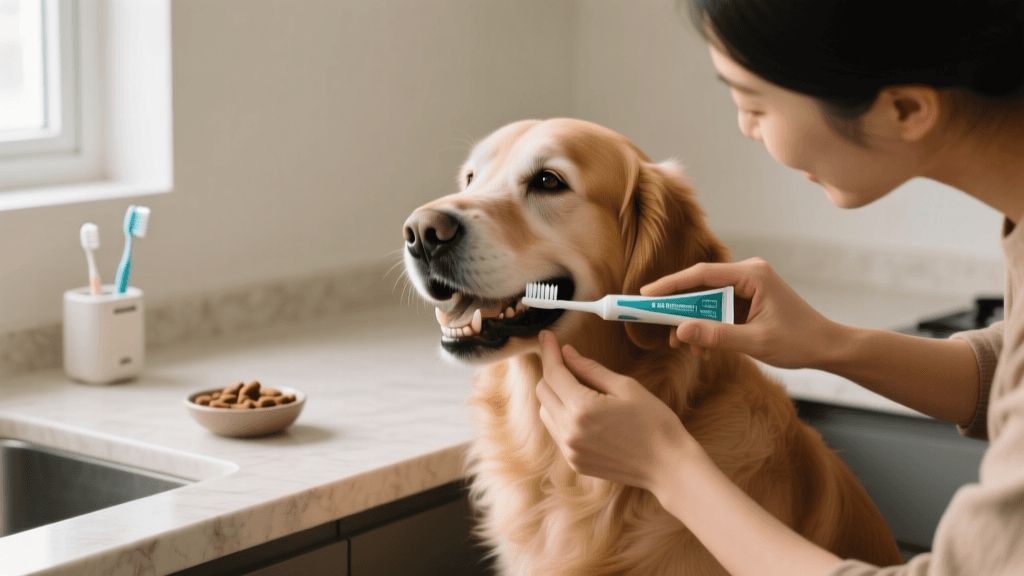
- Lift the upper lip to expose the side teeth (premolars and molars).
- Hold the brush at a 45-degree angle to the gum line. This is crucial, as plaque accumulates in the gingival sulcus where the tooth meets the gum.
- Use gentle, small circular motions. Focus on the outer surfaces of the teeth; a dog's tongue naturally helps keep the inner surfaces relatively clean.
- Start with 5 seconds of brushing on the left side, reward, then 5 seconds on the right side, reward.
- Over the next week, build up to a full 30 seconds per side, totaling one minute of brushing.
Proper Brushing Technique: Targeting the Carnassial Teeth
Dogs have 42 adult teeth, but you do not need to obsess over every single one. The most critical teeth to focus on are the canines (the four long fangs) and the carnassial teeth (the upper fourth premolars and lower first molars). The carnassial teeth are the largest in the mouth and have deep roots, making them highly susceptible to painful abscesses and severe tartar buildup. When brushing, prioritize these large cheek teeth. If your dog becomes fussy, quickly brush the canines and carnassials, reward heavily, and end on a positive note.
Troubleshooting Common Training Roadblocks
- My dog clamps their mouth shut: You have moved too fast. Go back to Phase 2. Never pry a dog's mouth open, as this triggers a defensive bite reflex. Wait for them to voluntarily accept the treat from your finger.
- My dog bites the brush: Switch to a silicone finger brush or dental wipes temporarily. Ensure you are using a brush with an angled, long handle so your knuckles are kept safely away from their molars.
- My dog hates the poultry flavor: Dogs have individual palates. Try switching to beef, malt, or seafood-flavored enzymatic pastes. Some dogs even prefer a tiny smear of low-sodium chicken broth rubbed on the bristles.
Supplementary Dental Care Options
While daily brushing is the gold standard, it is not always possible for every dog or owner. If your dog absolutely will not tolerate a brush, or if you need supplemental care between veterinary cleanings, look for products approved by the Veterinary Oral Health Council (VOHC). The VOHC evaluates pet dental products through rigorous clinical trials to ensure they actually reduce plaque and tartar.
- Dental Diets: Prescription kibble like Hill's Prescription Diet t/d or Purina Pro Plan Veterinary Supplements DH features a specialized matrix that acts like a squeegee on the tooth surface as the dog chews.
- VOHC-Approved Chews: Products like Greenies or Purina Dental Chewz are designed to be highly soluble and mechanically scrub the teeth. (Note: Always supervise your dog with chews to prevent choking, and factor the calories into their daily intake to prevent obesity).
- Water Additives: Tasteless liquids like TropiClean Fresh Breath or Oxyfresh can be added to your dog's water bowl to help alter the pH of their mouth and reduce bacterial load.
Conclusion
Training your dog to accept teeth brushing is an investment of time that yields massive dividends for their long-term health. By utilizing a gradual, reward-based desensitization protocol, you can prevent the pain and systemic diseases associated with periodontal decay. Remember to schedule annual veterinary oral exams, as even the most diligent home brushing routine cannot remove hardened calculus (tartar) that has already bonded to the enamel. With patience, the right enzymatic tools, and plenty of high-value rewards, you can ensure your dog's smile remains bright, healthy, and pain-free for years to come.
priya-sutaria
All our authors care for dogs every day — read more of their work on the authors page.