Budget-Friendly Dog Dental Care: Save Thousands on Vet Cleanings
Discover budget-friendly dog dental care routines. Learn how to prevent periodontal disease at home and save thousands on expensive veterinary cleanings.
When it comes to canine health, dental care is often the most overlooked—and ultimately the most expensive—aspect of ownership. According to the American Veterinary Medical Association (AVMA), over 80% of dogs show signs of periodontal disease by the age of three. Left untreated, this condition leads to painful tooth extractions, systemic infections that can damage the heart and kidneys, and veterinary bills that can easily exceed a thousand dollars. For budget-conscious dog owners, mastering at-home dental care is not just about saving money; it is a critical component of preventive health that extends your dog's lifespan and improves their daily comfort.
The True Cost of Professional Veterinary Dental Cleanings
Many pet owners delay dental care until their dog's breath becomes unbearable or they notice a broken tooth. By this time, a simple preventive cleaning has escalated into a complex surgical procedure. A professional veterinary dental cleaning under anesthesia typically includes several mandatory line items:
- Pre-Anesthetic Bloodwork: $80 - $150 to ensure the liver and kidneys can process anesthesia safely.
- IV Catheter and Fluids: $50 - $100 to maintain blood pressure during the procedure.
- General Anesthesia and Monitoring: $150 - $300 for the gases, equipment, and dedicated veterinary technician.
- Scaling and Polishing: $200 - $400 to remove calculus above and below the gumline.
- Dental Radiographs (X-Rays): $100 - $250 to evaluate the roots and jawbone.
When you add potential tooth extractions (which can cost $50 to $300 per tooth depending on the root structure), a routine dental visit can easily range from $600 to over $1,500. Transitioning to a rigorous, budget-friendly home care routine can delay or entirely prevent the need for these invasive and costly procedures.
Building Your Budget-Friendly Dental Arsenal
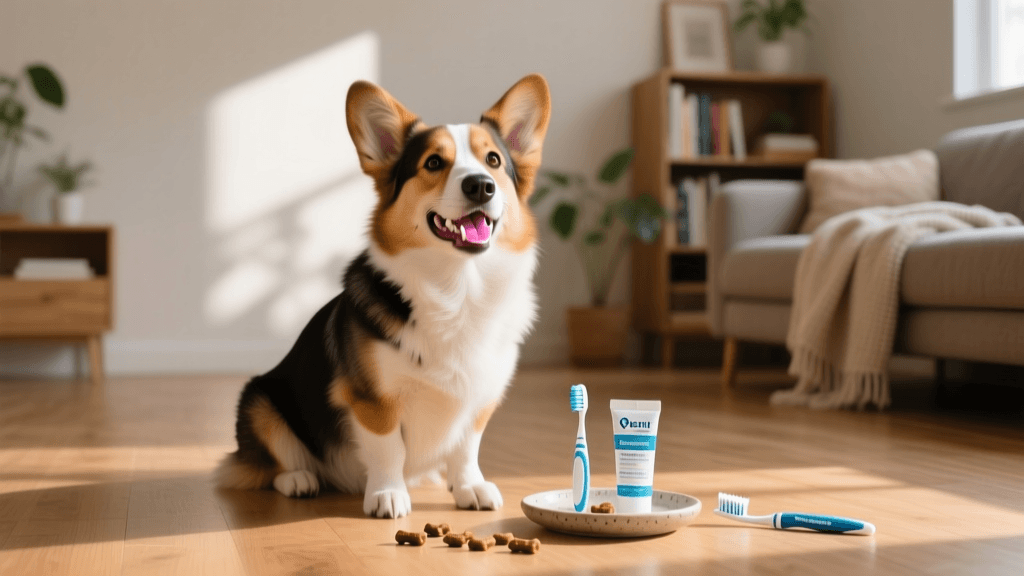
You do not need to spend a fortune on boutique pet dental products. The most effective tools are affordable, widely available, and backed by veterinary science. Here is exactly what you need to build a highly effective home dental kit for under $40.
1. Enzymatic Toothpaste
Human toothpaste contains fluoride and xylitol, both of which are highly toxic to dogs. You must use a veterinary-formulated enzymatic toothpaste. Products like Virbac C.E.T. Enzymatic Toothpaste or Sentry Petrodex cost between $8 and $14 per tube. These pastes contain the lactoperoxidase system, which actively breaks down plaque biofilm even if your dog doesn't tolerate vigorous scrubbing. A single tube typically lasts two to three months for a medium-sized dog.
2. Dual-Headed Toothbrushes
Skip the expensive electric brushes. A standard dual-headed dog toothbrush, which costs about $4 to $7, is designed to clean both the inside and outside surfaces of the tooth simultaneously. Alternatively, silicone finger brushes ($8 for a multi-pack) are excellent for small breeds or puppies, though they offer less reach for the back molars of larger dogs.
3. Water Additives (The Backup Plan)
If your dog absolutely refuses a toothbrush, water additives are a budget-friendly secondary defense. TropiClean Fresh Breath Oral Care Water Additive costs around $15 and lasts for months. While it does not replace the mechanical friction of brushing, it helps alter the pH of your dog's mouth to inhibit bacterial growth and freshen breath.
The 14-Day Desensitization Training Protocol
The biggest mistake owners make is forcing a toothbrush into a dog's mouth on day one, resulting in a lifelong aversion. To ensure compliance without spending money on professional behavioral training, follow this 14-day desensitization protocol:
- Days 1-3 (Taste Association): Place a pea-sized amount of enzymatic toothpaste on your finger. Let your dog lick it off. Praise them and offer a small training treat. Do this once daily.
- Days 4-7 (Gumline Introduction): Put the toothpaste on your finger, but this time, gently rub it along the outside of the front teeth and gumline for 10 seconds. Reward heavily.
- Days 8-11 (Tool Introduction): Apply the paste to the dual-headed brush. Let them lick it off the bristles. Gently touch the brush to their front canine teeth for just 5 seconds. Reward.
- Days 12-14 (Full Brushing): Lift the upper lip to expose the premolars and molars. Brush in small, gentle circles for 30 to 45 seconds per side. Focus heavily on the outer surfaces, as the dog's tongue naturally keeps the inner surfaces relatively clean.
Cost Comparison: Professional Cleaning vs. Preventive Home Care
To illustrate the massive financial return on investment of daily home care, consider the following five-year cost projection for a medium-sized dog. This comparison assumes the home-care dog requires only a standard non-anesthetic wellness exam, while the neglected dog requires two full anesthetic cleanings and three extractions over the same period.
| Care Category | 5-Year Professional Vet Costs | 5-Year At-Home Preventive Costs |
|---|---|---|
| Toothbrushes (Replaced every 3 months) | $0 | $60 |
| Enzymatic Toothpaste (4 tubes/year) | $0 | $240 |
| Dental Chews (VOHC Approved) | $600 | $600 |
| Anesthetic Dental Cleanings (x2) | $1,400 | $0 |
| Surgical Extractions (x3) | $450 | $0 |
| Total 5-Year Estimated Cost | $2,450 | $900 |
By investing less than $20 a month in toothpaste, brushes, and approved chews, you can potentially save over $1,500 in veterinary surgical fees over a five-year span.
Strategic Chewing: VOHC-Approved vs. DIY Options
Mechanical scraping through chewing is a vital secondary defense against tartar. However, not all chews are safe or effective. The gold standard for efficacy is the Veterinary Oral Health Council (VOHC) seal of acceptance. Products like Purina Pro Plan Dental Chewz or Greenies have undergone rigorous testing to prove they reduce plaque and calculus. These specific chews are designed with a flexible texture that wraps around the tooth, scraping the gumline where periodontal disease begins.
If commercial dental chews stretch your monthly budget, you can utilize safe, budget-friendly alternatives from your grocery store:
- Whole Raw Carrots: Large, thick carrots provide excellent mechanical scraping for large breed dogs and cost pennies per serving. Always supervise to prevent choking.
- Frozen Broth Cubes: Freeze low-sodium, onion-free chicken broth in a rubber Kong toy. The frozen texture soothes gums and encourages prolonged chewing, which stimulates saliva production and naturally washes away food debris.
- Apples (Core and Seed Removed): The crisp texture of apple slices helps clean teeth while providing a low-calorie, high-fiber snack.
Warning: Never give your dog cooked bones, weight-bearing bones from large livestock, or hardened antlers. These are harder than canine enamel and frequently result in slab fractures of the carnassial teeth, leading to emergency veterinary extractions that will instantly destroy your dental budget.
Red Flags: When Budget Care Isn't Enough
While preventive home care is highly effective, it cannot reverse advanced periodontal disease once the tooth root is compromised. The American Animal Hospital Association (AAHA) emphasizes that regular veterinary assessments are crucial. Small breeds, such as Chihuahuas and Dachshunds, are genetically predisposed to rapid dental decay due to tooth crowding and may need more frequent professional monitoring. You must schedule a vet visit if you notice any of the following red flags, regardless of your budget:
- Persistent, foul-smelling halitosis (bad breath)
- Red, swollen, or bleeding gums, especially along the gumline
- Dropping kibble while eating or chewing exclusively on one side of the mouth
- Pawing at the face or rubbing the mouth against furniture
- Visible brown or yellow calculus buildup that cannot be brushed away
Ultimately, budget-friendly dog dental care is about consistency rather than expensive products. By dedicating just two minutes a day to brushing, utilizing safe chewing alternatives, and monitoring your dog's oral health, you protect your dog from painful diseases and your bank account from unnecessary veterinary emergencies.
priya-sutaria
All our authors care for dogs every day — read more of their work on the authors page.