2026 Canine OA Treatment Guide: Librela & Home Care
Discover the top 2026 canine OA treatments, including Librela injections, joint supplements, and home modifications to keep your senior dog pain-free.
Understanding Canine Osteoarthritis in 2026
Osteoarthritis (OA), also known as degenerative joint disease, is a progressive condition that affects the cartilage, bones, and surrounding tissues of a dog's joints. According to the American College of Veterinary Surgeons (ACVS), OA affects roughly 20% of adult dogs and over 80% of senior canines. As we navigate 2026, the veterinary community has fully shifted away from relying solely on traditional painkillers, embracing a comprehensive, multimodal approach to canine OA treatment. This modern protocol combines cutting-edge biologic therapies, targeted nutraceuticals, physical rehabilitation, and strategic home modifications to maximize mobility and quality of life.
If your dog is showing signs of stiffness, reluctance to jump, or a decreased interest in walks, understanding the latest 2026 treatment landscape is critical. Below, we break down the most effective, science-backed strategies for managing canine osteoarthritis today.
The Medical Frontier: Librela (Bedinvetmab)
The most significant breakthrough in recent years that continues to dominate 2026 OA protocols is Librela (bedinvetmab). Librela is a fully caninized monoclonal antibody that targets Nerve Growth Factor (NGF), a key protein involved in the transmission of pain signals. Unlike traditional Non-Steroidal Anti-Inflammatory Drugs (NSAIDs) that are processed through the liver and kidneys, Librela is metabolized like natural proteins, making it exceptionally safe for senior dogs with underlying renal or hepatic issues.
Administration and 2026 Pricing
Librela is administered as a once-monthly subcutaneous injection by your veterinarian. The dosage is weight-dependent, typically ranging from 0.5 to 1.0 mg/kg. In 2026, the average cost per monthly injection ranges from $75 to $130, depending on your dog's size and your geographic location. Most pet owners report a noticeable improvement in their dog's mobility and enthusiasm within 7 to 14 days of the first injection, with peak efficacy achieved after the second or third monthly dose.
Next-Generation Oral Medications
While Librela handles the nerve pain signaling, inflammation still needs to be managed. The U.S. Food and Drug Administration (FDA) continues to monitor the safety of various anti-inflammatory drugs, and in 2026, veterinary consensus heavily favors targeted therapies over older, broad-spectrum NSAIDs when possible.
- Grapiprant (Galliprant): This is an EP4 receptor antagonist. Instead of blocking all prostaglandins (which can affect stomach and kidney protection), Galliprant specifically blocks the prostaglandin E2 receptor responsible for OA pain and inflammation. The standard 2026 dosage is 2 mg/kg once daily.
- Carprofen & Meloxicam: Traditional NSAIDs are still widely used and highly effective, particularly for acute flare-ups. However, they require bi-annual blood work to monitor liver and kidney enzymes.
- Amantadine: Used as an adjunct therapy for 'wind-up' pain (central nervous system sensitization) in dogs that have been in chronic pain for years.
Targeted Joint Supplements and Nutraceuticals
Supplements are no longer viewed as 'alternative' medicine; they are a foundational pillar of the 2026 multimodal OA plan. To see real results, you must use clinical doses of high-quality ingredients.
- Omega-3 Fatty Acids (EPA and DHA): Derived from wild-caught fish oil or microalgae, Omega-3s inhibit inflammatory pathways. The clinical dose for OA is high: 300 mg of combined EPA/DHA per 10 lbs of body weight daily.
- Undenatured Type II Collagen (UC-II): UC-II works via oral tolerance, training the immune system to stop attacking joint cartilage. A daily dose of just 40 mg has been shown in recent studies to outperform traditional glucosamine/chondroitin combinations in improving joint extension.
- Green-Lipped Mussel (GLM): Rich in glycosaminoglycans (GAGs) and unique furan fatty acids, GLM provides excellent cartilage support and mild anti-inflammatory benefits.
Physical Rehabilitation and Modalities
Keeping the muscles surrounding the arthritic joints strong is paramount. If a dog stops moving, muscle atrophy sets in, placing more stress on the damaged joints. In 2026, canine physical rehabilitation is highly accessible and includes:
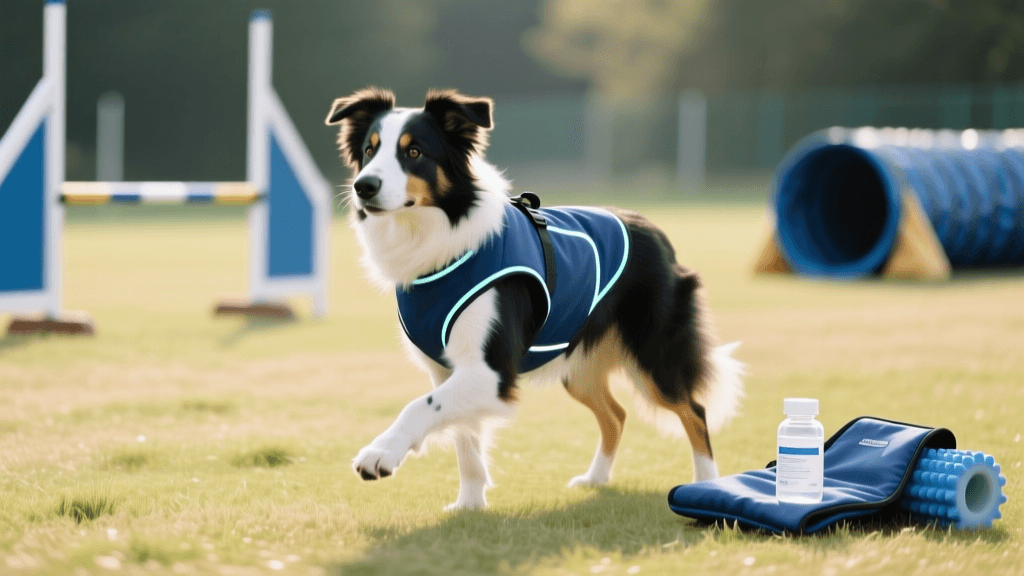
- Underwater Treadmill Therapy: The buoyancy of the water supports the dog's weight, reducing joint impact while the water's resistance builds muscle mass.
- Class IV Cold Laser Therapy: Photobiomodulation uses specific wavelengths of light to increase cellular ATP production, reduce localized inflammation, and accelerate tissue healing. Sessions typically cost $40 to $75 and are recommended twice weekly for the first month.
- Acupuncture: Veterinary medical acupuncture is highly effective for stimulating endorphin release and improving local blood flow to compromised joints.
Environmental and Home Modifications
Medical treatments will only take you halfway. Modifying your home environment is crucial to prevent micro-traumas that exacerbate OA pain. Implement these specific adjustments in your home today:
Orthopedic Bedding
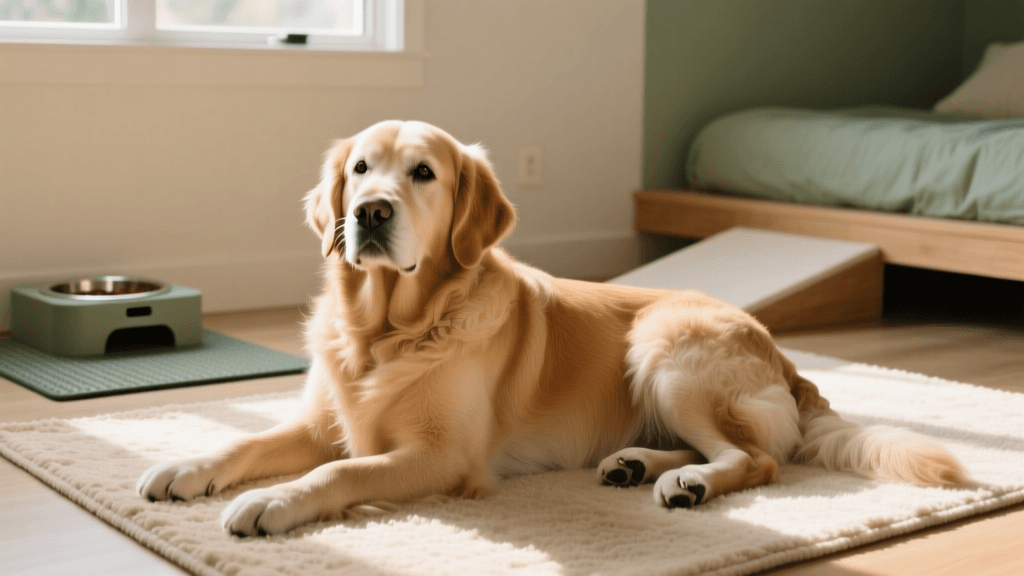
Discard flattened, poly-fill beds. Invest in a high-density orthopedic memory foam bed that is at least 4 to 6 inches thick. This ensures that when your dog lies down, their heavy joints (hips, elbows, shoulders) do not press through the foam against the hard floor. Beds with a low-profile entry or a 'bolster' edge can also provide neck support and make getting up easier.
Ramps and Stairs
Jumping on and off furniture or out of SUVs causes massive concussive force on arthritic joints. Use pet ramps with a high-traction surface. The golden rule for ramp incline is a 1:4 ratio. For example, if your couch is 1 foot high, the ramp should be at least 4 feet long to ensure a gentle slope that doesn't strain the dog's back or shoulders.
Flooring Traction
Slippery hardwood or tile floors are an OA dog's worst enemy. Slipping causes joint sprains and accelerates cartilage wear. Lay down interlocking foam mats, low-pile area rugs, or yoga mats in high-traffic areas. Additionally, applying a veterinary-grade paw wax or using silicone paw grips can dramatically improve traction.
2026 Canine OA Treatment Comparison Chart
| Treatment Modality | Category | 2026 Est. Monthly Cost | Primary Benefit |
|---|---|---|---|
| Librela (Bedinvetmab) | Monoclonal Antibody | $75 - $130 | Blocks NGF pain signaling safely |
| Galliprant (Grapiprant) | Targeted NSAID | $60 - $110 | Reduces inflammation with fewer GI risks |
| Nutraceutical | $25 - $45 | Systemic joint inflammation reduction | |
| UC-II Collagen | Nutraceutical | $20 - $35 | Halts immune-mediated cartilage attack |
| Cold Laser Therapy | Rehabilitation | $150 - $300 | Cellular healing and localized pain relief |
| Orthopedic Memory Foam | Home Modification | $80 - $200 (One-time) | Prevents pressure sores and joint stress |
Weight Management: The Ultimate Non-Medical Intervention
No medication or supplement can outwork the physics of excess weight. Carrying even two extra pounds places exponential stress on a dog's joints, particularly the cranial cruciate ligaments and hips. In 2026, veterinarians utilize the 9-point Body Condition Score (BCS) system. An ideal OA dog should be kept at a lean BCS of 4/9, where the ribs are easily palpable without excess fat covering, and a distinct abdominal tuck is visible.
If your dog needs to lose weight, transition to a prescription joint-and-weight management diet. These formulas are fortified with joint-supporting nutrients while maintaining high protein and low caloric density to preserve lean muscle mass during weight loss.
Veterinary Insight: 'In 2026, we view osteoarthritis not as an inevitable consequence of aging, but as a manageable chronic condition. By combining biologic therapies like Librela with strict weight control and environmental modifications, we are seeing dogs live active, joyful lives well into their senior years.' - Board-Certified Veterinary Sports Medicine Specialist.
Conclusion
Treating canine osteoarthritis in 2026 requires a proactive, layered strategy. The advent of monoclonal antibodies like Librela has revolutionized pain management, offering safe, long-term relief for dogs that cannot tolerate traditional NSAIDs. However, true success lies in the details: measuring your Omega-3 doses accurately, investing in proper 4-inch memory foam bedding, enforcing a 1:4 ramp ratio, and keeping your dog lean. Consult with your veterinarian to build a customized, multimodal OA protocol tailored to your dog's specific joints, lifestyle, and overall health profile.
aaron-whyte
All our authors care for dogs every day — read more of their work on the authors page.