Agility Dog Recovery 2026: Best Cooling Vests & Joint Care
Discover the best 2026 recovery protocols for canine athletes. Compare top cooling vests, joint supplements, and therapy techniques for agility dogs.
The Evolution of Canine Sports Medicine in 2026
Dog sports such as agility, flyball, disc dog, and fast CAT have evolved from casual weekend hobbies into high-performance athletic events. As the 2026 competition season reaches its peak, the focus among top handlers and veterinary professionals has shifted dramatically from mere training to comprehensive sports medicine, injury prevention, and active recovery. Canine athletes push their musculoskeletal and cardiovascular systems to the absolute limit, requiring recovery protocols that rival those of human Olympians.
According to the American Kennel Club's agility guidelines, proper conditioning and post-run recovery are just as critical as the time spent on the course. A dog that runs a 15-second agility course exerts a massive burst of anaerobic energy, followed by rapid heat generation and micro-trauma to the joints. Without a structured recovery protocol, dogs face a heightened risk of heat exhaustion, cumulative joint degradation, and soft tissue injuries. This guide explores the most effective, scientifically backed recovery strategies, cooling technologies, and joint care supplements available for canine athletes in 2026.
Thermoregulation: Why Cooling Vests Are Non-Negotiable
Unlike humans, dogs lack widespread eccrine sweat glands. They rely primarily on panting and vasodilation in their paw pads and ear flaps to dissipate heat. In the high-humidity environments common at many summer 2026 regional and national competitions, panting becomes highly inefficient. A dog's core temperature can spike dangerously fast, leading to heatstroke, which is a leading cause of acute veterinary emergencies at dog sports events.
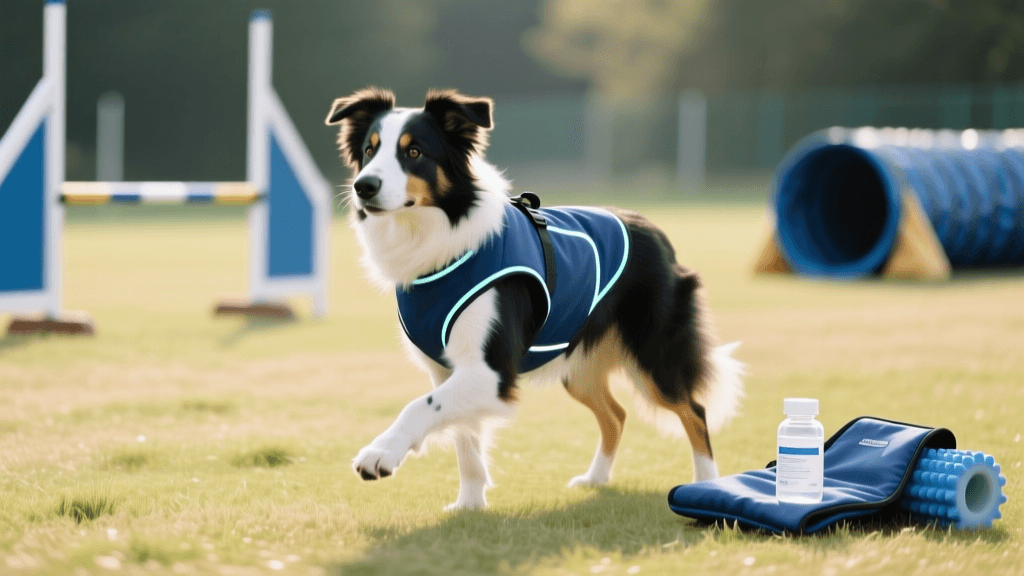
The American Veterinary Medical Association consistently emphasizes that proactive heat management is essential for canine welfare. In 2026, the market for canine cooling gear has advanced significantly, moving beyond simple wet bandanas to engineered garments utilizing evaporative cooling, phase-change materials (PCM), and targeted ice-pack integration.
2026 Cooling Vest Comparison Chart
Choosing the right cooling vest depends on your competition environment. Evaporative vests work best in dry heat, while ice-based or PCM vests are required for high-humidity environments where evaporation is stalled.
| Brand & Model | Cooling Mechanism | Best Environment | Approx. 2026 Price |
|---|---|---|---|
| Ruffwear Swamp Cooler | Evaporative (Water-soaked multi-layer) | Dry, arid climates | $94.00 |
| Hurtta Cooling Wrap | Evaporative + UV reflective | Sunny, moderate humidity | $89.00 |
| CoolK9 Ice Vest | Ice-pack inserts (Targeted core cooling) | High humidity, extreme heat | $125.00 |
| TechK9 PCM Harness | Phase-Change Material (Maintains 58°F) | All climates, long-duration | $140.00 |
Pro Tip: For maximum efficacy, pair an evaporative vest with a portable, battery-operated misting fan in your crating area. The forced air accelerates evaporation, pulling heat away from the dog's core much faster than passive air drying.
Joint Preservation: Supplementing the High-Impact Athlete
Agility and flyball demand explosive starts, sharp decelerations, and high-impact landings. The carpal, tarsal, and shoulder joints absorb forces equivalent to several times the dog's body weight during a single jump or weave pole entry. Over a competitive career, this leads to cumulative micro-trauma, cartilage wear, and early-onset osteoarthritis if not properly managed.
The American College of Veterinary Sports Medicine and Rehabilitation advocates for a proactive approach to joint health, recommending that athletic dogs begin joint support protocols early in their careers, long before clinical signs of lameness appear.
Key Ingredients to Look For in 2026
The supplement market is saturated, but veterinary sports medicine has narrowed down the most efficacious ingredients for canine joint preservation:
- Undenatured Type II Collagen (UC-II): Unlike traditional glucosamine, UC-II works via oral tolerance, modulating the immune system's inflammatory response to cartilage breakdown. It is highly effective at very small doses (typically 40mg daily) and is a staple in 2026 agility dog regimens.
- Green-Lipped Mussel (Perna canaliculus): Rich in eicosatetraenoic acid (ETA), a unique Omega-3 fatty acid that actively inhibits the enzymes responsible for joint inflammation and cartilage degradation.
- Hyaluronic Acid (HA): Crucial for synovial fluid viscosity. Oral HA supplements help maintain the lubrication of the joint capsule during high-friction movements.
- Curcumin (Phytosome bound): Traditional turmeric has poor bioavailability. Modern 2026 formulations use phytosome technology to bind curcumin to phospholipids, increasing absorption by up to 30 times and providing potent, natural pain relief without the gastrointestinal side effects of NSAIDs.
Advanced Recovery Modalities: PEMF and Hydrotherapy
Beyond supplements and cooling, active recovery modalities have become standard for serious competitors. Two of the most prominent therapies in the 2026 canine sports medicine toolkit are Pulsed Electromagnetic Field (PEMF) therapy and hydrotherapy.
PEMF Therapy: Devices like the Assisi Loop or modern wearable PEMF blankets emit low-frequency electromagnetic waves that stimulate cellular repair, reduce localized edema (swelling), and accelerate the healing of micro-tears in muscle fibers. A 15-minute PEMF session immediately after a day of competing can significantly reduce next-day stiffness.
Hydrotherapy: Access to underwater treadmills and therapeutic swimming pools is no longer limited to post-surgical rehab. Many elite agility teams now incorporate weekly 'maintenance' hydrotherapy sessions. The buoyancy of the water unloads the joints while the resistance builds cardiovascular endurance and strengthens stabilizing muscles without impact trauma.
Post-Competition Nutrition and Hydration Protocols
The 'anabolic window'—the period immediately following intense exercise where the body is primed to absorb nutrients and replenish glycogen stores—applies to dogs just as it does to humans. For canine athletes, this window is roughly 30 to 45 minutes post-run.
Hydration is the first priority. Plain water is often insufficient after heavy panting and exertion, as dogs lose essential electrolytes. Utilizing a canine-specific electrolyte powder (formulated without xylitol or artificial sweeteners, and balanced for canine sodium/potassium ratios) encourages drinking and prevents cellular dehydration.
For nutrition, fast-acting carbohydrates paired with branched-chain amino acids (BCAAs) are ideal. Many handlers in 2026 utilize specialized recovery chews or liquid slurries containing maltodextrin and whey protein isolate. These are easily digestible, preventing the gastrointestinal upset that can occur if a dog is fed a heavy, high-fat kibble meal immediately after high-stress exercise.
Building a Comprehensive 2026 Recovery Plan
To ensure your canine athlete remains sound, happy, and competitive throughout the 2026 season and beyond, implement a structured, multi-tiered recovery protocol:
- Pre-Run: 10 minutes of dynamic movement (trotting, figure-eights, play bows) to increase synovial fluid circulation and warm up muscle bellies.
- Immediate Post-Run: Offer electrolyte-enhanced water. Apply a cooling vest if ambient temperatures exceed 75°F (24°C) or humidity is high.
- 30 Minutes Post-Run: Administer a fast-acting carbohydrate/BCAA recovery chew. Perform a 5-minute gentle massage focusing on the shoulders, lower back, and hindquarters to flush lactic acid.
- Evening Routine: Apply PEMF therapy for 15-20 minutes. Serve the daily meal fortified with UC-II and Green-Lipped Mussel joint supplements.
By treating your dog not just as a pet, but as a elite athlete deserving of elite sports medicine, you will extend their competitive lifespan and ensure they enjoy every moment they spend on the field with you. The advancements in veterinary rehabilitation and recovery gear available in 2026 make it easier than ever to protect your partner's health, ensuring that the thrill of the sport remains safe and sustainable for years to come.
aaron-whyte
All our authors care for dogs every day — read more of their work on the authors page.