Best Puppy Breeds for Remote Workers in 2026: WFH Wellness Guide
Discover the best puppy breeds for remote workers in 2026. Learn how to support your WFH dog's mental health, prevent anxiety, and optimize home setups.
Navigating the 2026 Remote Work Landscape with a Puppy
As we settle into the permanent hybrid and remote work structures of 2026, the home office has become a shared space for millions of professionals and their canine companions. While working from home (WFH) offers unparalleled opportunities for bonding and midday potty breaks, it also presents unique challenges for canine mental health and wellbeing. The constant presence of an owner can inadvertently foster hyper-attachment, leading to severe distress when the puppy is eventually left alone. Choosing the right breed is the first critical step in ensuring a harmonious, stress-free environment for both you and your dog.
Not all puppies are suited for the quiet, sedentary nature of a home office. High-drive working breeds, such as Border Collies or Belgian Malinois, often develop destructive behaviors and vocalize excessively when their physical and mental needs are not met between Zoom calls. For remote workers, the ideal puppy breed possesses a balanced temperament, low indoor energy, and a natural inclination toward independent relaxation. In this comprehensive 2026 guide, we explore the best puppy breeds for remote workers, focusing on mental wellbeing, separation anxiety prevention, and ergonomic home office setups.
The WFH Paradox: Hyper-Attachment and Canine Mental Health
One of the most significant wellbeing risks for WFH puppies is the development of separation anxiety. When a puppy spends 24/7 with their owner during their critical developmental months, they fail to learn the vital coping skill of being alone. According to the ASPCA's behavioral guidelines, dogs with hyper-attachment can exhibit extreme panic, pacing, and destructive behavior the moment their owner steps out the door. For remote workers who occasionally need to attend off-site meetings or run errands, this can be a heartbreaking and disruptive reality.
To combat this, remote workers must prioritize breeds that are naturally more independent or prone to deep relaxation indoors. Furthermore, implementing 'independence training' from day one is non-negotiable. This involves using baby gates, crate training, and smart pet cameras to allow the puppy to spend time in a separate room while you work, ensuring they remain confident and secure even when you are not in their immediate line of sight.
Top 4 Low-Anxiety Puppy Breeds for Remote Workers (2026 Edition)
1. Cavalier King Charles Spaniel
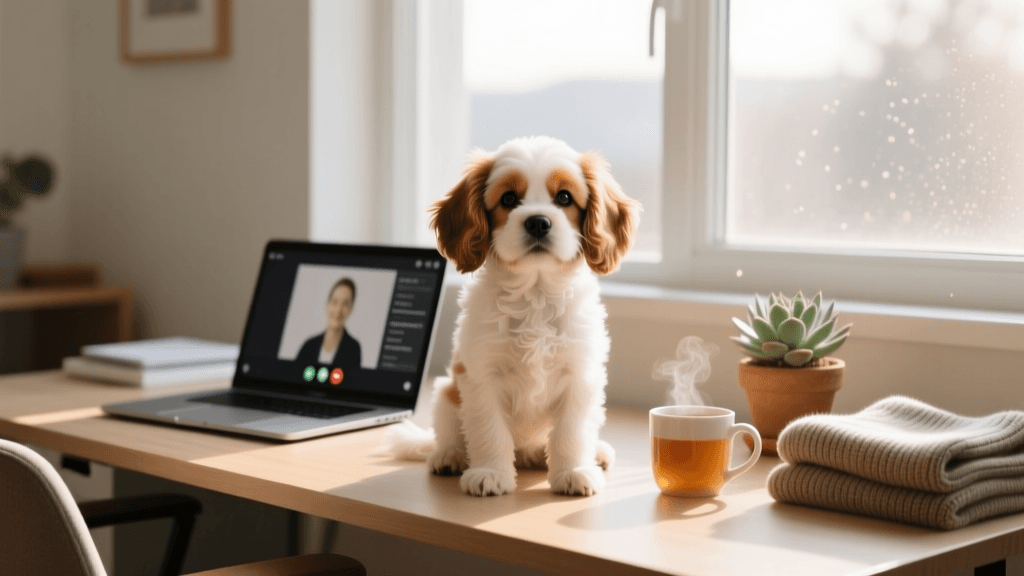
The Cavalier King Charles Spaniel remains a top-tier choice for remote workers in 2026 due to their profound desire to simply 'be' with their humans without demanding constant, high-octane interaction. They are the ultimate 'velcro dogs' who are perfectly content sleeping on an orthopedic bed beneath your standing desk. Their low indoor energy levels mean they will not disrupt your workflow with incessant pacing or toy-dropping.
Wellbeing Note: Cavaliers are genetically predisposed to mitral valve disease (MVD) and syringomyelia. When selecting a puppy in 2026, it is imperative to work with breeders who adhere to the latest veterinary cardiology screening protocols, ensuring both parents have been cleared by a board-certified veterinary cardiologist. Regular, gentle walks and weight management are crucial to supporting their joint and heart health over their lifespan.
2. Basset Hound
Do not let their melancholy expression fool you; the Basset Hound is a sturdy, low-energy companion that thrives in a calm home office environment. Bred for scent tracking rather than speed, Bassets require moderate outdoor exercise but are notorious 'couch potatoes' indoors. They are highly unlikely to bark at the delivery driver, making them excellent neighbors for those working in apartments or shared housing.
Wellbeing Note: Bassets are highly scent-driven, which can lead to boredom if their environment lacks olfactory stimulation. Remote workers should incorporate daily indoor enrichment using snuffle mats and lick mats. This mental stimulation tires them out just as effectively as a long walk, promoting deep, restorative sleep during your afternoon meetings. Additionally, their long ears require weekly cleaning to prevent yeast infections, a common issue in the breed.
3. Shih Tzu
The Shih Tzu was literally bred for one purpose: companionship. Unlike terriers that want to hunt or herding dogs that want to manage, the Shih Tzu wants to sit on your lap while you type. They are incredibly adaptable to apartment living and require minimal outdoor exercise, making them perfect for urban remote workers with limited access to large yards.
Wellbeing Note: As a brachycephalic (flat-faced) breed, Shih Tzus are sensitive to heat and poor air quality. In 2026, maintaining optimal indoor air quality is a key component of their wellness. Investing in a high-quality HEPA air purifier for your home office will protect their sensitive respiratory tracts from dust and allergens. Furthermore, their prominent eyes are prone to corneal ulcers; ensure your desk area is free of sharp corners or low-hanging wires that could cause accidental injury.
4. Whippet
Often described as 'the laziest fast dog in the world,' the Whippet is a sighthound that requires a short, intense sprint outdoors but spends the remaining 22 hours of the day curled up in a deep sleep. They are exceptionally quiet, rarely barking, and are highly attuned to the emotional state of their owners, providing excellent, non-intrusive emotional support during stressful workdays.
Wellbeing Note: Whippets have virtually no body fat and very thin coats, making them highly susceptible to cold drafts and hard surfaces. A premium, bolstered orthopedic bed is a mandatory wellness investment for this breed to prevent joint stiffness and pressure sores. Providing a variety of soft blankets in your home office will allow them to thermoregulate and nest comfortably while you work.
Comparison Chart: WFH Puppy Breeds & Wellness Needs
| Breed | Indoor Energy Level | Separation Anxiety Risk | Primary WFH Wellness Need |
|---|---|---|---|
| Cavalier King Charles Spaniel | Very Low | Moderate (Needs independence training) | Cardiac screening & weight management |
| Basset Hound | Low | Low | Olfactory enrichment & ear hygiene |
| Shih Tzu | Low | Moderate | Climate control & eye protection |
| Whippet | Low (Post-Sprint) | Low | Orthopedic bedding & warmth |
Designing a Wellness-Friendly Home Office for Your Puppy
Creating a space that supports your puppy's physical and mental health is just as important as choosing the right breed. The modern 2026 home office must be optimized for both human ergonomics and canine comfort. According to the American Kennel Club, providing a designated 'safe space' for low-energy breeds helps them establish a routine and understand when it is time to rest.
- Orthopedic Resting Zones: Avoid cheap, poly-fill dog beds. Invest in high-density memory foam beds that support your puppy's developing joints. Place the bed in a low-traffic corner of your office where they can observe you without being underfoot.
- Smart Enrichment Tech: Utilize AI-powered pet cameras that not only dispense treats but also monitor your dog's resting heart rate and activity levels throughout the day. This data can be shared with your veterinarian during annual wellness exams to track baseline health metrics.
- Acoustic Management: Puppies are sensitive to the sudden, loud noises that often occur during virtual meetings. Using a white noise machine near their bed can mask sudden vocal spikes from your colleagues, preventing startle responses and maintaining a calm nervous system.
Preventing Hyper-Attachment: Actionable Independence Training
To ensure your WFH puppy grows into a well-adjusted adult, you must actively practice absence. The American Veterinary Medical Association emphasizes that proactive behavioral training is a core component of preventive veterinary care. Here is a daily protocol to implement:
- The 'Fake Commute': Leave your house for 15-30 minutes every single day, even if you only walk around the block or sit in your car. This prevents the puppy from associating your departure with a permanent loss of access to you.
- Visual Barriers: Use a pet gate to keep the puppy in an adjacent room for at least two hours of your workday. Provide a long-lasting chew, such as a frozen Kong stuffed with dog-safe peanut butter, to create a positive association with your absence.
- Ignore Demand Barking: If your puppy whines or paws at you while you are on a call, do not reward the behavior with eye contact or physical touch. Wait for a moment of calm, independent resting before initiating affection.
Conclusion
Working from home in 2026 is a privilege that allows us to share our professional lives with our best friends. By selecting a breed that naturally aligns with the sedentary, quiet nature of remote work—such as the Cavalier, Basset Hound, Shih Tzu, or Whippet—you set the stage for a lifetime of mutual wellbeing. Coupled with proactive independence training and an ergonomically designed home office, your puppy will thrive, providing silent, steadfast support through every deadline and virtual meeting.
beth-carrasco
All our authors care for dogs every day — read more of their work on the authors page.